
How to Improve Skin Hydration and Skin Quality
Understanding how to improve skin hydration is one of the most important steps you can take toward healthier, more resilient skin. Hydration affects almost every visible aspect of skin quality — from texture and radiance to firmness and the rate at which fine lines develop. When the skin’s water content drops, you may notice dullness, roughness, and a loss of elasticity that no amount of surface-level product can fully correct.
For patients living in Dubai and Abu Dhabi, chronic skin dehydration is particularly common. The combination of intense heat, high UV exposure, and prolonged time in air-conditioned environments can steadily deplete your skin’s moisture reserves. While topical serums and moisturisers play a supportive role, regenerative aesthetic treatments can address hydration at a deeper, structural level — restoring what daily skincare alone cannot reach.
This guide explores why your skin may be dehydrated, the clinical options available to improve skin quality, and how to build a hydration plan that delivers lasting results.
Written & Clinically Reviewed By
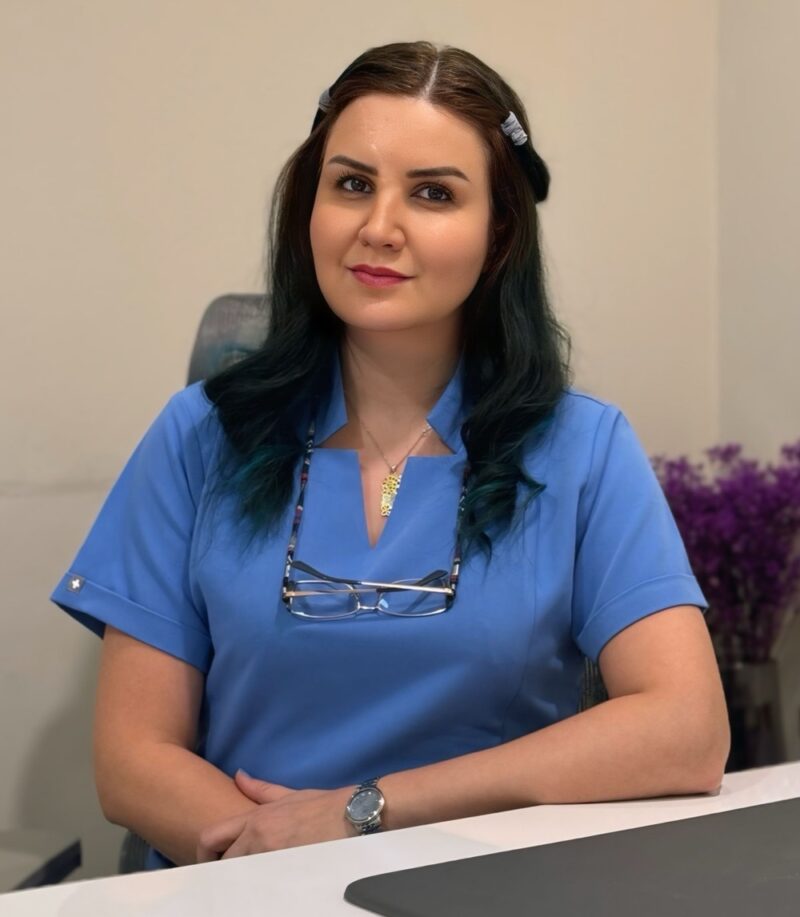
Dr. Azra Vaziri is a medical aesthetics practitioner based in Dubai and Abu Dhabi, specialising in regenerative skin treatments and skin quality improvement. She designs personalised hydration and skin renewal protocols based on clinical assessment.
In This Guide
Common Causes of Skin Dehydration
Signs Your Skin May Be Dehydrated
Topical Hydration vs. Clinical Hydration
Clinical Treatments That Improve Skin Hydration
What to Expect From Skin Hydration Treatments
Building a Skin Hydration Plan
Who May Benefit From Clinical Skin Hydration Treatment
Why Skin Hydration Matters
Adequate hydration is essential to healthy skin barrier function. When your skin retains sufficient water, it looks smoother, feels more supple, and reflects light more evenly — which is what gives skin its natural radiance. Hydrated skin also maintains better elasticity, helping it resist the visible signs of ageing.
It is important to understand that dehydrated skin is a condition, not a skin type. Even oily or combination skin can lack water, resulting in tightness and dullness alongside excess oil production. Hyaluronic acid — a molecule naturally found in the skin — plays a central role in retaining moisture. As you age, your body produces less of it, and the skin’s ability to hold water gradually declines.
Common Causes of Skin Dehydration
Several factors contribute to chronic skin dehydration, many of which are especially relevant to patients in the United Arab Emirates:
Climate and UV exposure — Intense heat and prolonged sun exposure accelerate transepidermal water loss, drawing moisture away from deeper skin layers.
Air conditioning — Extended time in air-conditioned environments strips humidity from the air and, in turn, from your skin’s surface.
Ageing — Natural declines in hyaluronic acid production and skin barrier function reduce the skin’s water-holding capacity over time.
Lifestyle factors — Insufficient water intake, excess caffeine or alcohol consumption, and poor sleep can all contribute to dehydration from within.
Skincare habits — Harsh cleansers, over-exfoliation, and the absence of barrier-supporting products can compromise the skin’s protective layer.
Medical factors — Certain medications and hormonal changes may affect how effectively your skin retains moisture.
Signs Your Skin May Be Dehydrated
Dehydration often presents differently from dryness. You may notice some of the following signs:
— Dullness and a noticeable lack of radiance
— Persistent tightness or roughness, even after moisturising
— Fine lines that appear more prominent due to dehydration rather than expression
— Flakiness or uneven texture despite having oily skin
— Makeup not sitting smoothly on the skin’s surface
— Reduced bounce or plumpness when the skin is pressed
If you are experiencing several of these signs, your skin may benefit from a clinical dehydrated skin treatment approach that goes beyond surface-level care.
Topical Hydration vs. Clinical Hydration
Topical products such as serums and moisturisers are an important part of any skincare routine. They hydrate the skin’s outermost layers and can help support barrier function. However, these products cannot penetrate deep enough to restore hydration within the dermis — the layer where collagen production, elasticity, and structural moisture reside.
Clinical skin hydration treatments are designed to deliver active ingredients — such as hyaluronic acid — directly into the dermal layer. This allows for deeper, longer-lasting improvement in skin texture and overall skin quality. This is the key gap that non-surgical skin treatments fill: delivering dermal hydration where topical products cannot reach.
Clinical Hydration
Delivers hyaluronic acid and active compounds directly into the dermis
Supports collagen production and structural moisture retention
Results can last several months with maintenance
Requires clinical assessment and professional administration
Topical Hydration
Hydrates the skin’s outermost layers (epidermis)
Supports barrier function and prevents moisture loss
Requires consistent daily application for ongoing benefit
Available over the counter; no clinical supervision needed
Clinical Treatments That Improve Skin Hydration
A range of skin hydration treatments in Dubai can target dehydration at a structural level. Below are the most commonly used clinical approaches for skin quality improvement treatments.
Skin booster injections — These involve micro-doses of hyaluronic acid delivered directly into the dermis. Skin booster treatment is designed to improve dermal hydration, skin texture, and overall luminosity over a course of sessions. Profhilo takes this further through bioremodelling — stimulating collagen and elastin alongside deep hydration. See also: how skin boosters improve skin quality →
PRP skin therapy — PRP skin therapy uses your own platelet-rich plasma to deliver growth factors that may support natural hydration, repair, and renewal processes within the skin.
Microneedling — Microneedling collagen induction therapy creates controlled micro-channels in the skin, which can improve the absorption of hydrating products and stimulate the skin’s natural repair response.
Exosome therapy — Exosome therapy involves cellular signalling molecules that may accelerate tissue repair and support the skin’s hydration pathways at a cellular level.
Polynucleotide (PDRN) therapy — Polynucleotide treatment activates fibroblasts through the adenosine A2A receptor pathway, delivering deep cellular repair, barrier rebuilding, and strong water-binding capacity — making it particularly effective for dehydrated or barrier-compromised skin.
Collagen biostimulators — Collagen biostimulator treatments stimulate your body’s own collagen production, which in turn can improve the skin’s structural support and its ability to retain moisture over time.
| Treatment | How It Supports Hydration | Best For | Results Timeline |
|---|---|---|---|
| Skin Boosters | Delivers hyaluronic acid directly into the dermis | Dull, dehydrated skin lacking radiance | Visible improvement within 2–4 weeks |
| PRP Therapy | Growth factors support natural repair and hydration | Overall skin renewal and tone improvement | Gradual improvement over 4–6 weeks |
| Microneedling | Enhances product absorption and stimulates collagen | Rough texture, fine lines, uneven skin | Noticeable results after 2–3 sessions |
| Exosome Therapy | Cellular signals that may accelerate hydration and repair | Accelerated recovery and skin rejuvenation | Early signs within 1–3 weeks |
| Collagen Biostimulators | Stimulates collagen to improve moisture retention | Loss of firmness and long-term skin quality | Progressive results over 8–12 weeks |
For detailed comparisons: Profhilo vs Skin Boosters · Skin Boosters vs Polynucleotides
What to Expect From Skin Hydration Treatments
Before Your Appointment
Your clinician will carry out a clinical skin assessment to determine the level and type of dehydration, your skin type, and any factors that may influence treatment selection. You may be advised to avoid certain skincare actives (such as retinoids or strong exfoliants) for a few days before your session.
During Treatment
Most skin hydration treatments take between 30 and 60 minutes. A topical anaesthetic may be applied beforehand to minimise discomfort. Sensations during treatment are generally mild — most patients describe a slight prickling or pressure depending on the technique used.
Aftercare and Recovery
Downtime is minimal for most procedures. You may experience mild redness or sensitivity for 24–48 hours. Sun avoidance and the use of gentle, hydrating skincare are typically recommended in the days following treatment.
Building a Skin Hydration Plan
Optimal skin hydration often requires a combined approach: clinical treatments provide the structural foundation — including collagen stimulation and deep dermal hydration — while daily skincare habits help maintain and extend results. Neither works as effectively in isolation.
A common approach involves an initial treatment course of two to three sessions spaced several weeks apart, followed by maintenance treatments every four to six months. Between sessions, a consistent daily routine built around hydrating cleansers, hyaluronic acid serums, and barrier-supporting moisturisers can help preserve the benefits of clinical work.
Dr Azra Vaziri creates personalised hydration protocols tailored to each patient’s skin condition, lifestyle, and treatment goals — ensuring the plan reflects your individual needs rather than a one-size-fits-all formula. For treatment costs, see skin booster pricing →
Who May Benefit From Clinical Skin Hydration Treatment
Clinical skin hydration treatments may be appropriate for you if you experience any of the following:
— Chronic dehydration that does not improve with topical products alone
— Dull or tired-looking skin that lacks vitality
— Fine lines caused by dryness rather than muscular movement
— Rough or uneven skin texture improvement goals
— A desire to maintain skin quality preventatively, before visible concerns develop
— Living in the UAE, where high UV and air-conditioned environments accelerate moisture loss
Who May Not Be a Suitable Candidate
While skin hydration treatments are generally well tolerated, they may not be suitable for everyone. The following factors may affect your eligibility:
Active skin infection or inflammation — Treatment should be postponed until the affected area has fully healed to avoid complications.
Pregnancy or breastfeeding — Most injectable and clinical skin treatments are not recommended during pregnancy or breastfeeding as a precaution.
Known allergy to hyaluronic acid — For skin booster treatments specifically, a known sensitivity to hyaluronic acid-based products is a contraindication.
Autoimmune conditions — These are assessed individually; some conditions may require medical clearance before proceeding.
Recent isotretinoin use — For microneedling procedures, a waiting period is typically advised following isotretinoin therapy to allow the skin to recover.
Suitability is always confirmed during a medical consultation, where your medical history and skin condition are assessed before any treatment is recommended.