PRP Skin Treatment in Dubai
PRP (platelet-rich plasma) — also known as the Vampire Facial when combined with microneedling — is an autologous skin rejuvenation treatment that uses your own blood’s concentrated growth factors to stimulate collagen production, improve skin texture and restore a naturally youthful radiance. This makes PRP a valuable option within a broader dull skin treatment plan.
Because it uses your body’s own biology, there is virtually zero risk of allergic reaction, making it one of the safest and most versatile treatments in regenerative aesthetics.
PRP Skin Treatment in Dubai at a glance
PRP skin treatment and Vampire Facial in Dubai with Dr Azra Vaziri. Your own platelet growth factors stimulate collagen for smoother, brighter, firmer skin.
- Procedure Time
- 60 – 90 min
- Anesthesia
- Topical
- Recovery Time
- 24–48 hours mild redness
- Pain Level
- Mild
From AED 500 · Performed by Dr Azra Vaziri at Prof Sakla Spanish Eye Clinic, Dubai
In Simple Terms
PRP is used for facial skin rejuvenation, scar reduction, hair restoration, dark circle treatment, and overall skin quality improvement. For more on how collagen renewal supports long-term skin quality, see our guide on how to restore collagen in aging skin.
| Also Known As | Vampire Facial (PRP + microneedling), PRP facial, Platelet-rich plasma therapy |
|---|---|
| What Is PRP Used For? | Skin rejuvenation, Collagen stimulation, Scar reduction, Texture improvement, Dark circles, Hair restoration |
| Procedure Time | 60 – 90 min |
| Technique | Micro-injections or combined with Dermapen microneedling (Vampire Facial) |
| Anesthesia | Topical |
| Recovery Time | 24–48 hours mild redness |
| Pain Level | Mild |
| Lasts | 12 to 18 months (with maintenance) |
| From | AED 500 / session (standard AED 600) · Package of 3: AED 1,000 (standard AED 1,200) |
| Note | Individual results may vary. 3–4 sessions recommended. |
| Related Treatments | Dermapen Microneedling, Dermapen Exosome, Exosome Therapy, RF Microneedling, Stem Cell Facial, Regenerative Aesthetics |
Advantages of PRP Skin Treatment for the Face in Dubai
- PRP uses your body’s own growth factors (PDGF, TGF-β, VEGF) to activate fibroblasts and produce new collagen and elastin, gradually restoring skin firmness and elasticity over 4–8 weeks.
- Accelerated cellular turnover reduces the appearance of fine lines, enlarged pores, acne scars and uneven pigmentation for smoother, more luminous skin.
- Since PRP is derived entirely from your own blood, there is virtually no risk of allergic reaction, foreign-body response or rejection — an unmatched safety profile.
- Most patients experience only mild redness for 24–48 hours with no synthetic material involved, so swelling and bruising are typically minor.
- Results build gradually as new collagen matures — skin appears progressively healthier and more youthful over several weeks rather than an abrupt change.
- PRP enhances outcomes when combined with Dermapen microneedling (collagen induction therapy), Dermapen Exosome protocol, or exosome therapy, amplifying collagen induction and healing speed.
- The concentrated platelet layer contains 3–5× the normal growth factor levels, making it one of the most potent natural regenerative tools available in aesthetic medicine.
- PRP is versatile — it can be used for facial skin rejuvenation, dark circles, hair restoration, and body treatments across the face, neck, décolletage and hands. A consultation with Dr Azra confirms which of these apply to your skin.
What Is a Vampire Facial?
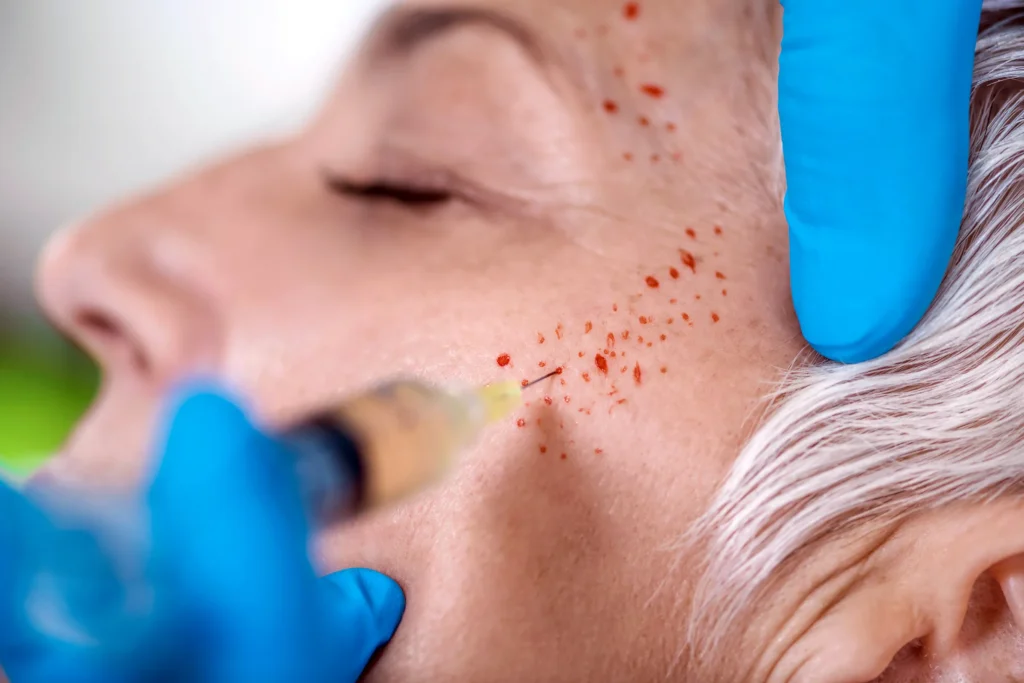
The Vampire Facial is the popular name for a treatment that combines PRP with Dermapen microneedling. After your blood is drawn and processed to isolate platelet-rich plasma, the PRP is applied to the skin while thousands of micro-channels are created by the Dermapen device. This allows the concentrated growth factors to penetrate directly into the dermis — far deeper than topical application alone. For a comparison of PRP vs exosome serums with Dermapen, see our Dermapen Exosome vs Dermapen PRP guide →
The term “Vampire Facial” gained widespread recognition through social media, but the treatment itself is a well-established clinical protocol backed by peer-reviewed research. It is particularly effective for:
The Vampire Facial is available at Dr Azra Vaziri’s Dubai clinic as a standalone session or as part of a multi-treatment skin rejuvenation programme. To find out whether it suits your skin, book a consultation. For post-treatment guidance, see our Dermapen aftercare guide →
- Improving overall skin radiance and skin hydration
- Reducing acne scarring and post-blemish marks
- Softening fine lines and improving skin elasticity
- Enhancing texture and pore refinement
- Treating dull, tired-looking skin
PRP Facial Before and After — What to Expect
PRP results develop progressively — unlike injectable fillers or Botox, the changes emerge gradually as new collagen matures and skin cellular renewal takes effect. Most patients notice initial improvements in radiance and hydration within the first week, with texture, firmness, and scar reduction continuing to improve over 4–8 weeks.
Results Timeline
Your own timeline is mapped at your consultation.
- Day 1–3: Mild redness, slight warmth. Skin may feel tight.
- Days 3–7: Redness resolves. Early glow and improved hydration appear.
- Weeks 2–4: Smoother texture, more even tone, skin feels firmer.
- Months 1–2: Collagen remodelling deepens — fine lines soften, scars reduce visibly.
Read moreShow less
- Months 2–3: Full results from a single session. Best outcome after 3–4 sessions.
- Months 6–18: Results sustained with maintenance sessions every 6–12 months.
What Patients Typically Report
Individual results vary. Before-and-after outcomes depend on skin condition, age, number of sessions, and lifestyle. Results discussed at consultation.
- Brighter, more radiant skin tone
- Smoother skin texture and refined pores
- Reduction in acne scars and post-blemish marks
- Softer fine lines and improved elasticity
- More hydrated, plumper-feeling skin
- Natural-looking — no sudden change in appearance
PRP for Hair Loss
PRP hair treatment uses the same platelet-rich plasma technology to address thinning hair and early-stage hair loss. The concentrated growth factors are injected directly into the scalp at the level of the hair follicle, where they may stimulate dormant follicles, improve blood supply to the follicular unit, and promote thicker, stronger hair growth.
PRP for hair restoration is most effective in patients experiencing early to moderate thinning — particularly androgenetic alopecia (pattern hair loss) in both men and women. It is not a cure for advanced baldness, but it can help slow progression and improve density when follicles are still active.
Ask about PRP for hair at your consultation.
PRP hair treatment is available at Dr Azra Vaziri’s Dubai clinic. A scalp assessment during your consultation will determine whether PRP is appropriate for your type and stage of hair loss. For a full overview of hair treatments in Dubai — including PRP, exosomes, and mesotherapy — see our dedicated guide.
| Ideal Candidates | Early to moderate hair thinning, androgenetic alopecia, post-partum hair loss |
|---|---|
| Technique | Micro-injections into the scalp at the follicular level |
| Sessions Recommended | 3–4 initial sessions spaced 4 weeks apart, then maintenance every 4–6 months |
| Results Timeline | Reduced shedding within 4–6 weeks; visible density improvement over 3–6 months |
| Important Note | Individual results vary. Most effective when follicles are still active. Not suitable for advanced baldness. |
PRP vs PRF: What Is the Difference?
Patients researching platelet-based treatments will often encounter both PRP and PRF (platelet-rich fibrin). Both are derived from your own blood, but they differ in preparation, composition, and how they deliver growth factors.
PRP is produced by centrifuging blood at high speed to isolate a concentrated layer of platelets in plasma. It can be injected precisely and delivers a concentrated burst of growth factors (PDGF, TGF-β, VEGF) to the treatment area. PRP has a well-established evidence base with over a decade of clinical use in both aesthetic medicine and orthopaedics.
PRF is produced by centrifuging blood at a lower speed without anticoagulants, resulting in a fibrin matrix that traps platelets and white blood cells. This matrix may release growth factors more slowly over time, creating a sustained-release effect. PRF is a newer approach and, while early results are promising, its evidence base in dermatology is still developing relative to PRP.
Not sure which suits you? Dr Azra will advise at your consultation.
Dr Azra Vaziri currently uses PRP for its established evidence base, injection precision, and versatility across skin and hair treatments. PRF may be considered for specific applications where a sustained-release matrix is advantageous. The choice between PRP and PRF is discussed during your consultation based on your treatment goals.
| Factor | PRP | PRF |
|---|---|---|
| Preparation | High-speed centrifuge with anticoagulant | Low-speed centrifuge without anticoagulant |
| Consistency | Liquid — injectable | Gel/membrane — injectable or applied topically |
| Growth factor release | Concentrated, immediate release | Slower, sustained release via fibrin matrix |
| Contains white blood cells | Minimal | Yes — may enhance healing response |
| Clinical evidence | Well established (10+ years in aesthetics) | Emerging — promising but less mature |
| Injection precision | High — liquid form allows precise placement | Moderate — gel consistency limits precision |
Price confirmed after selecting the product and treatment plan at consultation.
PRP Pre-Treatment Care
Before undergoing PRP treatment, follow these guidelines to ensure optimal results and minimise potential risks:
- Avoid blood-thinning medications and supplements such as aspirin, ibuprofen, naproxen, and herbal supplements like ginkgo biloba and garlic for at least a week before treatment.
- Drink plenty of water in the days leading up to your appointment to ensure good hydration — this improves blood draw quality and platelet concentration.
- Avoid alcohol and tobacco for a few days before PRP treatment, as these can impair healing and platelet function.
- Inform your provider about any medications and medical conditions, including allergies, autoimmune disorders or blood disorders.
- Avoid vigorous exercise and activities that increase blood flow to the face for at least 24 hours before treatment.
- During your consultation, discuss your expectations for results and any concerns about the procedure or recovery process.
PRP Post-Treatment Care
After receiving PRP treatment, follow proper post-treatment care to ensure optimal results and minimise potential side effects. If your PRP session included Dermapen microneedling, see also our detailed Dermapen aftercare guide →
Unsure about anything in your recovery? Contact the clinic and we will talk it through.
- Avoid touching, rubbing or applying makeup to the treated area for at least 24 hours.
- Skip intense exercise, saunas, hot tubs and hot showers for 24 hours after treatment.
- Apply cold compresses if you experience swelling or discomfort.
- Apply SPF 30+ sunscreen daily — sun protection is critical during the healing phase.
- Stay hydrated and use a gentle, fragrance-free moisturiser.
- An initial glow often appears within the first week. Full collagen remodelling continues over 4–8 weeks.
- A course of 3–4 sessions spaced 4–6 weeks apart is typically recommended for optimal, lasting results.
- Attend scheduled follow-up appointments to assess results and address any questions.
- Be patient — the full results of PRP develop progressively as new collagen matures.
- If you experience any unusual or severe side effects such as persistent swelling, redness, pain, or signs of infection, contact your healthcare provider immediately.
The PRP Procedure — Step by Step
A same-day treatment typically completed within 60–90 minutes:
To arrange your PRP session, book a consultation at the Dubai or Abu Dhabi clinic.
- Consultation & Skin Assessment (15–20 min) — Your practitioner examines your skin, discusses goals and reviews medical history to confirm PRP is appropriate. A bespoke plan is created for your unique concerns.
- Blood Draw & Processing (15–20 min) — A small venous blood sample (10–20 ml) is drawn and placed into a medical-grade centrifuge to isolate the platelet-rich plasma layer containing concentrated growth factors.
- Topical Anaesthesia (20–30 min) — A numbing cream is applied to the treatment area and left to take effect, ensuring comfort during the treatment phase.
- PRP Application (20–30 min) — Concentrated PRP is delivered via precise micro-injections, or applied topically during a Dermapen microneedling session (Vampire Facial) for enhanced absorption through the micro-channels.
- Post-Treatment Care (5–10 min) — A soothing serum or mask may be applied. You receive aftercare instructions and can leave immediately — most patients resume normal activities the same day.
Educational Guides
Explore our educational articles for a deeper understanding of skin rejuvenation and the science behind regenerative treatments. If you would rather talk it through, book a consultation.
Why Choose Dr Azra for PRP Treatment
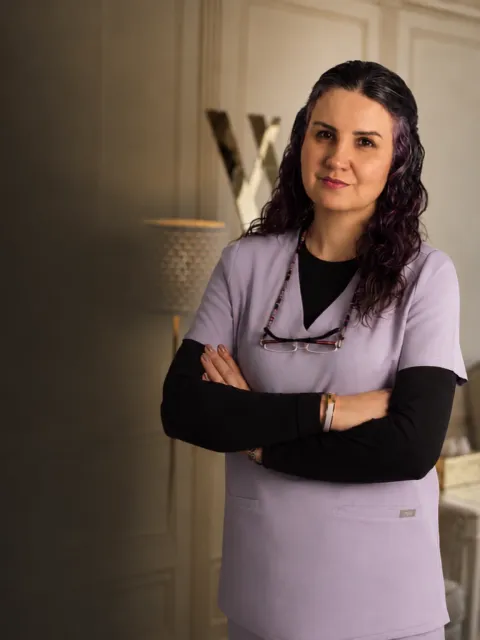
Dr Azra Vaziri is a DHA- and DOH-licensed aesthetic physician with more than 20 years of experience, practising aesthetic medicine since 2004, and every PRP session here is drawn, spun and injected by her. She offers PRP as both a standalone treatment and combined with Dermapen microneedling (Vampire Facial) at her Dubai clinic on Sheikh Zayed Road. Book a consultation to discuss your treatment plan.
- DHA & DOH LicensedLicensed in Dubai and Abu Dhabi
- 20+ Years ExperienceRegenerative aesthetics since 2004
- Sheikh Zayed RoadDubai — Exit 41, Vaksun Building, Office 119
Frequently Asked Questions
What is PRP treatment?
What is a PRP facial?
Is PRP safe?
What is a Vampire Facial?
How many sessions do I need?
Does PRP hurt?
When will I see results?
Can PRP help with hair loss?
What is the difference between PRP and PRF?
Can PRP be combined with other treatments?
Who is a good candidate for PRP?
How much does PRP cost in Dubai?
Related Concerns & Treatments
Dermapen MicroneedlingDermapen ExosomeExosome TherapyVampire Facial
Before & After Care
Book a Consultation
Dr Azra Vaziri — DHA & DOH licensed aesthetic physician with 20+ years of experience in Dubai & Abu Dhabi.