Thread lifting guides
Thread Lift in Dubai — Aptos & PDO Thread Face Lift
Thread lifting for the face uses absorbable threads inserted beneath the skin to mechanically reposition sagging tissue — cheeks, jawline, jowls, neck, brow — and stimulate collagen production simultaneously. You see an immediate lift. Over the following months, new collagen forms around the thread scaffold. A thread face lift in Dubai therefore keeps improving after the procedure.
Results last 12–18 months. No surgery, no general anaesthesia, minimal downtime.
- 45–90Mins per session
- 5–7Days mild recovery
- 12–18Months results
- 1,500AED from
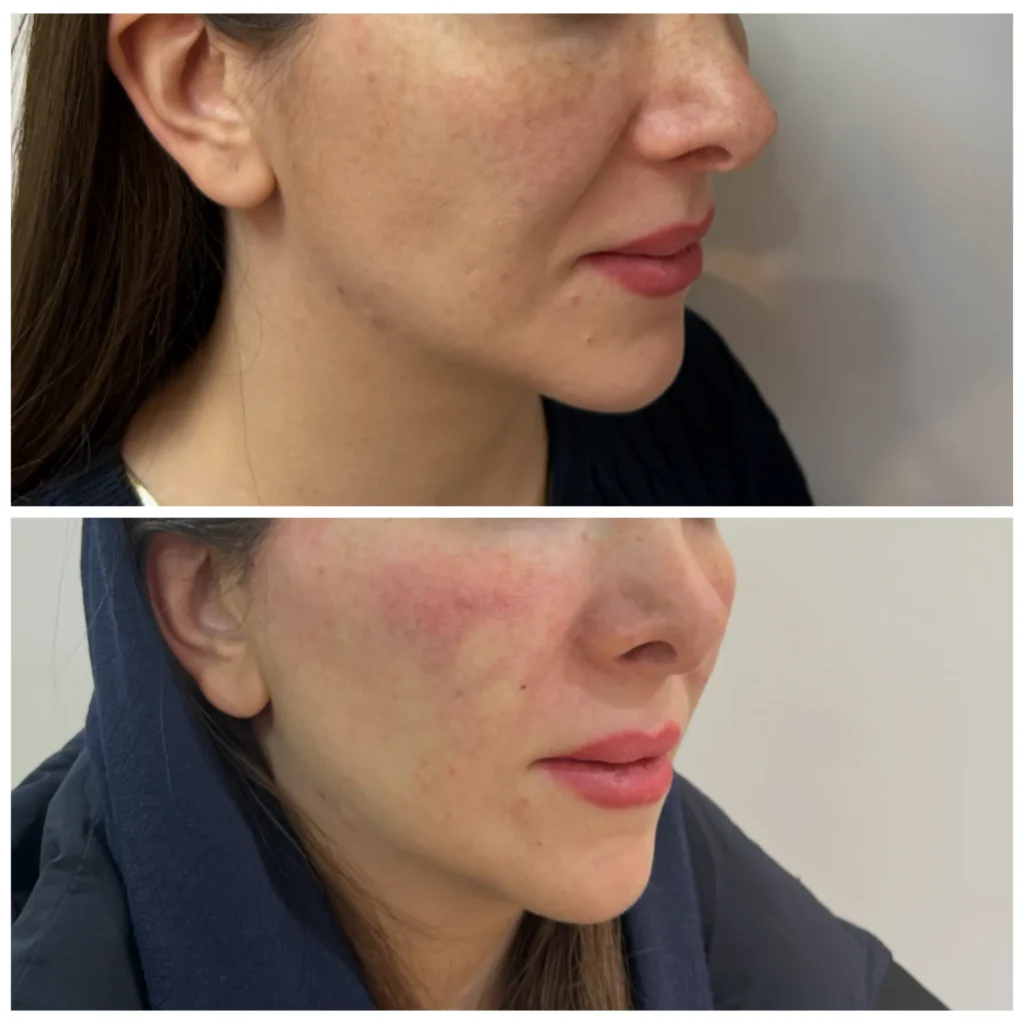
A face thread lift by Dr. Azra Vaziri — the tissue is repositioned, not filled. Published with the patient’s written consent.
Thread Lift in Dubai — Aptos & PDO Thread Face Lift at a glance
What is a facial thread lift? A facial thread lift is a non-surgical lift using absorbable PDO/PLLA threads placed under the skin to reposition sagging tissue and stimulate collagen.
- Mins per session
- 45–90
- Days mild recovery
- 5–7
- Months results
- 12–18
- AED from
- 1,500
It sharpens the jawline, cheeks and brow with minimal downtime, and results last 12–18 months. A thread lift in Dubai starts from AED 1,500.
Performed by Dr Azra Vaziri at Prof Sakla Spanish Eye Clinic, Dubai
In Simple Terms
What Is a Thread Lift for the Face
A facial thread lift uses fine absorbable threads — made from materials such as polylactic acid (PLLA) or polydioxanone (PDO) — that are inserted through tiny entry points into the subdermal tissue. The threads either have barbs or cones that grip the tissue and hold it in a repositioned, lifted position, or they are smooth and act purely as a collagen-stimulating scaffold.
Unlike dermal fillers that add volume, or biostimulators that stimulate collagen without mechanical lift, threads physically reposition tissue that has descended — making them the correct treatment when sagging, not volume loss, is the primary concern. For patients wondering which applies to them, see our guide on thread lift vs filler.
The threads dissolve gradually over 6–12 months. During this time, the collagen stimulated around the thread scaffold continues building. Once the threads are gone, the new collagen remains — maintaining structural support and skin quality improvement for 12–18 months from treatment.
PDO, PLLA, PCL, PLA or PDL Thread Lift in Dubai: Thread Types Compared
A note on the initials. The letters get mixed up constantly, including by clinics. PDO is polydioxanone, the everyday absorbable thread. PLLA (poly-L-lactic acid) and PCL (polycaprolactone) are the longer-lasting, collagen-stimulating materials. PLA and PDL are almost always someone reaching for PLLA or PDO — there is no separate “PDL thread”. If a quote names a thread you do not recognise, ask which of these four it is and how many are being placed; those two answers explain most of the price difference between clinics.
Different thread types serve different purposes. Dr Azra selects the appropriate thread based on your anatomy, degree of laxity, and treatment goals — often combining types within one session.
Filling Threads
Skin Quality + TextureAptos Excellence series
Read moreShow less
Smooth or lightly textured absorbable threads placed in a grid pattern beneath the skin. Act as a collagen-stimulating scaffold — improving skin texture, firmness, and overall quality across a treatment zone. No mechanical repositioning. Ideal for early laxity where skin quality is the primary concern rather than structural descent.
Price on consultation
Lifting Threads
Mechanical LiftAptos Thread / PDO cog threads
Read moreShow less
Bidirectional barbed or cog threads that physically grip and reposition sagging tissue. The most commonly requested thread lift — used for cheek and mid-face lifting, jawline definition, jowl correction, and neck tightening. Immediate lift is visible the same day. Collagen stimulation continues building for months. This is what most patients mean when they ask for a “thread lift.”
From
AED 3,400 / session(standard 5,000)
Namica Threads
Advanced RepositioningAptos Namica system
Read moreShow less
A premium Aptos thread with a spring-coil design that distributes lifting force more evenly across a wider tissue zone — reducing the risk of puckering and improving lift longevity. Best suited to patients with more significant facial descent or those wanting maximum durability from their thread lift. Dr Azra is among the few practitioners in the UAE trained specifically in Namica technique.
From
AED 6,000 / session(standard 7,000)
Thread type selection is determined at consultation — not before. Dr Azra assesses your facial anatomy, degree of laxity, skin quality, and goals before recommending a protocol. Many treatments combine thread types, or pair threads with fillers and biostimulators for comprehensive results. See our full thread lift pricing page →
Not sure which thread type suits your face? Ask Dr Azra at consultation →
| Thread | System | What it does | How it works | Best suited to |
|---|---|---|---|---|
| Filling threads | Aptos Excellence | Skin quality and texture | Collagen scaffold, no repositioning | Early laxity where skin quality is the concern |
| Lifting threads | Aptos / PDO cog | Mechanical lift | Barbed threads grip and reposition tissue | Cheeks, jawline, jowls, neck — visible the same day |
| Namica threads | Aptos Namica | Advanced repositioning | Spring-coil spreads the lifting force | More significant descent, longer-lasting lift |
Facial Thread Lift Treatment Areas — Cheeks, Jawline, Neck and Brow
Thread lifting can be applied to any area of the face where tissue descent is the primary concern. The most commonly treated zones at Dr Azra’s clinics:
Cheeks & Mid-Face
Lifts descended mid-face fat pads back to their original position — restoring cheekbone definition and correcting the hollow under-eye appearance caused by cheek descent rather than volume loss.
Jawline & Jowls
Redefines the jawline by repositioning jowl tissue upward and back. One of the most requested thread procedures — patients with good skin quality but a soft, undefined jaw are ideal candidates. Often combined with masseter Botox for jawline slimming.
Neck & Nefertiti Lift
Thread lifting combined with the Nefertiti lift technique addresses platysmal banding, early neck laxity, and the descent of lower face and neck tissue. Produces a lifted, defined jaw-to-neck contour.
Brow Lift
Non-surgical brow repositioning — lifting descended brow tissue to open the eye area and reduce the heavy, hooded appearance. Often combined with brow Botox for maximum effect.
Lower Face
Addresses marionette lines, corner of mouth descent, and lower cheek sagging. Frequently combined with targeted fillers for a full lower face rejuvenation — lift the structure with threads, restore volume with filler.
Nasolabial Folds
Deep smile lines caused by descended cheek tissue can be significantly improved by lifting the tissue rather than filling the fold. Thread lifting addresses the structural cause; filler addresses residual line depth.
Thread Lift Results — What to Expect
Thread lift results develop in two phases — immediate mechanical repositioning, then progressive biological collagen building. Understanding both prevents unrealistic expectations.
Day of Treatment
D1Immediate mechanical lift visible. Mild swelling is normal — your face may look slightly more lifted than the final settled result. Most patients are presentable within 24–48 hours.
Week 1–2
W2Swelling resolves. You settle into your baseline lifted position. Any surface dimpling at entry points smooths out. Follow-up review at 2 weeks for assessment.
Month 1–3
M3Collagen stimulation phase. Fibroblasts activate around the thread scaffold. Skin feels firmer and more structured. The lift looks increasingly natural as swelling is fully resolved.
Month 3–6
M6Peak collagen maturation. Skin feels its firmest and most defined. Many patients say this is when they look their best — not from the threads themselves, but from the new collagen they triggered.
Month 6–18
M12Threads fully absorbed. Results maintained by your own collagen. Lift gradually softens — not suddenly disappears. Most patients schedule next session around month 12–15.
Annual Maintenance
↻A single session per year maintains your result. With each cycle, accumulated collagen means patients often need fewer threads to sustain the same outcome.
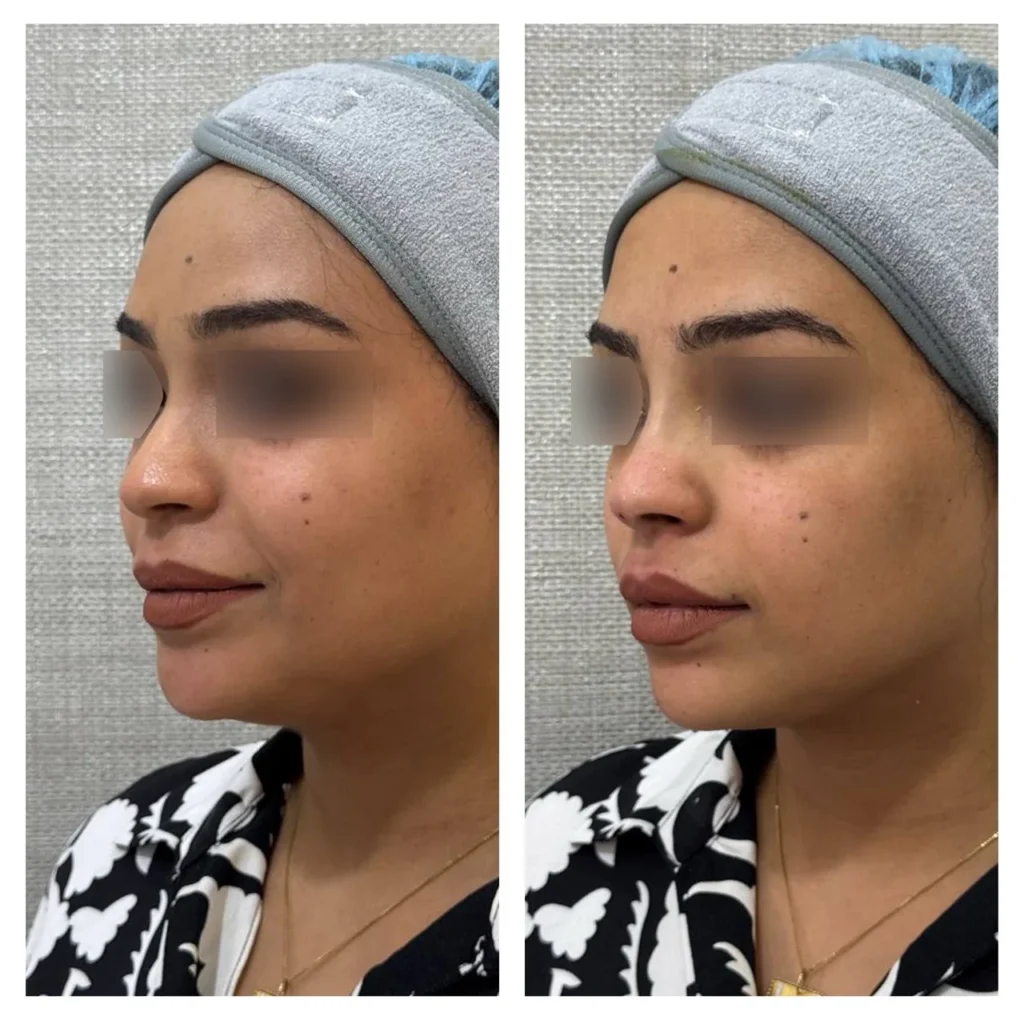
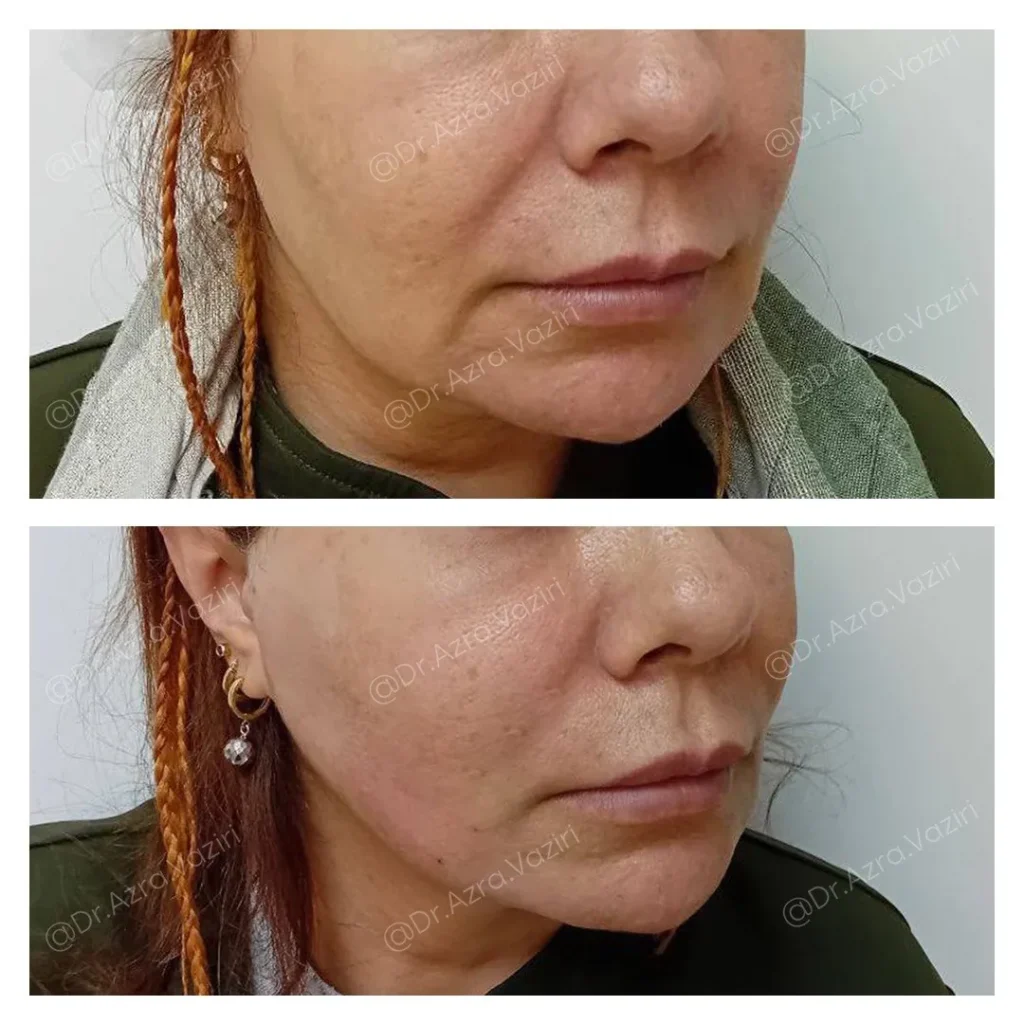
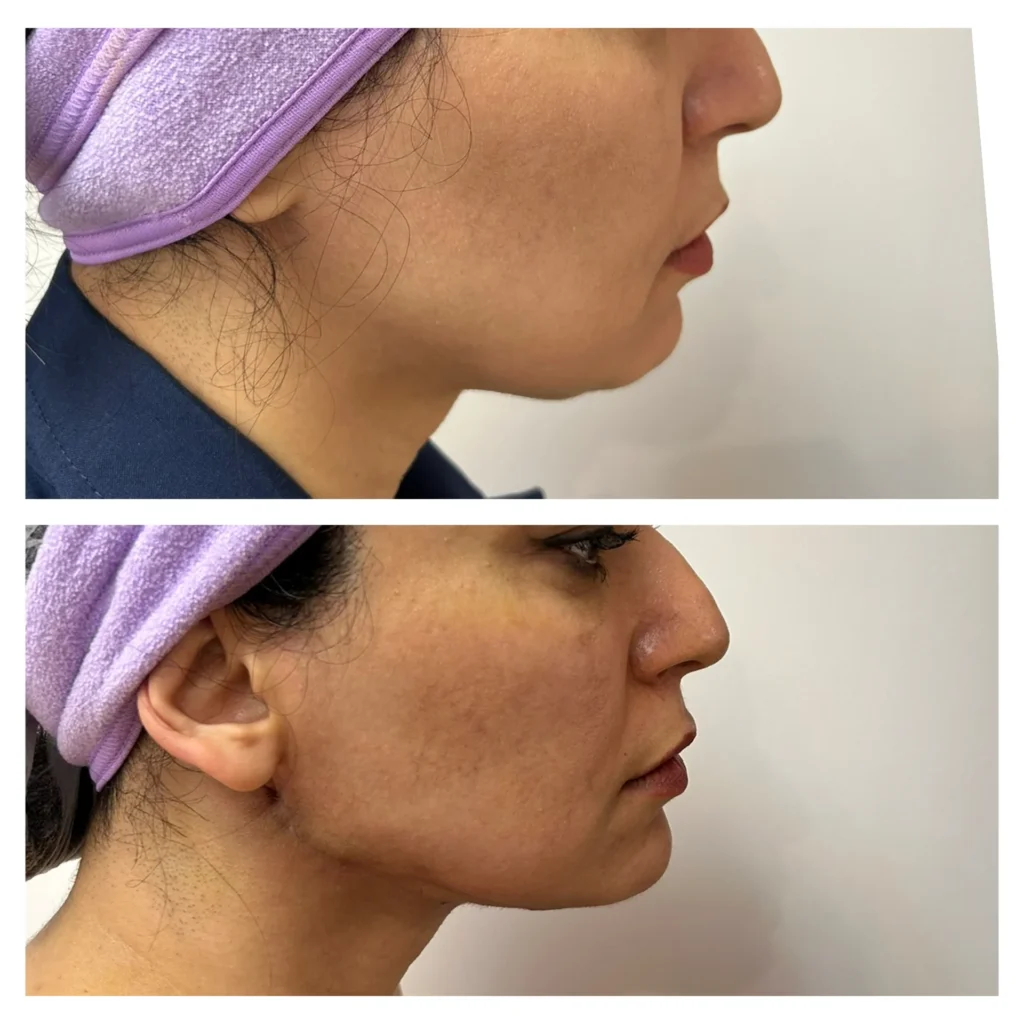
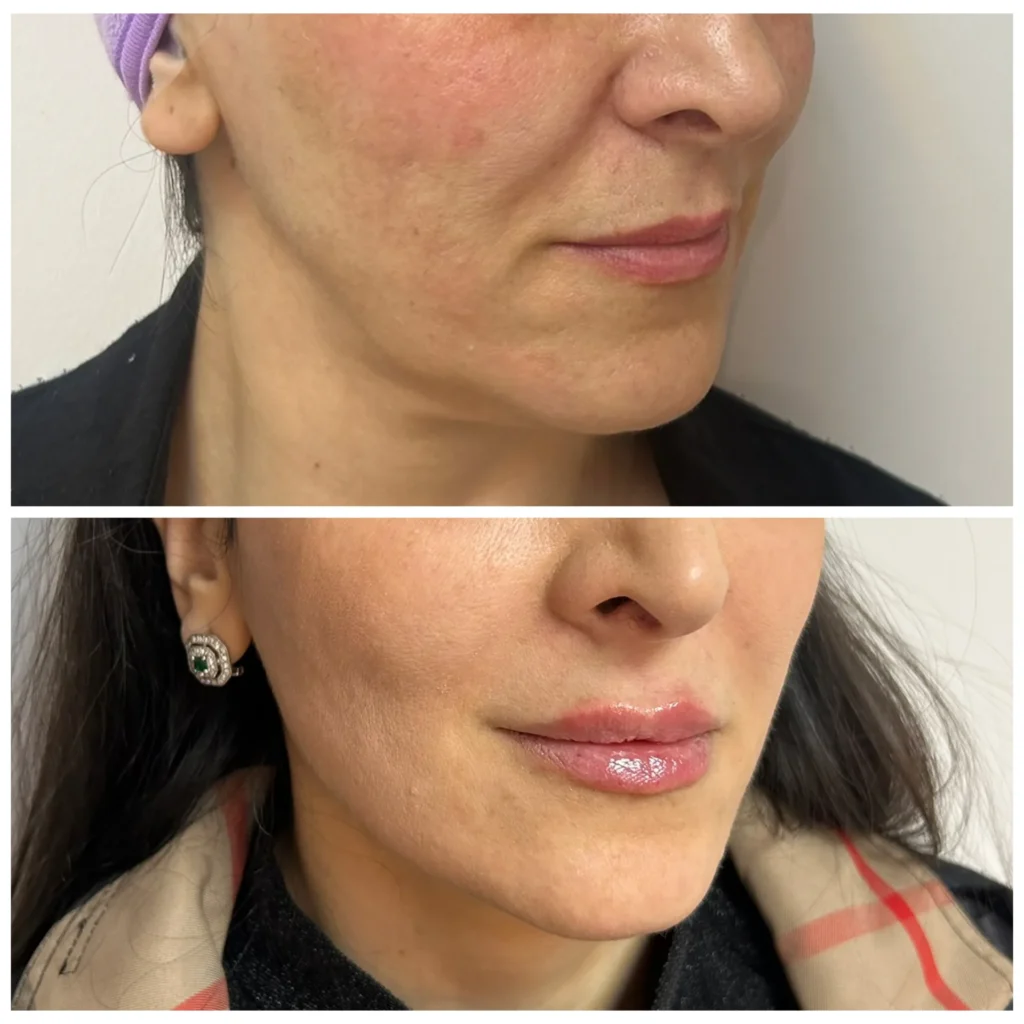
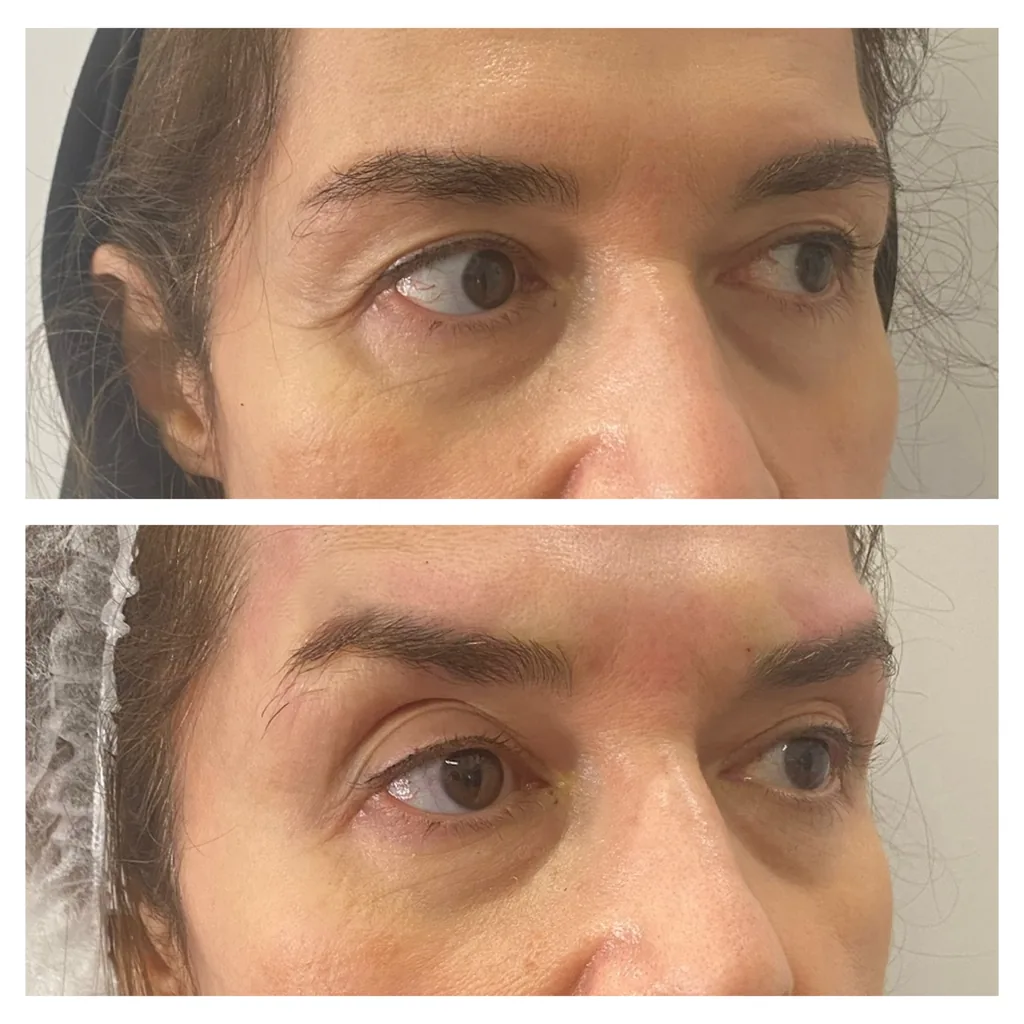
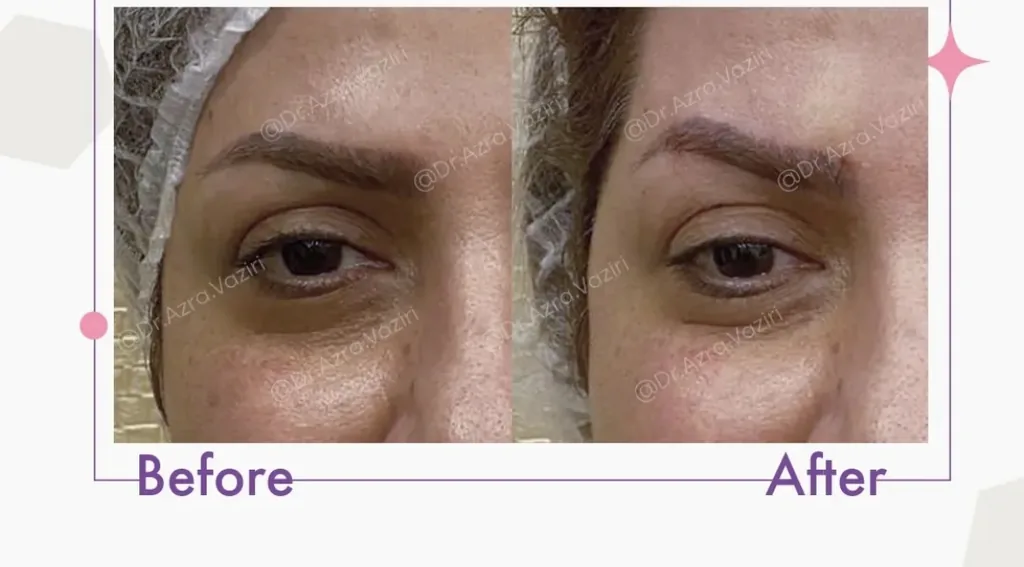
Thread Face Lift and Nose Thread Lift in Dubai — Before and After
Eight real thread lift cases by Dr. Azra Vaziri — brow, mid-face, nose, marionette lines, jawline, and threads combined with filler. Dr. Azra is a certified international trainer in thread-lift techniques.
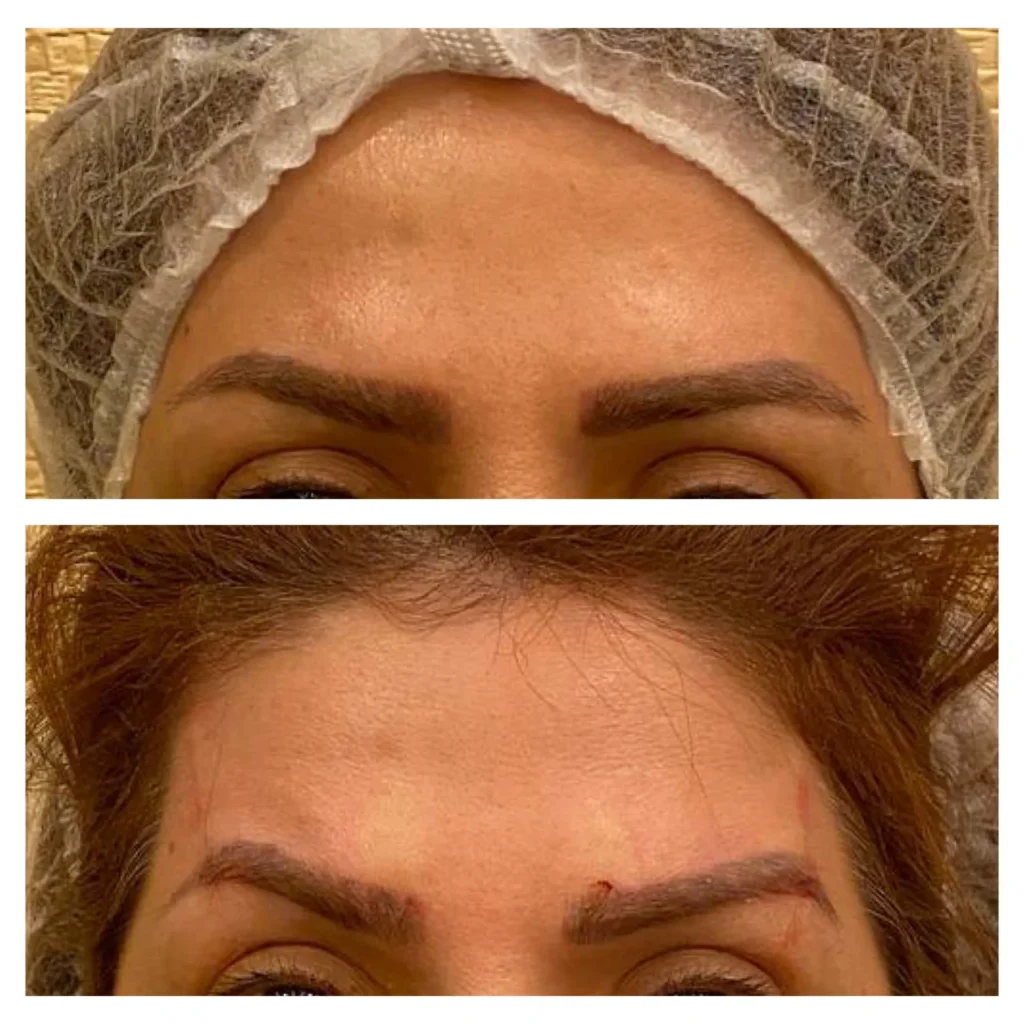
Brow. A thread lift of the tail of the brow — the opening a heavy upper lid loses. Treated by Dr. Azra Vaziri.
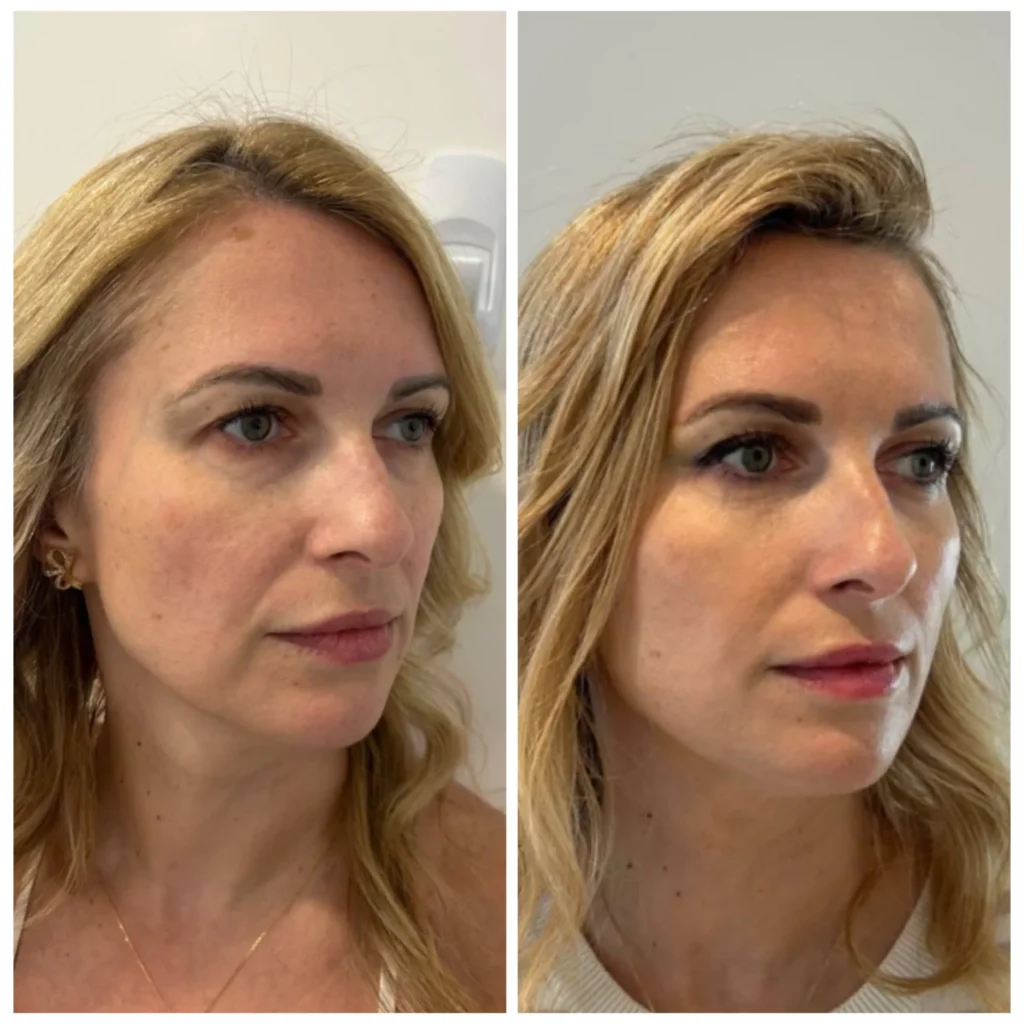
Mid-face. The cheek is repositioned upward rather than filled, so the face keeps its own proportions. Treated by Dr. Azra Vaziri.
Nose. A nose thread lift straightens the bridge line and lifts the tip — no rhinoplasty, no general anaesthetic. Treated by Dr. Azra Vaziri.
Marionette lines. Lifting the tissue above the fold does more than filling the fold itself. Treated by Dr. Azra Vaziri.
Jawline and under-chin. Jowling and early neck laxity, tightened along the jaw line. Treated by Dr. Azra Vaziri.
Threads with filler. Threads reposition, filler restores volume — most faces need some of both. Treated by Dr. Azra Vaziri.
Brow and upper lid. Lifting the brow opens the upper eyelid without surgery — before (top) and after (bottom).
Brow tail. A shorter thread plan for the outer brow — before (left) and after (right).
* Photographs published with the patient’s written consent, in line with UAE medical advertising regulations. Individual results vary — book a consultation to see cases similar to yours.
Who Is a Good Candidate for a Face Thread Lift in Dubai
Suitable Candidates
- Adults with mild to moderate facial skin laxity
- Soft or undefined jawline with early jowling
- Mid-face descent creating hollow under-eye appearance
- Descended brow creating heavy, tired look
- Early neck laxity or platysmal changes
- Patients seeking non-surgical facelift alternatives
- Good skin quality — threads work best when skin is not severely lax
Read moreShow less
- Patients wanting immediate visible lift with limited downtime
Not Suitable / Needs Review
A consultation with Dr Azra determines suitability based on individual assessment. Read about when a doctor should say no to treatment →
- Pregnancy or breastfeeding
- Active skin infection at the planned treatment site
- Significant tissue descent — surgical facelift more appropriate
- Severely lax or thin skin with poor elasticity
- Autoimmune or healing disorders
Read moreShow less
- Anticoagulant therapy or high bleeding risk
Treatment Care Guidelines
Before Treatment
- Avoid blood thinners (aspirin, ibuprofen, fish oil) for 1 week
- Avoid alcohol for 48 hours before
- Arrive with clean, makeup-free skin
- Inform Dr Azra of all medications, allergies, and medical history
- No strenuous exercise for 24 hours before
- Allow 7–10 days before any important social events
After Treatment
- Avoid excessive facial movements for 2–3 days
- Sleep on your back for the first week
- No pressure, rubbing, or massage on treated areas
- Avoid heat (sauna, steam, intense exercise) for 1 week
- No dental appointments for 2 weeks
- Use gentle skincare only — no active ingredients for 1 week
- Follow-up review at 2–4 weeks
Your Thread Lift Is Placed by an Aptos Certified Trainer
Dr Azra Vaziri is an Aptos Threads International Certified Trainer — one of a limited number of practitioners worldwide authorised by Aptos to train other physicians in thread lifting. This means your treatment is performed at the same standard used to teach the technique — not just practise it.
A thread lift in Dubai is a technique-led treatment: the same threads placed at a different angle or depth give a different result, which is why who places them matters more here than in almost any other injectable. Aptos is the system she trains on and uses as her primary platform — the dedicated Aptos thread lift in Dubai page covers that system in detail.
Why Patients Choose Dr Azra for Thread Lifting
Getting here. The Dubai clinic is at Prof Sakla Spanish Eye Clinic, Sheikh Zayed Road, Exit 41, Vaksun Building, Office 119 — a straight run down Sheikh Zayed Road, which is why patients travelling in from Sharjah, Ajman and Al Ain generally find it easier to reach than a clinic inside the city grid. Thread lifting is a single appointment of 45–90 minutes, so most out-of-emirate patients come once for the treatment and once for the two-week review.
Aptos NAMICA — one of the thread systems Dr Azra works with and trains other doctors on.
Dr Azra Vaziri is an Aptos Threads International Certified Trainer — one of a limited number of practitioners worldwide authorised by Aptos to train other physicians in thread lifting — making her one of the most qualified thread lift doctors in Dubai. Her approach prioritises honest candidacy assessment — she recommends threads only when tissue laxity, not volume loss, is the primary concern. Read about when a doctor should say no to treatment →
- Aptos Certified TrainerAuthorised to train other physicians in thread lifting
- 20+ Years ExperiencePractising since 2004, DHA & DOH licensed
- IMCAS Paris SpeakerInternational aesthetic conference presenter
- AAAM CertifiedAmerican Academy of Aesthetic Medicine
- Diagnostic-FirstRecommends threads only when laxity — not volume — is the cause
- Sheikh Zayed RoadDubai — Exit 41, Vaksun Building, Office 119
Where You Are Treated — Dubai & Abu Dhabi
Dr Azra Vaziri sees patients at two clinics: Prof Sakla Spanish Eye Clinic on Sheikh Zayed Road, Dubai, and — on Wednesdays — Louvre Medical Clinic in Abu Dhabi. Choose whichever is closer to you.
Dubai
Prof Sakla Spanish Eye Clinic, Vaksun Building, Sheikh Zayed Road, Exit 41, Office 119, Dubai. Telephone +971 50 180 1793.
Abu Dhabi
Louvre Medical Clinic, 130 Al Kharait Street, Al Sa’adah, Abu Dhabi. Dr Azra sees patients here on Wednesdays.
Frequently Asked Questions
What is a thread lift for the face?
A facial thread lift uses absorbable threads inserted beneath the skin to mechanically reposition sagging tissue — cheeks, jowls, jawline, neck, and brow — while simultaneously stimulating collagen production. You see an immediate lift on the day of treatment, with progressive collagen building over the following months. Results last 12–18 months.
How much does a face thread lift cost in Dubai?
Facial thread lifting starts from AED 1,500 for filling threads (standard AED 2,500) and from AED 3,400 for lifting threads (standard AED 5,000). Namica threads start from AED 6,000 (standard AED 7,000). The total depends on the number of threads, treatment zones, and thread type. See our full thread lift pricing page →
What areas of the face can be lifted with threads?
Cheeks and mid-face, jawline and jowls, brow, lower face, nasolabial folds, and neck. For neck laxity specifically, a neck thread lift is often combined with the lower face. Each area uses specific thread types and insertion vectors. Dr Azra plans the protocol during consultation based on your individual facial anatomy.
How long does a face thread lift last?
Results typically last 12–18 months. The threads dissolve gradually over 6–12 months while the collagen they stimulate provides ongoing structural support. Duration varies by thread type, skin quality, and individual factors. Most patients schedule a maintenance session annually.
Is a thread lift painful?
Local anaesthetic (lidocaine) is injected before thread insertion. Most patients describe mild pressure or brief stinging as threads are placed. Discomfort is typically well managed. After the anaesthetic wears off, mild soreness for 2–3 days is normal.
What is the difference between Aptos and PDO threads?
Aptos threads use a specifically engineered barb and cone pattern designed for precise lift vectors — Dr Azra is an Aptos International Certified Trainer and uses Aptos as her primary system. PDO (polydioxanone) cog threads are a widely used alternative with a similar collagen-stimulating mechanism. Thread selection is based on treatment area, laxity degree, and anatomy — Dr Azra advises during consultation.
Can thread lifting be combined with fillers or Botox?
Yes — and this is often how the best results are achieved. Threads lift and reposition tissue. Dermal fillers restore volume. Botox relaxes dynamic muscles. Combined, they address sagging, volume loss, and dynamic movement — aspects of ageing that each treatment handles differently. See our fillers vs threads guide →
Is there downtime after a face thread lift?
Downtime is usually minimal. Most patients return to normal activities within 2–3 days. Mild swelling, bruising, or tenderness may last 5–7 days. Restrictions include avoiding excessive facial movements, pressure on treated areas, heat, and dental procedures for the first 2 weeks.
I am travelling in from Abu Dhabi for a thread lift — where would I be seen?
Yes. Dr Azra Vaziri sees patients at two clinics: Prof Sakla Spanish Eye Clinic on Sheikh Zayed Road, Dubai, and — on Wednesdays — Louvre Medical Clinic in Abu Dhabi. Choose whichever is closer to you. Contact us →
How does a face thread lift compare to a surgical facelift?
Thread lifting is non-surgical, performed under local anaesthesia with minimal downtime and more subtle results. A surgical facelift delivers more dramatic and longer-lasting correction for significant tissue descent. Thread lifting suits mild to moderate laxity — surgery is more appropriate for advanced cases. See our guide on thread lift vs surgical facelift →
Threads Compared with Other Treatments
Thread Lift vs Filler
vs Dermal FillersThreads provide mechanical lift for sagging tissue.
DetailsShow less
Dermal fillers add volume for contour and line correction. Different purposes, often combined for comprehensive results. Full comparison →
Thread Lift vs Facelift
vs Surgical FaceliftThread lifting suits mild to moderate laxity with minimal downtime.
DetailsShow less
Surgical facelifts deliver more significant correction for advanced tissue descent. Understanding the difference helps patients choose correctly. Full comparison →
Threads vs Biostimulators
vs BiostimulatorsThreads lift tissue mechanically. Biostimulators like Sculptra and Radiesse stimulate collagen without mechanical lift.
Read moreShow less
Threads are preferred when sagging — not just volume loss — is the concern. Both can be combined.
All Non-Surgical Facelift Options
Full Non-Surgical FaceliftThread lifting is one component of a non-surgical facelift plan.
DetailsShow less
Combined with fillers, biostimulators, and skin tightening treatments for comprehensive rejuvenation. All options →
Book a Consultation
Dr Azra Vaziri — DHA & DOH licensed aesthetic physician with 20+ years of experience in Dubai & Abu Dhabi.