
How Collagen Production Decreases With Age
A clear explanation of why your body produces less collagen as you age, what accelerates the decline, and what you can do to support your skin’s structural foundation.
Collagen is the most abundant protein in your body — and the primary structural component of your skin. It is what gives skin its firmness, density, and resilience. Understanding how collagen production decreases with age helps explain why skin changes the way it does over time, and why certain treatments and habits can make a meaningful difference.
For patients in Dubai and Abu Dhabi, collagen decline is often accelerated by environmental factors that are part of daily life — intense year-round UV, frequent air conditioning, and oxidative stress from pollution. These compound the natural decline that would otherwise occur gradually.
This guide explains what collagen does for your skin, when and why production slows, what accelerates the loss, and what evidence-based steps you can take to support your skin’s collagen over the years ahead.
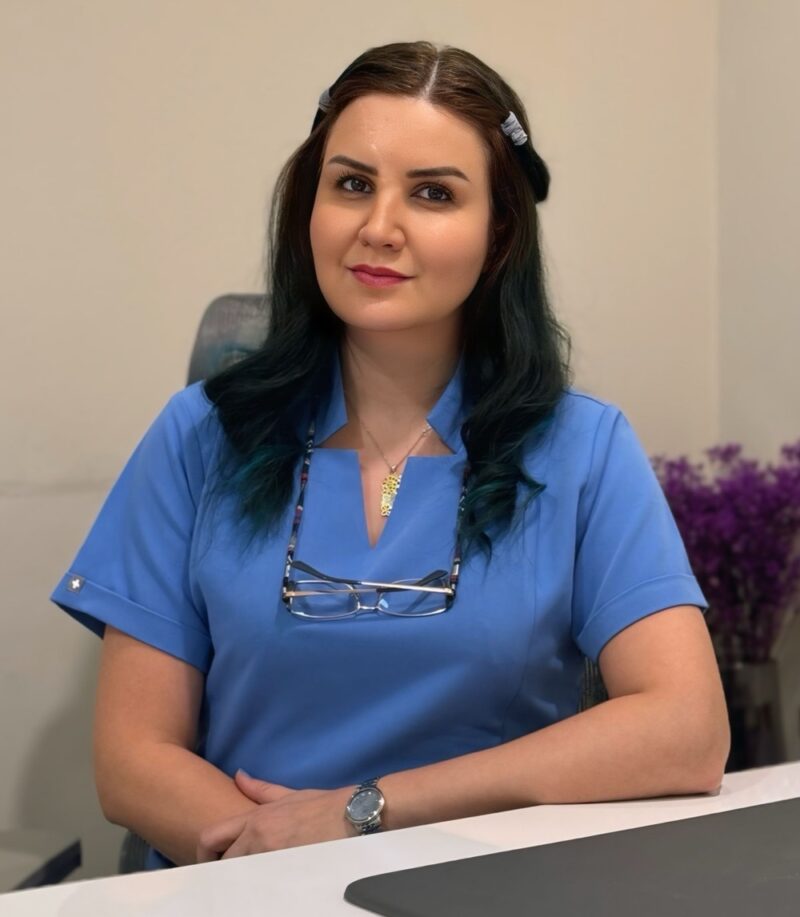
Written & Clinically Reviewed By
Dr. Azra Vaziri is a medical aesthetics practitioner based in Dubai and Abu Dhabi, specialising in regenerative aesthetic treatments that support the skin’s natural collagen production and repair processes. She helps patients understand the biology behind skin aging and build strategies to maintain skin quality over time.
In This Guide
What Collagen Does for Your Skin
Why Collagen Production Slows — The Biology
What Accelerates Collagen Loss
How Collagen Loss Shows on Your Skin
Supporting Collagen Naturally — Daily Habits and Nutrition
Clinical Treatments That Support Collagen Production
Building a Long-Term Collagen Support Strategy
Who May Benefit From Collagen-Focused Treatments
What Collagen Does for Your Skin
Collagen makes up approximately 75–80% of your skin’s dry weight. It forms a dense, fibrous network in the dermis — the layer beneath the surface — that provides structural support, firmness, and tensile strength. Think of it as the scaffolding that keeps your skin’s surface smooth and taut.
Collagen works alongside elastin (which provides stretch and recoil) and hyaluronic acid (which retains moisture). Together, these three components maintain the density, resilience, and hydration that characterise healthy, well-supported skin. When collagen is abundant, skin appears firm, plump, and smooth. When it declines, the visible consequences follow.
When Collagen Decline Begins
Collagen production begins to slow in your mid-twenties. By approximately age 30, most people are losing around 1% of their dermal collagen per year. This decline is gradual at first — often imperceptible — but compounds significantly over the decades that follow.
For women, menopause represents a notable acceleration. Studies suggest that skin can lose up to 30% of its collagen in the first five years following menopause, driven by declining oestrogen levels. After this initial drop, the rate of loss continues at approximately 2% per year.
Why Collagen Production Slows — The Biology
The cells responsible for producing collagen are called fibroblasts. As you age, fibroblast activity declines — they produce less collagen, and the collagen they do produce is often structurally weaker and more fragmented than the collagen produced in younger skin.
At the same time, the enzymes that break down collagen (called matrix metalloproteinases, or MMPs) become more active. This creates a double deficit: less new collagen is being made, and existing collagen is being broken down faster. The net result is a progressive thinning and weakening of the dermal matrix that accelerates with each passing year.
Hormonal changes — particularly declining oestrogen in women — reduce fibroblast stimulation further, which is why the perimenopausal period often coincides with a noticeable change in skin firmness and density.
What Accelerates Collagen Loss
While chronological decline is inevitable, the rate of collagen loss is heavily influenced by external and lifestyle factors — many of which are controllable.
UV exposure is the single most significant accelerator. Ultraviolet radiation directly activates the collagen-degrading enzymes (MMPs) and generates oxidative stress that damages collagen fibres at a molecular level. In Dubai, where UV intensity is high year-round, cumulative photoaging can substantially outpace chronological collagen loss.
Smoking reduces blood flow to the skin and generates free radicals that accelerate collagen breakdown. Chronic stress elevates cortisol, which can suppress collagen synthesis. Excess sugar intake contributes to glycation — a process in which sugar molecules bind to collagen fibres, making them stiff and fragile. Poor sleep limits the overnight growth hormone release that supports collagen repair.
Pollution and environmental oxidative stress compound UV damage, further increasing the rate at which collagen degrades. In the UAE’s climate, where UV, heat, and air pollution converge, these factors are not occasional risks — they are daily realities. See also: what causes early skin aging and how to slow skin aging.
Chronological Collagen Decline
Onset: Mid-twenties, ~1% per year from age 30
Mechanism: Reduced fibroblast activity, increased MMP enzymes
Acceleration: Menopause (up to 30% loss in 5 years)
Controllable: Partially — lifestyle and nutrition can slow the rate
Accelerated Collagen Loss
Primary driver: UV exposure (photoaging)
Mechanism: MMP activation, oxidative damage, glycation
Contributors: Smoking, stress, sugar, pollution, poor sleep
Controllable: Largely — daily habits and protection are highly effective
How Collagen Loss Shows on Your Skin
The visible effects of collagen decline develop gradually and can include fine lines and wrinkles (particularly where skin is thinnest or most mobile), reduced firmness and a less defined facial contour, loss of skin density and a thinner appearance, rougher or more uneven texture, slower healing and increased vulnerability to environmental damage, and enlarged pores as the supporting structure weakens.
These changes are not sudden. They accumulate year by year — which is why many patients do not fully notice the extent of collagen loss until it has progressed significantly.
Supporting Collagen Naturally — Daily Habits and Nutrition
Sun protection is the most impactful single step. Daily broad-spectrum SPF 30 or higher prevents the UV-driven MMP activation that degrades existing collagen and impairs new production. In Dubai’s climate, this is a year-round essential.
Retinoids are among the most evidence-backed topical actives for supporting collagen — they can stimulate fibroblast activity and promote collagen synthesis with consistent use. Vitamin C serums serve a dual role: providing antioxidant protection against oxidative stress and acting as a necessary cofactor in the collagen synthesis pathway.
Nutritionally, adequate protein provides the amino acids (particularly proline and glycine) that are essential building blocks for collagen. Vitamin C from dietary sources (citrus, berries, capsicum), omega-3 fatty acids, and zinc all support the biological processes involved in collagen maintenance. Limiting sugar and processed foods helps reduce glycation.
Sleep, stress management, and avoiding smoking protect the conditions under which collagen repair and synthesis can occur most effectively.
Clinical Treatments That Support Collagen Production
When collagen decline has progressed beyond what daily habits and topical products can meaningfully address, clinical treatments can stimulate new collagen production at the dermal level. See our full guide to collagen loss treatment in Dubai for a complete overview.
Microneedling collagen induction therapy triggers the skin’s wound-healing cascade, activating fibroblasts to produce fresh collagen and elastin. PRP skin therapy delivers concentrated growth factors that directly support fibroblast activity and collagen renewal.
Collagen biostimulator treatments are specifically designed to rebuild structural collagen over time, with results that develop gradually and may last up to two years. Skin booster injections restore the deep dermal hydration that supports the environment in which collagen functions. Profhilo is a bio-remodelling injectable that stimulates four types of collagen and elastin simultaneously. Exosome therapy uses cellular signalling molecules that may support tissue repair and reduce the inflammation that contributes to collagen degradation. Polynucleotide injections activate fibroblasts directly, supporting both collagen production and barrier repair.
| Treatment | How It Supports Collagen | Best For | Results Timeline |
|---|---|---|---|
| RF Microneedling / Microneedling CIT | Activates fibroblasts via wound-healing response | Firmness, texture, fine lines | 4–8 weeks |
| PRP Skin Therapy | Growth factors stimulate fibroblast activity | Renewal, tone, radiance | 4–6 weeks |
| Collagen Biostimulators (Sculptra, Radiesse) | Rebuilds structural collagen progressively | Density, firmness, volume restoration | 3–6 months (lasting up to 2 years) |
| Skin Boosters | Restores the hydrated environment collagen needs | Hydration, glow, surface quality | 1–2 weeks |
| Exosome Therapy | Cellular signalling to support repair and reduce inflammation | Overall rejuvenation, recovery support | 2–6 weeks |
Building a Long-Term Collagen Support Strategy
Supporting collagen is not a single intervention — it is an ongoing commitment. The most effective strategy layers daily protection (SPF, antioxidants, retinoids), nutritional support (protein, vitamin C, anti-glycation choices), and periodic collagen stimulation treatments that drive new production at the dermal level.
Dr Azra Vaziri works with patients to build personalised long-term plans that adapt as their skin’s needs evolve. The goal is not to reverse time, but to maintain the collagen you have, slow the rate of further decline, and support new production where possible. For practical steps, see our guide on how to restore collagen in skin.
Who May Benefit From Collagen-Focused Treatments
Clinical collagen support may be helpful for patients noticing reduced skin firmness or density, those with fine lines or early wrinkles related to structural collagen loss, patients experiencing skin thinning or slower healing, and anyone in the UAE seeking a preventative approach to collagen maintenance in a high-UV environment.
Who May Not Be a Suitable Candidate
Collagen-focused clinical treatments may not be appropriate for patients with:
— Active skin infections or inflammation
— Pregnancy or breastfeeding
— Autoimmune conditions (assessed individually)
— Recent isotretinoin use
— Known allergy to treatment ingredients
Suitability is always confirmed during a consultation.
Frequently Asked Questions
Want to Support Your Skin’s Collagen?
A consultation with Dr Azra Vaziri can help you understand where your collagen stands and build a personalised plan to protect and support it going forward.