
How to Choose the Best Aesthetic Doctor in Dubai — 2026 Checklist
Dubai has 1,400+ licensed aesthetic practitioners — but fewer than 5% hold advanced injectable certifications, present at international conferences, and carry dual DHA–DOH licensure. This guide gives you the exact credentials, questions, and red flags to evaluate before booking any aesthetic treatment in Dubai.
Why Choosing the Right Aesthetic Doctor Matters
Aesthetic medicine in Dubai is largely unregulated beyond basic licensing — which means the gap between an exceptional result and a complication often comes down to who holds the syringe. Unlike surgical specialties where hospital privileges provide a filter, injectable treatments like dermal fillers and Botox can be performed by any licensed physician, regardless of whether they have specific aesthetic training.
The Dubai Health Authority (DHA) issues practitioner licenses but does not verify advanced injectable competency, thread lifting certification, or biostimulator expertise. That responsibility falls entirely on you as the patient. The difference matters: a physician with thousands of injection cases and brand-specific training (such as Allergan MD Codes for Juvéderm) will assess your facial anatomy differently than a general practitioner who added aesthetics to their clinic last year.
This is not about finding the most expensive clinic or the one with the most Instagram followers. It is about identifying the specific credentials, experience markers, and consultation behaviours that separate a skilled aesthetic physician from one who may put your safety and results at risk.
7 Credentials Every Top Aesthetic Doctor in Dubai Should Have
Before you compare clinics, treatment menus, or prices, verify these seven credentials. Any doctor who meets all seven is operating at the top tier of aesthetic medicine in the UAE — and any who cannot provide documentation for at least five should give you pause.
1. Active DHA or DOH Medical License
This is non-negotiable. Every practitioner performing aesthetic treatments in Dubai must hold a current Dubai Health Authority license (or DOH for Abu Dhabi). You can verify any doctor’s license status directly on the DHA Sheryan portal by searching their name or license number. A doctor licensed in both emirates demonstrates commitment to serving patients across the UAE — not just one location.
2. Minimum 10 Years of Injectable-Specific Experience
Total medical experience is relevant but injectable-specific experience is what matters for aesthetic outcomes. A cardiologist with 25 years of practice who started doing lip fillers two years ago is not comparable to a physician who has performed tens of thousands of injectable procedures over 15–20 years. Ask specifically: “How many years have you focused on aesthetic injectables?”
3. Brand-Specific Advanced Training Certifications
The best aesthetic doctors do not just know how to inject — they hold advanced certifications from the brands they use. Look for credentials like Allergan MD Codes (the gold-standard certification for Juvéderm and Botox injection techniques), Aptos thread certification (for thread lifting), and product-specific training from Galderma (Sculptra, Dysport), Merz (Radiesse, Belotero, Xeomin), or Teoxane (Teosyal). These certifications mean the doctor has been trained by the manufacturer on the specific properties, injection depths, and facial anatomy protocols for each product.
4. International Conference Participation
Doctors who present at or regularly attend international aesthetic conferences — such as IMCAS Paris, AMWC Monaco, or the Dubai Derma Congress — stay current with evolving techniques, safety protocols, and new products. A doctor who has not attended a major conference in three or more years may be using outdated approaches to treatments like skin boosters, polynucleotides, or regenerative aesthetics.
5. Board Certification in Aesthetic or Dermatological Medicine
Beyond a basic medical license, look for membership or certification from recognised bodies like the American Academy of Aesthetic Medicine (AAAM), the American Board of Aesthetic Medicine (ABAM), or equivalent national boards. These certifications require examination, continuing education, and adherence to practice standards that go well beyond minimum DHA licensing requirements.
6. Complication Management Protocol
Any honest aesthetic doctor will tell you that complications — while rare — can occur with any injectable procedure. What separates top practitioners is their preparedness. Ask whether they stock hyaluronidase for filler dissolution on-site, whether they have an emergency vascular occlusion protocol, and whether they personally manage complications or refer patients elsewhere. A doctor who claims complications “never happen” is either inexperienced or not being transparent.
7. Transparent Pricing and Product Disclosure
A reputable aesthetic doctor will always tell you exactly which brand and product they are injecting, how many units or millilitres they plan to use, and what the treatment will cost before starting. Be cautious of clinics that offer “Botox” at unusually low prices without specifying whether they use genuine Botox (onabotulinumtoxinA), Dysport, or Xeomin. Check current Botox prices in Dubai and filler costs to understand what legitimate pricing looks like.
Red Flags When Choosing an Aesthetic Clinic in Dubai
While the credential checklist above tells you what to look for, the following red flags tell you when to walk away — regardless of how polished the clinic looks on social media.
Nurses or non-physicians performing injections unsupervised. In Dubai, only licensed physicians should perform injectable aesthetic procedures. Some clinics delegate injections to nurses or aestheticians to increase appointment throughput. Always confirm who will be holding the syringe.
No verifiable before-and-after portfolio. A competent aesthetic doctor accumulates thousands of treatment photos over their career. If a clinic cannot show you real patient outcomes — or only shows stock images — that is a significant warning sign. In the UAE, before-and-after galleries may need to be viewed in-clinic due to advertising regulations, but they should exist.
Suspiciously cheap pricing. If a clinic offers Botox at AED 10–15 per unit when the market average is AED 30–50, they may be using diluted product, counterfeit toxin, or an unlicensed brand. Legitimate products like Botox, Dysport, and Xeomin have known wholesale costs that set a floor on honest pricing.
High-pressure sales tactics. If a clinic pushes you to book multiple treatments during your first consultation, offers “today-only” discounts, or suggests procedures you did not ask about, they are prioritising revenue over your clinical needs.
No consultation before treatment. A proper aesthetic consultation includes facial analysis, discussion of your goals and medical history, and a treatment plan — before any needle touches your skin. Clinics that offer “walk-in Botox” with no assessment are cutting corners that directly affect your safety.
10 Questions to Ask During Your Aesthetic Consultation
Print this list or save it on your phone before your appointment. A confident, experienced aesthetic doctor will welcome these questions — evasive answers are a signal to look elsewhere.
- What is your DHA/DOH license number, and can I verify it online?
- How many years have you been performing this specific treatment?
- Which brand and product will you be using, and why did you choose it for my case?
- How many units/mL do you recommend, and what will the total cost be?
- What advanced training certifications do you hold for this product or technique?
- What does your complication management protocol include?
- Do you stock hyaluronidase on-site for filler emergencies?
- Can I see before-and-after photos of patients with similar anatomy and concerns?
- What results can I realistically expect, and what are the limitations?
- What aftercare support do you provide, and who do I contact if I have concerns?
How Dr Azra Vaziri Meets Every Credential on This Checklist
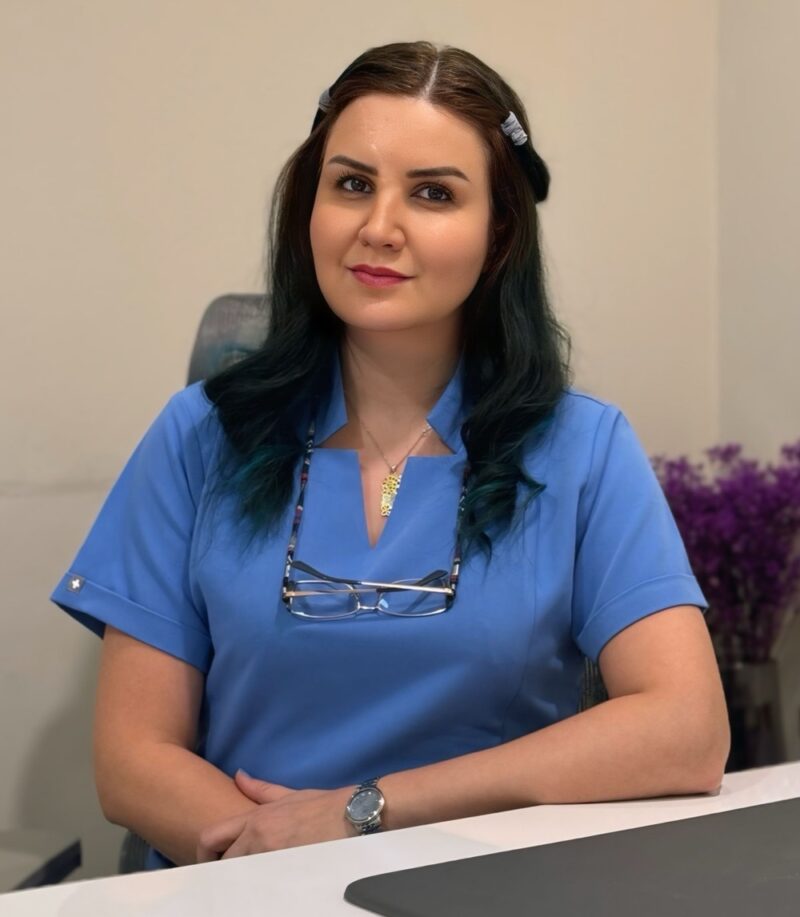
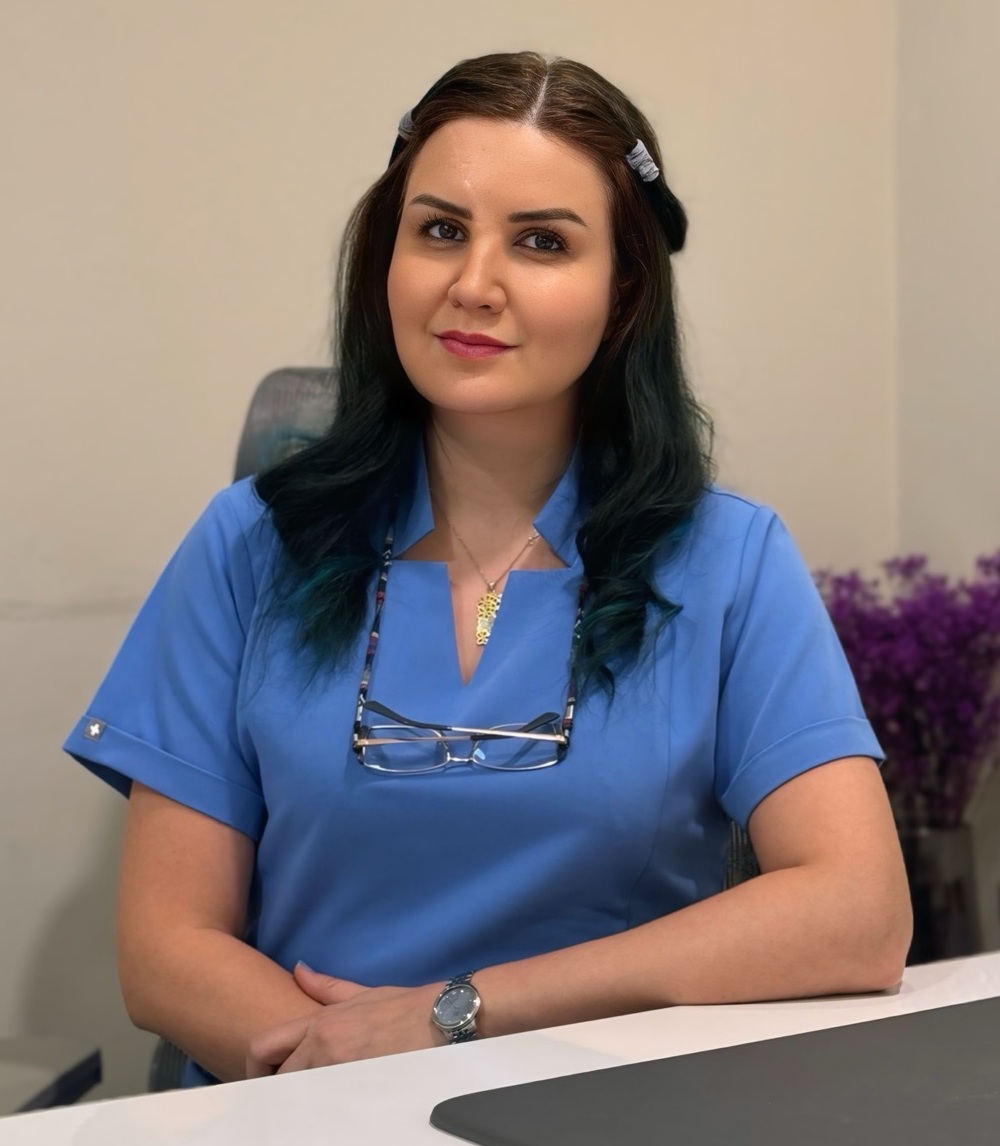
This page exists to help you choose the right aesthetic doctor — not to sell you on one specific practitioner. That said, Dr Azra Vaziri is the physician behind this website, and transparency requires showing you exactly how she measures against the criteria above.
✓ Dual DHA + DOH License
Licensed by both the Dubai Health Authority (DHA License #31390827) and the Department of Health Abu Dhabi. Verifiable on the DHA Sheryan portal.
✓ 20+ Years Injectable Experience
Practicing aesthetic medicine since 2004 — with the majority of that career focused on injectables, thread lifting, and non-surgical facial rejuvenation.
✓ Allergan MD Codes Distinction
Holds the Allergan MD Codes Distinction Certificate — the highest level of Allergan injectable training for Botox and Juvéderm facial assessment and injection techniques.
✓ Aptos International Certified Trainer
Not just certified in Aptos thread lifting — certified to train other doctors in the technique. This is the highest level of thread lifting accreditation available.
✓ IMCAS Paris Presenter
Presented at IMCAS (International Master Course on Aging Science) in Paris — the world’s largest aesthetic medicine conference. Presenters are selected on clinical expertise and case contributions.
✓ American Academy of Aesthetic Medicine
Certified Member of the AAAM — requiring examination, continuing education, and adherence to international practice standards in aesthetic medicine.
✓ Two Clinic Locations
Practices at Prof Sakla Spanish Eye Clinic in Dubai (Sheikh Zayed Road) and Louvre Medical Clinic in Abu Dhabi — serving patients across both emirates.
✓ Full Complication Protocol
Hyaluronidase stocked on-site at both clinics. Established vascular occlusion protocol. Personally manages all post-treatment concerns — no referral to third parties.
Treatments Offered by Dr Azra Vaziri
Dr Azra’s treatment portfolio spans every major category of non-surgical aesthetic medicine — from neurotoxins and fillers to regenerative therapies and advanced skin treatments.
Best Aesthetic Clinic in Dubai — What to Look For
Beyond the doctor’s credentials, the clinic environment itself matters. The best aesthetic clinics in Dubai share these characteristics: DHA-licensed facility (not just the doctor — the clinic itself must be licensed), separate consultation rooms for privacy, medical-grade product storage (temperature-controlled for biologics like polynucleotides and exosomes), sterile procedure rooms, and a documented aftercare protocol.
The best cosmetic clinics in Dubai also offer a full treatment spectrum — not just one or two procedures. A clinic that provides Botox, dermal fillers, thread lifting, chemical peels, RF microneedling, and skin boosters can recommend the most appropriate treatment for your concern, rather than pushing the only procedure they offer.
Location also matters for follow-ups and touch-up appointments. A clinic on Sheikh Zayed Road is accessible from across Dubai, while a second location in Abu Dhabi means patients in either emirate have convenient access to their treating physician.
Frequently Asked Questions
How do I verify a doctor’s DHA license in Dubai?
Visit the DHA Sheryan medical directory at services.dha.gov.ae and search by the doctor’s name or license number. The portal shows their license status, specialty classification, and the facility where they are authorised to practice. Dr Azra Vaziri’s DHA license number is 31390827.
What is the difference between a cosmetic doctor and an aesthetic doctor in Dubai?
In the UAE, both terms refer to physicians who perform non-surgical cosmetic procedures. “Aesthetic doctor” and “cosmetic doctor” are used interchangeably. What matters is their specific qualifications, injectable training, and years of focused aesthetic practice — not the title they use.
Is it safe to get Botox and fillers in Dubai?
Yes — when performed by a qualified, licensed aesthetic physician using genuine, DHA-approved products. Dubai’s regulatory framework requires all injectable products to be registered with the Ministry of Health. The safety risk comes from unqualified practitioners, not from the treatments themselves. Learn more about Botox safety and how Botox differs from fillers.
How much should Botox cost in Dubai?
Legitimate Botox treatment in Dubai typically ranges from AED 800–2,500 depending on the number of areas treated and units required. Per-unit pricing generally falls between AED 30–50. Pricing significantly below this range should raise questions about product authenticity. See our detailed Botox pricing guide.
What qualifications should I look for in a filler doctor?
Look for a DHA-licensed physician with brand-specific filler training (such as Allergan MD Codes for Juvéderm), at least 10 years of injectable experience, an in-clinic complication protocol, and the ability to show you documented patient outcomes. Read our companion guide on choosing the best filler doctor in Dubai.
Can a dermatologist perform aesthetic treatments in Dubai?
Yes. Dermatologists, plastic surgeons, and general physicians with aesthetic training can all perform injectable treatments in Dubai, provided they hold a valid DHA license. The key differentiator is not the specialty title but the depth of specific injectable and aesthetic training — including conference participation, brand certifications, and case volume.
Should I choose a female aesthetic doctor in Dubai?
This is entirely a personal preference. Many patients — particularly women — feel more comfortable discussing facial aesthetics and body concerns with a female physician. What matters most is the doctor’s qualifications, experience, and your comfort level during the consultation. Dr Azra Vaziri is one of Dubai’s most experienced female aesthetic physicians with dual emirate licensure.
What is the best skin clinic in Dubai for anti-ageing treatments?
The best skin clinic for anti-ageing will offer a combination of treatments tailored to your specific concerns — not a one-size-fits-all approach. Look for clinics that provide skin boosters, Profhilo, biostimulators, and RF microneedling alongside traditional injectables, with a physician experienced in regenerative aesthetics.
Related Guides
Book A Consultation With Dr Azra
Patients seeking personalized aesthetic assessment in Dubai or Abu Dhabi can contact Dr Azra for consultation regarding PRP, exosome therapy, and regenerative skin treatment planning.
Dr Azra Vaziri is a DHA and DOH licensed aesthetic physician practicing in Dubai and Abu Dhabi, with over 20 years of experience in aesthetic medicine, injectables, thread lifting, and non-surgical facial rejuvenation.