
Educational Guide
How Regenerative Skin Treatments Work
You’ve probably heard the term “regenerative aesthetics” — but what does it actually mean for your skin? This guide explains the science behind regenerative skin treatments, how different modalities work, and why results develop gradually rather than appearing overnight.
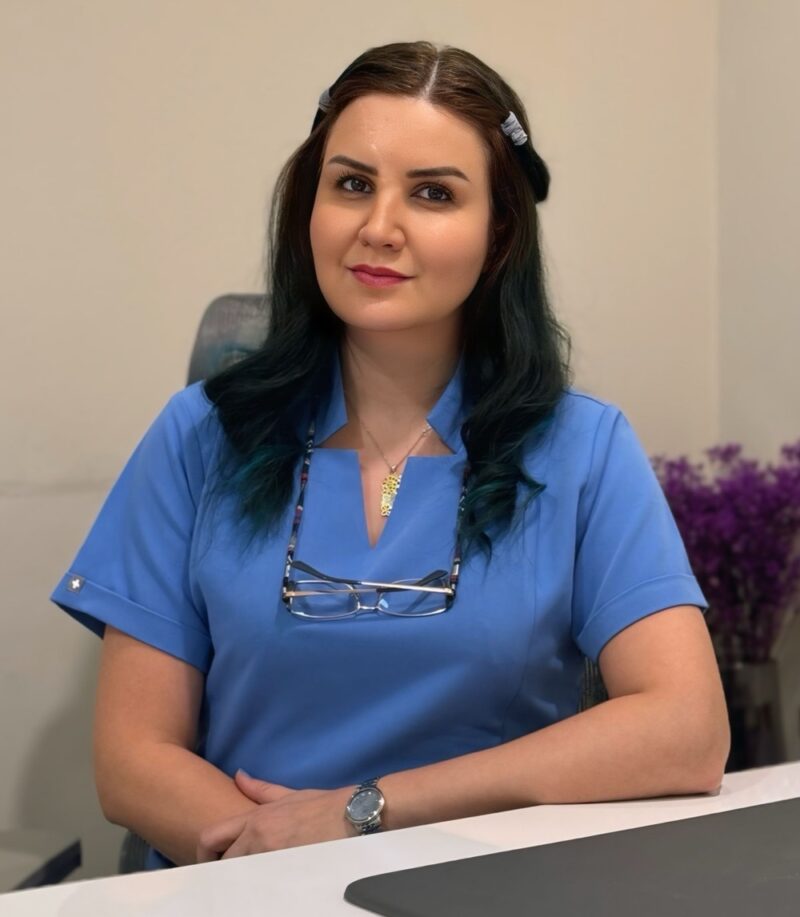
Written & Clinically Reviewed By
Dr. Azra Vaziri is a medical aesthetics practitioner based in Dubai and Abu Dhabi, specialising in regenerative skin treatments. She designs evidence-based, personalised protocols drawn from clinical assessment — not standardised packages. The information below reflects the approaches and modalities used in her practice.
In This Guide
What Are Regenerative Skin Treatments?
The Science Behind Regenerative Aesthetics
How Different Regenerative Treatments Work
Treatment Comparison at a Glance
What These Treatments Are Designed to Improve
Why Results Often Develop Gradually
What to Expect: Before, During, and After Treatment
Who May Not Be Suitable for Regenerative Treatments
What Are Regenerative Skin Treatments?
Regenerative skin treatments are clinical procedures designed to improve skin quality by stimulating the body’s own biological repair and renewal mechanisms. Rather than adding external substances to fill lines or freeze muscles, these treatments work by reactivating the processes that keep skin healthy — collagen production, tissue repair, cellular communication, and deep hydration. For a broader introduction to this field, see what is regenerative aesthetic medicine.
This distinguishes regenerative approaches from purely cosmetic treatments. Dermal fillers add volume by occupying space. Neurotoxins relax muscles to reduce creasing. Both are effective — but neither changes the underlying biology of your skin. Regenerative aesthetic treatments aim to improve how your skin functions at a structural level.
The Science Behind Regenerative Aesthetics
Every regenerative skin treatment works through one or more biological mechanisms. Understanding these helps explain why different treatments are recommended for different concerns.
Collagen stimulation is the most common mechanism. When treatments trigger fibroblasts to lay down new structural protein, the skin gradually becomes firmer, smoother, and more resistant to aging.
Growth factor delivery introduces concentrated signalling molecules that stimulate cell proliferation, new blood vessel formation, and tissue repair.
Cellular signalling — particularly through exosome-based therapies — involves delivering nanoscale vesicles that communicate directly with skin cells, instructing them to upregulate repair and produce more collagen.
The wound-healing response is harnessed by treatments like microneedling, which creates controlled micro-injuries that activate the body’s most powerful natural mechanism for producing new tissue.
How They Compare
Regenerative Treatments
How they work: Stimulate your body’s own repair — collagen production, growth factors, cellular signalling
Results timeline: Gradual improvement over 6–12 weeks
Longevity: Months to years as new tissue is built
Best for: Skin quality, texture, radiance, prevention
Cosmetic Treatments
How they work: Add volume (fillers) or relax muscles (neurotoxins)
Results timeline: Immediate or within days
Longevity: 3–12 months before retreatment
Best for: Volume loss, deep lines, dynamic wrinkles
Note: Many patients benefit from combining both regenerative and cosmetic approaches. They are complementary, not competing.
How Different Regenerative Treatments Work
Skin Boosters and Profhilo
Skin booster treatment and Profhilo deliver hyaluronic acid directly into the dermis, restoring the skin’s internal hydration reservoir at a depth that topical products cannot reach. Profhilo additionally stimulates collagen and elastin through bio-remodelling, improving plumpness, surface smoothness, and overall skin quality.
Microneedling Collagen Induction Therapy
Microneedling collagen induction therapy and RF microneedling use controlled micro-injuries to activate the wound-healing cascade and trigger fresh collagen and elastin production. RF microneedling adds radiofrequency energy for deeper tissue remodelling and skin tightening.
PRP Skin Treatment
PRP skin treatment uses platelet-rich plasma extracted from your own blood. The concentrated platelets release growth factors that stimulate fibroblast activity, collagen production, and angiogenesis. Because the material is autologous, the risk of allergic reaction is minimal.
Exosome Skin Therapy and Polynucleotides
Exosome skin therapy and polynucleotide injections deliver cell-derived signalling molecules that communicate with skin cells at the cellular level. These instruct target cells to accelerate repair, reduce inflammation, and upregulate collagen synthesis. Exosome therapy represents one of the more advanced — and still-evolving — modalities in regenerative aesthetics.
Biostimulator Treatment
Collagen-stimulating treatments such as biostimulator injections use biocompatible materials that act as a scaffold once injected, triggering fibroblasts to produce new collagen — resulting in gradual, natural improvement in skin density and firmness that can persist for one to two years.
Treatment Comparison at a Glance
| Treatment | Primary Mechanism | Best For | Typical Sessions | Results Timeline |
|---|---|---|---|---|
| Skin Boosters | Deep dermal hydration | Dehydration, dullness, fine lines | 2–3 initial, then maintenance | 1–4 weeks |
| Microneedling | Wound-healing & collagen induction | Texture, scars, fine lines, pores | 3–6 sessions (4–6 weeks apart) | 4–12 weeks |
| PRP | Growth factor delivery | Skin rejuvenation, collagen loss, dullness | 3 sessions (4–6 weeks apart) | 4–8 weeks |
| Exosome Therapy | Cellular signalling | Inflammation, repair, advanced rejuvenation | Varies by protocol | 4–12 weeks |
| Biostimulators | Collagen scaffolding | Skin laxity, density loss, firmness | 2–3 sessions (6–8 weeks apart) | 8–12 weeks (lasting 1–2 years) |
Session counts and timelines are general guidelines. Your personalised treatment plan will be determined during consultation.
What These Treatments Are Designed to Improve
Regenerative skin treatments address concerns driven by slowed biological repair: dull, tired-looking skin, chronic skin dehydration, fine lines, uneven skin texture, early signs of aging, and collagen loss.
What unites these concerns is that they are all driven — at least in part — by biological processes that regenerative treatments are designed to reactivate.
Why Results Often Develop Gradually
Most patients notice initial improvement within two to four weeks, but optimal results typically develop over six to twelve weeks. This is because regenerative treatments trigger biological processes that take time — collagen synthesis, tissue remodelling, cellular repair. The improvement is real and lasting, but it is built by your body, not applied to your surface.
Most treatment plans involve an initial course of multiple sessions, followed by periodic maintenance to sustain and build on the results.
What to Expect: Before, During, and After Treatment
Before Your Appointment
Your treatment begins with a clinical skin assessment. Dr. Azra Vaziri evaluates your skin’s condition, concerns, and goals before recommending any procedure. You may be asked to avoid certain medications (such as blood thinners or retinoids) in the days leading up to treatment, and to arrive with clean, product-free skin. Specific preparation instructions vary by treatment and will be provided during your consultation.
During Treatment
Most regenerative procedures take 30 to 60 minutes. Topical anaesthetic is typically applied beforehand to minimise discomfort. Treatments such as skin boosters and PRP involve micro-injections, while microneedling uses a controlled device passed over the treatment area. Most patients describe the sensation as mild and manageable.
After Treatment: Downtime and Aftercare
Downtime varies by procedure. Skin boosters typically involve minimal downtime — mild redness that resolves within hours to a day. Microneedling may cause redness and slight sensitivity for one to three days. PRP and exosome treatments generally have minimal visible recovery time. Biostimulators may involve mild swelling at injection sites for a few days.
Common aftercare instructions include avoiding direct sun exposure, refraining from active skincare ingredients (retinoids, AHAs) for a few days, and keeping the skin gently hydrated. Your specific aftercare plan will be provided at the time of treatment.
Who May Not Be Suitable for Regenerative Treatments
While regenerative skin treatments are well-tolerated by most patients, they are not appropriate for everyone. You may not be a suitable candidate if you have:
Active skin infections or inflammation — including herpes simplex outbreaks, active acne cysts, eczema flare-ups, or open wounds in the treatment area
Pregnancy or breastfeeding — as a precaution, most regenerative treatments are not performed during pregnancy or nursing
Autoimmune or bleeding disorders — conditions affecting wound healing or clotting may affect treatment suitability, particularly for PRP and microneedling
Recent use of isotretinoin (Accutane) — patients are generally advised to wait several months after completing isotretinoin before undergoing procedures that rely on wound healing
Keloidal scarring tendency — treatments that involve controlled micro-injury may not be appropriate for patients prone to keloid or hypertrophic scarring
This is not an exhaustive list. Suitability is always determined during a medical consultation, where your full medical history and skin condition are assessed before any treatment is recommended.
Why Combination Treatment Plans Are Common
Different treatments work through different biological mechanisms, so layering them often produces more comprehensive results. Common combinations include microneedling paired with PRP, exosome therapy delivered via microneedling, and skin boosters used alongside biostimulators.
Dr. Azra Vaziri, who practises in both Dubai and Abu Dhabi, designs personalised protocols based on clinical assessment — not standardised packages. For an overview of the top-performing options, see best regenerative skin treatments in Dubai.
Who May Benefit From Regenerative Skin Treatments
You may benefit if you are experiencing early signs of aging, chronic dehydration, mild textural concerns, reduced radiance, or collagen-related changes. These treatments are also well-suited for patients who prefer a preventative approach. For a full breakdown of clinical benefits, see benefits of regenerative skin treatments. Suitability varies, and a medical consultation is important to determine which treatments are appropriate for your specific skin.