Best Regenerative Skin Treatments in Dubai 2026
The biggest shift in aesthetic medicine over the past few years has not been a new filler or a new laser — it has been the rise of regenerative aesthetics: treatments that work with your body’s own biology to rebuild, repair, and rejuvenate the skin rather than simply masking the signs of ageing.
- 20+Years' experience
- DHA · DOHLicensed
- 2Clinics
- 2004Practising since
Rebuilding Skin From the Cellular Level, Not Masking It
In Dubai and Abu Dhabi — where UV exposure, heat, and environmental stress place unique demands on skin health — these treatments address the root causes of skin ageing, not just the surface symptoms. This guide covers the most effective options for 2026, how each one works, and how they combine into a comprehensive strategy.
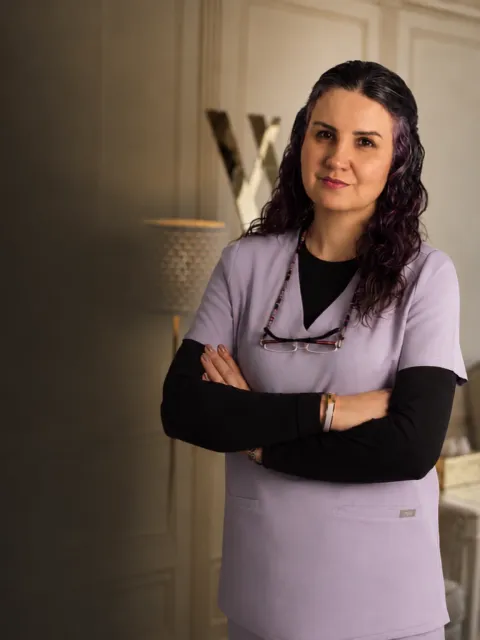
Biology, not cover-up. Dr Azra Vaziri designs layered regenerative protocols matched to your skin, in Dubai and Abu Dhabi.
- 6
- modalities compared
- All
- skin types safe
- 5.0★
- 101 reviews
What Is Regenerative Aesthetics?
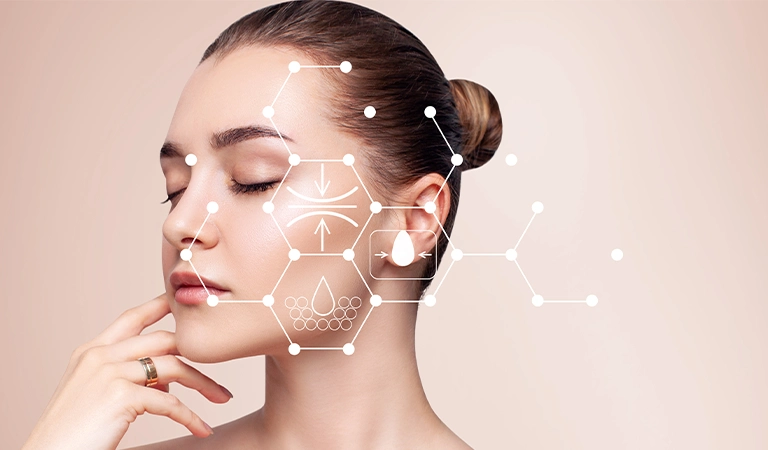
Traditional aesthetic treatments focus on covering, filling, or resurfacing — they address what you can see. Regenerative aesthetics goes deeper. It uses biological signals, growth factors, and cellular activators to trigger your body’s own repair and renewal mechanisms.
Read moreShow less
The goal is not to replace your tissue with a product, but to stimulate your tissue to become healthier, thicker, more hydrated, and more resilient on its own. This is a fundamental shift in approach — from cosmetic correction to biological optimisation.
In practical terms, regenerative treatments activate fibroblasts (the cells that produce collagen, elastin, and hyaluronic acid), support cellular turnover, reduce inflammation, repair the skin barrier, and improve the overall structural quality of the skin. For a deeper look, see our regenerative aesthetics hub.
The Best Regenerative Treatments Available in 2026
1. Polynucleotides (PDRN / Salmon DNA)
Polynucleotides have become the defining regenerative treatment of the mid-2020s. Purified DNA fragments — derived from salmon or trout — are injected into the skin where they activate fibroblasts through the adenosine A2A receptor pathway, stimulate collagen production, deeply hydrate the dermis, and repair the skin barrier. Brands include Rejuran, Plinest, and Ameela.
2. Exosome Therapy
Exosomes are nano-sized signalling vesicles derived from stem cells that carry growth factors, cytokines, and messenger RNA. When applied to the skin — typically after microneedling or RF microneedling — they deliver regenerative instructions directly to skin cells, accelerating healing, stimulating collagen, and enhancing the results of the underlying treatment.
3. PRP (Platelet-Rich Plasma)
PRP therapy uses your own blood, processed to concentrate the platelets and growth factors, then reinjected into the skin. It was one of the earliest regenerative aesthetic treatments and remains a reliable option for collagen stimulation, skin rejuvenation, and hair restoration. It is entirely autologous — nothing from outside your body.
4. Collagen Biostimulators (Radiesse & Sculptra)
Collagen biostimulators trigger your body to build new collagen at the injection site. Radiesse (CaHA) provides immediate volume plus progressive collagen; Sculptra (PLLA) works entirely through gradual collagen accumulation. Both produce volume that is fundamentally your own tissue — not a synthetic product sitting in your face.
5. Profhilo (Bioremodelling)
Profhilo uses ultra-pure hyaluronic acid to trigger bioremodelling — stimulating four types of collagen plus elastin while deeply hydrating the tissue. It sits at the intersection of hydration and regeneration and has become a foundational treatment for maintaining skin quality year-round.
6. Microneedling with Regenerative Add-Ons
Dermapen microneedling and RF microneedling create controlled micro-channels that trigger the wound-healing cascade and stimulate collagen production. When combined with regenerative agents — PRP, exosomes, polynucleotides, or growth factor serums — the micro-channels serve as delivery pathways, significantly enhancing the penetration and effectiveness of these agents.
| Best for | Read more | Status in 2026 | |
|---|---|---|---|
| 1. Polynucleotides (PDRN / Salmon DNA) | Deep skin repair, barrier restoration, under-eye rejuvenation, glass skin, overall quality | Salmon DNA Facial: The TikTok Treatment Explained · What are polynucleotides? → · Book treatment → | |
| 2. Exosome Therapy | Post-procedure recovery, enhanced treatment results, cellular signalling, hair restoration | Emerging — rapidly growing evidence base. Widely available in UAE clinics. Brands include ASCE+, Benev, and ExoSCRT. | |
| 3. PRP (Platelet-Rich Plasma) | Hair loss, skin rejuvenation, under-eye dark circles, combination with microneedling (Vampire Facial) | Established — extensive evidence base. Still widely used but increasingly combined with or complemented by polynucleotides and exosomes. PRP vs exosomes comparison → | |
| 4. Collagen Biostimulators (Radiesse & Sculptra) | Volume restoration, jawline definition, facial structure, Ozempic face, hands, neck tightening | Established — the structural pillar of regenerative aesthetics. | |
| 5. Profhilo (Bioremodelling) | Overall glow, mild laxity, bioremodelling, face/neck/hands | Profhilo vs Skin Booster vs Polynucleotides | |
| 6. Microneedling with Regenerative Add-Ons | Texture, acne scars, fine lines, pore refinement — amplified by whichever regenerative agent is delivered | Microneedling has evolved from a standalone treatment into a regenerative delivery platform. |
Regenerative Treatments at a Glance
How the main regenerative options compare by what they do best, how they work, downtime, and how long results last. Every treatment below is suitable for all Fitzpatrick skin types.
Guide only – timelines and longevity vary by individual, brand, and protocol. Your plan is personalised at consultation.
| Treatment | Best for | How it works | Downtime | Results timeline | Longevity |
|---|---|---|---|---|---|
| Polynucleotides (PDRN) | Deep repair, barrier, under-eye, glass skin | Salmon/trout DNA fragments activate fibroblasts and hydrate the dermis | Minimal – mild swelling 1–2 days | From 2–4 weeks, building over the course | 6–12 months |
| Exosome therapy | Post-procedure recovery, boosting other treatments | Stem-cell signalling vesicles deliver growth factors and mRNA | Minimal – follows the base procedure | Accelerates and enhances the paired treatment | Enhances the accompanying treatment |
| PRP | Hair loss, skin rejuvenation, under-eye circles | Your own concentrated platelets and growth factors, reinjected | Mild – redness, occasional bruising | 4–6 weeks, cumulative over sessions | 6–12 months |
| Biostimulators (Radiesse / Sculptra) | Structure, volume, jawline, Ozempic face | CaHA or PLLA triggers new collagen at the injection site | Mild – possible swelling or bruising | Gradual over 6–12 weeks | 12–24 months |
| Profhilo (bioremodelling) | Overall glow, mild laxity, skin quality | Ultra-pure hyaluronic acid stimulates collagen, elastin and hydration | Minimal – injection points settle within hours | From 4–8 weeks after the second session | 6–12 months |
| Microneedling + add-ons | Texture, acne scars, fine lines, pores | Micro-channels trigger healing and deliver regenerative agents deeper | 1–3 days of redness | Progressive over several sessions | Maintained with a course |
Building a Regenerative Protocol: The Layered Approach
The real power of regenerative aesthetics in 2026 is not in any single treatment — it is in how they are layered. A comprehensive protocol might include:
Foundation · Biostimulators
Radiesse and/or Sculptra rebuild the structural collagen framework that ageing, UV damage, and volume loss deplete.
Repair · Polynucleotides
PDRN/PN injectables activate fibroblasts, repair the barrier, and rebuild dermal quality at the cellular level.
Remodelling · Profhilo
Bioremodelling for broad collagen, elastin, and hydration across the face, neck, and hands.
Activation · Microneedling + Exosomes/PRP
Controlled micro-injury combined with regenerative signalling agents for texture, scars, and targeted rejuvenation.
Not every patient needs every layer. Dr Azra Vaziri designs personalised regenerative protocols at her Dubai clinic on Sheikh Zayed Road based on your skin’s condition, age, environmental exposure, and goals.
Why Regenerative Treatments Matter More in the UAE
Regenerative aesthetics is relevant everywhere, but it is particularly important for patients living in the UAE and Gulf region. Here is why:
In this environment, treatments that repair and rebuild rather than simply resurface have a distinct advantage — they address the ongoing damage, not just the accumulated result.
- Chronic high-UV exposure accelerates collagen and elastin breakdown significantly faster than in temperate climates
- The indoor air-conditioning / outdoor heat cycle creates persistent skin barrier stress and dehydration
- Hard water in Dubai can strip the skin’s natural moisture barrier
- Desert dust and air pollution contribute to oxidative stress and premature ageing
- The UAE’s diverse population means treatments must work across all Fitzpatrick skin types — regenerative treatments are inherently safe for all skin colours
Frequently Asked Questions
What are regenerative skin treatments?
What is the best regenerative treatment for skin?
Are regenerative treatments better than fillers?
How long do regenerative treatment results last?
What are exosomes in skin treatment?
Is PRP still relevant in 2026?
Can regenerative treatments help with acne scars?
Are these treatments safe for all skin types?
How much do regenerative treatments cost in Dubai?
Where can I get regenerative skin treatments in Dubai?
Ready to Explore Regenerative Aesthetics?
Dr Azra Vaziri offers personalised regenerative skin consultations in Dubai and Abu Dhabi. Find out which treatments — and which combination — will produce the best results for your skin in 2026 and beyond.
Book a Consultation
Dr Azra Vaziri — DHA & DOH licensed aesthetic physician with 20+ years of experience in Dubai & Abu Dhabi.