
What Causes Early Skin Aging
Understanding what causes early skin aging is the first step toward protecting and maintaining your skin’s long-term health. While all skin ages over time, many patients notice visible changes — such as fine lines, loss of firmness, uneven tone, and dullness — far earlier than expected. In most cases, this is not simply genetic. It is the result of environmental, lifestyle, and biological factors that accelerate the skin’s natural ageing process.
For patients living in Dubai and Abu Dhabi, several of these factors are particularly pronounced. Chronic UV exposure, extreme heat, prolonged air conditioning, and the demands of a fast-paced lifestyle can place the skin under sustained stress — depleting collagen, disrupting barrier function, and impairing the skin’s ability to repair itself effectively.
This guide explains the key causes of premature skin ageing, how they affect your skin at a structural level, and the regenerative aesthetic approaches that can help slow, prevent, or address the visible signs of early ageing.
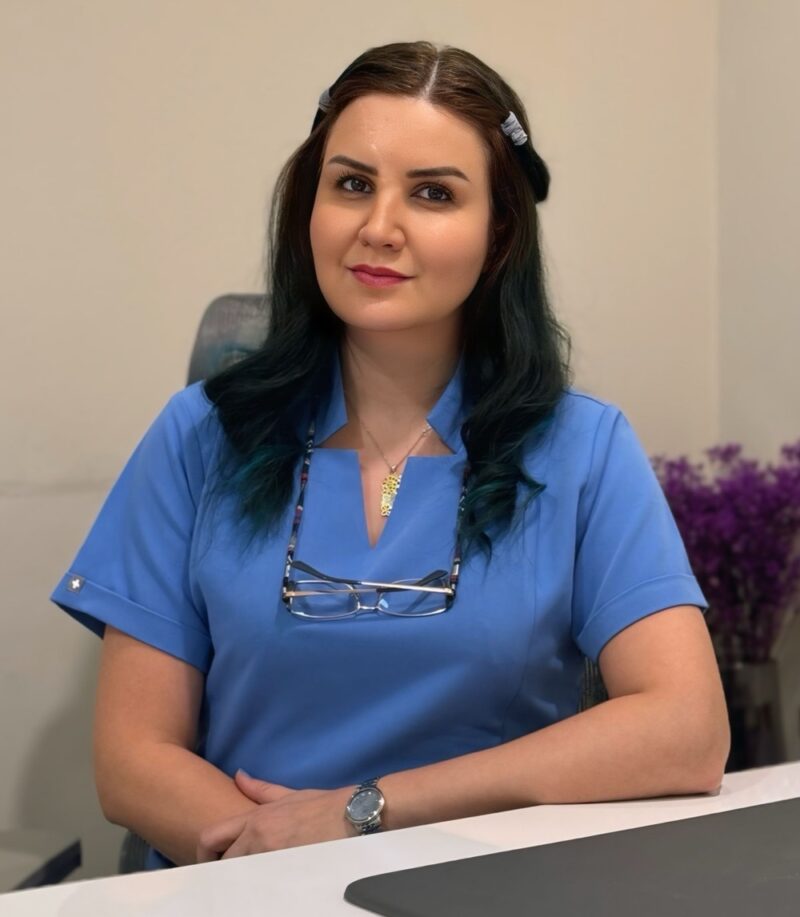
Written & Clinically Reviewed By
Dr. Azra Vaziri is a medical aesthetics practitioner based in Dubai and Abu Dhabi, specialising in regenerative skin treatments and preventative skin ageing protocols. She helps patients identify the causes of premature ageing and develop personalised plans to protect and restore skin quality.
In This Guide
Intrinsic vs Extrinsic Ageing
Skin ageing can be divided into two broad categories. Intrinsic ageing is the natural, genetically programmed process that occurs over time. It includes the gradual decline in collagen production, reduced cell turnover, and a natural thinning of the skin’s structural layers. This type of ageing is largely unavoidable, though its pace varies between individuals.
Extrinsic ageing, by contrast, is driven by external factors — UV radiation, pollution, lifestyle habits, and environmental exposure. It is extrinsic ageing that accounts for the majority of premature skin changes, and it is also the category where prevention and clinical intervention can make the most significant difference.
UV Exposure and Sun Damage
Ultraviolet radiation is the single largest contributor to premature skin ageing — a process known as photoageing. UVA rays penetrate deep into the dermis, where they degrade collagen and elastin fibres over time. UVB rays damage the epidermis and contribute to uneven pigmentation, sunspots, and rough texture.
In the UAE, where UV levels are consistently high throughout the year, cumulative sun exposure is a particularly significant factor. Even incidental daily exposure — driving, walking between buildings, or spending time near windows — contributes to photodamage over months and years. Broad-spectrum sunscreen, applied consistently, remains the most important daily measure against UV-driven ageing.
Environmental and Climate Factors
Beyond UV, several environmental conditions prevalent in Dubai and the wider Gulf region can accelerate skin ageing:
Extreme heat — Prolonged heat exposure increases transepidermal water loss, leaving the skin chronically dehydrated and weakening its barrier function over time.
Air conditioning — While essential for comfort, air-conditioned environments strip humidity from indoor air, drawing moisture out of the skin’s surface layer day after day.
Pollution and airborne particles — Fine particulate matter and pollutants can generate free radicals on the skin’s surface, contributing to oxidative stress that damages collagen and accelerates visible ageing.
Together, these factors create an environment where the skin is under near-constant pressure, making proactive protection and clinical support more relevant than in milder climates.
Lifestyle and Behavioural Factors
A number of daily habits and lifestyle choices can contribute to early skin ageing, often without the individual realising the cumulative effect:
Poor sleep — During deep sleep, the skin undergoes repair and renewal. Chronic sleep deprivation impairs this process, leading to dullness, under-eye changes, and reduced skin resilience.
Chronic stress — Sustained stress elevates cortisol levels, which can break down collagen and compromise the skin’s barrier function over time.
Smoking — Tobacco smoke reduces blood flow to the skin and accelerates the degradation of collagen and elastin, contributing to premature wrinkling and a sallow complexion.
Diet and hydration — A diet low in antioxidants and essential fatty acids, combined with insufficient water intake, can deprive the skin of the nutrients and moisture it needs to maintain its structure.
Skincare habits — Over-exfoliation, harsh cleansers, and the absence of sun protection or barrier-supporting products can weaken the skin and leave it more vulnerable to environmental ageing.
Signs of Early Skin Ageing
Premature ageing does not always announce itself with deep wrinkles. The earliest signs are often subtler and may include:
— Fine lines that appear at rest, not just during expression
— A gradual loss of skin firmness or bounce
— Dullness and a loss of natural radiance
— Uneven pigmentation, sunspots, or a blotchy complexion
— Rough or dry texture that does not respond to topical moisturisers
— Visible pores or a loss of skin smoothness
If you are noticing these changes earlier than you would expect — particularly if you are in your late twenties or thirties — extrinsic factors are likely playing a significant role, and a clinical assessment can help identify the most relevant contributors.
Clinical Approaches to Early Skin Ageing
Once the causes of premature ageing are identified, a range of non-surgical skin treatments can be used to address the damage and support the skin’s renewal capacity. See Dr Azra’s early skin aging treatment page for her full clinical approach. The right treatment depends on which factors are most relevant for you.
Skin booster injections and bioremodelling — Skin boosters and Profhilo bioremodelling deliver hyaluronic acid directly into the dermis, replenishing deep hydration that has been depleted by environmental exposure and ageing. This can improve skin texture, luminosity, and moisture retention.
Microneedling and RF microneedling — Microneedling and RF microneedling stimulate collagen and elastin production through controlled micro-injuries, helping to restore the structural support that intrinsic and extrinsic ageing erode.
PRP skin therapy — PRP skin therapy uses your own growth factors to support cellular renewal, improve skin tone, and promote tissue repair — targeting the biological slowdown that contributes to visible ageing.
Polynucleotide (PDRN) therapy — PDRN treatment uses purified DNA fragments to activate fibroblasts and repair cellular damage at the structural level — directly addressing the biological causes of early aging.
Exosome therapy — Exosome therapy delivers cellular signalling molecules that may accelerate repair and renewal, particularly in skin that has been stressed by years of environmental exposure.
Collagen biostimulators — Collagen biostimulator treatments encourage the body to rebuild its own collagen gradually, addressing the structural loss that underpins many visible signs of premature ageing.
| Treatment | How It Addresses Premature Ageing | Best For | Results Timeline |
|---|---|---|---|
| Skin Boosters / Profhilo | Restores dermal hydration lost to environment and age | Dehydration-driven dullness, fine lines, texture | Visible improvement within 2–4 weeks |
| Microneedling / RF Microneedling | Stimulates collagen and elastin to rebuild structure | Texture, scarring, pores, loss of firmness | Progressive over 4–6 weeks per session |
| PRP Therapy | Growth factors support renewal and tissue repair | Overall vitality, tone, early ageing signs | Gradual improvement over 4–6 weeks |
| Polynucleotides (PDRN) | Activates fibroblasts, repairs cellular damage at structural level | Deep cellular repair, barrier restoration | Progressive improvement over 3–6 weeks |
| Exosome Therapy | Cellular signals may accelerate repair in stressed skin | Environmentally damaged or fatigued skin | Early signs within 1–3 weeks |
| Collagen Biostimulators | Rebuilds structural collagen lost through ageing | Loss of firmness, volume, long-term quality | Progressive results over 8–12 weeks |
Prevention and Long-Term Maintenance
Addressing early skin ageing is not only about treating visible signs — it is equally about preventing further damage. A combination of clinical treatment and daily protective habits produces the most sustainable results.
Clinical Prevention
Periodic collagen-stimulating treatments to counteract structural decline
Hydration treatments to restore and maintain dermal moisture levels
Regular skin assessments to monitor changes and adjust protocols
Personalised maintenance plans designed around your skin’s needs
Daily Protection
Broad-spectrum SPF 30+ sunscreen applied every day, including indoors
Hydrating serums and barrier-supporting moisturisers
Antioxidant protection (topical vitamin C or similar)
Adequate sleep, hydration, and a nutrient-rich diet
Dr Azra Vaziri develops personalised prevention and maintenance plans that combine clinical treatment with daily skincare guidance — ensuring your approach addresses the specific factors that are most relevant to your skin and environment. Read more: how to slow skin aging.
Who May Benefit From Preventative Treatment
Preventative and restorative treatments for early skin ageing may be suitable for you if you experience any of the following:
— Fine lines or loss of firmness appearing earlier than expected
— Dull, tired-looking skin that no longer responds to topical care
— Uneven pigmentation, sunspots, or a blotchy complexion
— Rough or dehydrated skin texture despite a consistent routine
— A desire to take a proactive, preventative approach before visible ageing progresses
— Living in the United Arab Emirates, where environmental factors place significant ongoing stress on the skin
Suitability for specific treatments is always confirmed during a medical consultation, where your skin condition, medical history, and goals are reviewed before any plan is recommended.