
What Is PDRN? The Viral Treatment Explained
PDRN has gone from a niche regenerative medicine ingredient to one of the most searched aesthetic treatments in the world. It is the active compound behind the viral “salmon DNA facial,” appearing in TikTok videos, Korean beauty clinics, and increasingly in aesthetic practices across Dubai, Abu Dhabi, and the Gulf. But what actually is PDRN, how is it different from polynucleotides, and what does the science say?
This guide goes beyond the social media surface to explain the molecular science, the clinical evidence, and the practical reality of PDRN treatment in 2026.
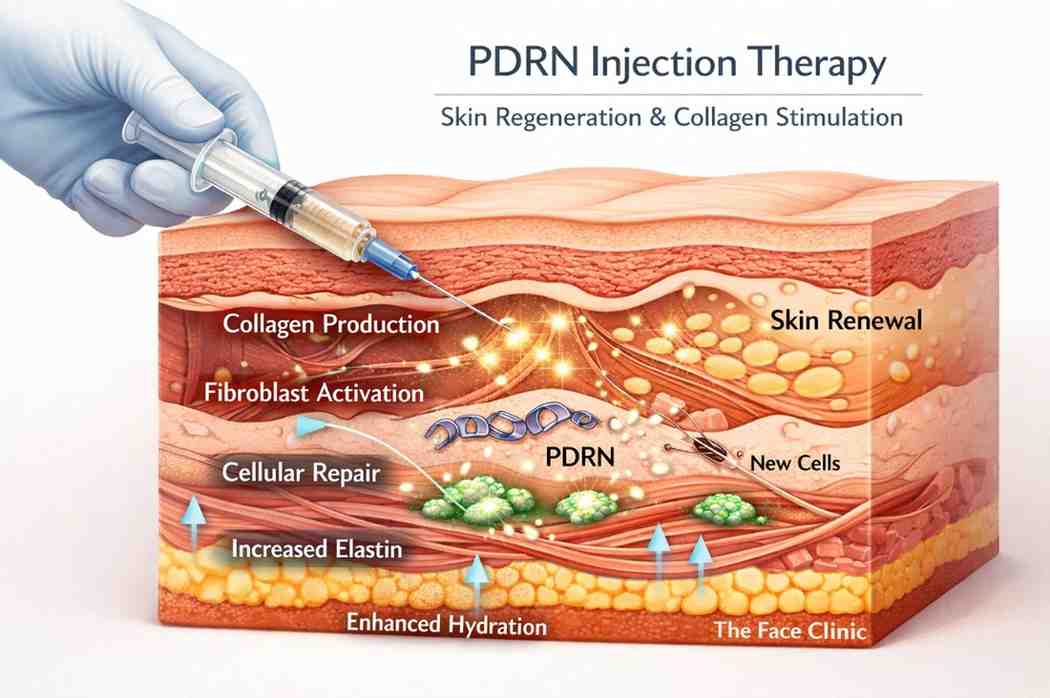
PDRN stands for polydeoxyribonucleotide — a mouthful that simply means: short, purified fragments of DNA. Specifically, PDRN consists of DNA chains between 50 and 200 nucleotides long, extracted and purified from the reproductive cells (gonads) of salmon or trout. These are not living cells, not whole DNA, and not genetic material that could alter your own DNA. They are inert, highly purified molecular fragments that function as biological signalling molecules when introduced into tissue. Think of them as keys that unlock specific repair pathways in your cells. PDRN is not new. It has been used in regenerative medicine since the early 2000s — primarily in wound healing, orthopaedics, and diabetic ulcer treatment in South Korea, Italy, and Japan. Its migration into aesthetic medicine happened when clinicians noticed that the tissue-repair properties that healed wounds also improved skin quality, stimulated collagen, and reversed signs of ageing.What PDRN Actually Is
PDRN’s primary mechanism of action is through the adenosine A2A receptor pathway. Here is how it works, step by step: Step 1 — Injection and degradation: When PDRN is injected into the dermis, it begins to be broken down by natural enzymes (nucleases) in the tissue. This degradation releases individual nucleotides and nucleosides — including adenosine. Step 2 — Receptor activation: The released adenosine binds to A2A receptors on the surface of fibroblasts and other cells. This activates an intracellular signalling cascade that promotes cell proliferation, tissue repair, and anti-inflammatory responses. Step 3 — Fibroblast activation: Activated fibroblasts increase production of collagen (types I and III), elastin, and glycosaminoglycans — the structural molecules that give skin its firmness, elasticity, and hydration. Step 4 — Anti-inflammatory effect: PDRN simultaneously suppresses pro-inflammatory cytokines (TNF-alpha, IL-6) while promoting anti-inflammatory mediators. This makes it particularly effective for damaged, reactive, or post-procedure skin. Step 5 — Salvage pathway: The nucleotide building blocks released during PDRN degradation are also recycled by cells through the “salvage pathway” — providing raw materials for DNA repair and cell division. This is particularly valuable in tissue that has been damaged by UV radiation, inflammation, or ageing.How PDRN Works: The Adenosine A2A Pathway
This is one of the most common points of confusion. Both terms appear in marketing material, often interchangeably. Here is the actual distinction: PDRN (polydeoxyribonucleotide) refers specifically to short DNA fragments, typically 50–200 nucleotides in length. PDRN has a well-documented mechanism through the adenosine A2A receptor. Products like Rejuran contain PDRN. PN (polynucleotide) is a broader term that includes longer DNA chains — typically 200–2,000+ nucleotides. Polynucleotides still activate fibroblasts and stimulate collagen, but through a combination of mechanisms that include but are not limited to the A2A pathway. Products like Plinest contain PN. In practice, the clinical outcomes of PDRN and PN products are similar — both improve skin quality, stimulate collagen, hydrate, and repair the barrier. The choice between them often comes down to brand preference, formulation, and clinical experience rather than a meaningful difference in results for the patient. For how polynucleotides compare to another regenerative option, see polynucleotides vs exosomes.PDRN vs Polynucleotides (PN): What Is the Difference?
Factor PDRN PN (Polynucleotide) Chain length Short (50–200 nucleotides) Long (200–2,000+ nucleotides) Primary mechanism Adenosine A2A receptor activation Multiple pathways including A2A Water binding Moderate Strong (longer chains bind more water) Key brands Rejuran, Ameela/TwAc Plinest (Fast, Strong) Source Salmon gonad Trout gonad (Plinest) or salmon
One thing that separates PDRN from many trendy aesthetic ingredients is its genuine medical history. PDRN has been studied and used clinically for over two decades in contexts far beyond skincare: This medical pedigree is important. PDRN is not a cosmetic invention — it is a regenerative medicine technology that has been adapted for aesthetic use because the same tissue-repair mechanisms that heal wounds also rejuvenate ageing skin. For more on the aesthetic applications, see our salmon DNA facial guide and our best regenerative treatments overview.PDRN’s Medical History: Not Just a Beauty Trend
In an aesthetic context, PDRN is used to address: Skin ageing and quality decline — Stimulates collagen and elastin production, improves skin thickness, firmness, and elasticity. The core anti-ageing application. Dehydration and dullness — Strong water-binding capacity restores dermal hydration, producing the plump, dewy quality associated with glass skin. For a lighter hydration option, compare with skin boosters. Under-eye concerns — Rejuran I is specifically designed for the periorbital area. PDRN improves skin thickness and quality under the eyes without adding volume. See our dark circles treatment guide. Barrier damage — The anti-inflammatory and repair properties make PDRN particularly effective for sensitised, reactive, or environmentally stressed skin — especially relevant in Dubai’s UV and AC-heavy environment. Acne scarring — PDRN can improve the overall quality of scarred skin and is sometimes used alongside RF microneedling for enhanced collagen remodelling in acne scar treatment. Hair restoration — PDRN scalp injections can support hair growth by stimulating follicular activity and improving the scalp microenvironment.What PDRN Treats in Aesthetic Medicine
Frequently Asked Questions