
Microneedling vs Chemical Peels for Skin Texture
If you are comparing microneedling vs chemical peels for skin texture improvement, you are weighing two of the most established clinical approaches to smoother, more refined skin. Both treatments can improve texture, reduce the visibility of scars and fine lines, and promote a brighter, more even complexion — but they do so through very different mechanisms and are suited to different skin concerns.
For patients in Dubai and Abu Dhabi, where UV exposure, heat, and air conditioning contribute to rough texture, dullness, and uneven tone, choosing the right resurfacing approach matters. The wrong treatment for your skin type — or one performed at the wrong depth — can lead to prolonged recovery or unwanted side effects, particularly in higher Fitzpatrick skin types that are more prone to post-inflammatory pigmentation.
This guide explains how each treatment works, how they compare, and how to determine which may be right for your skin — as part of a broader regenerative aesthetics approach to long-term skin quality.
Written & Clinically Reviewed By
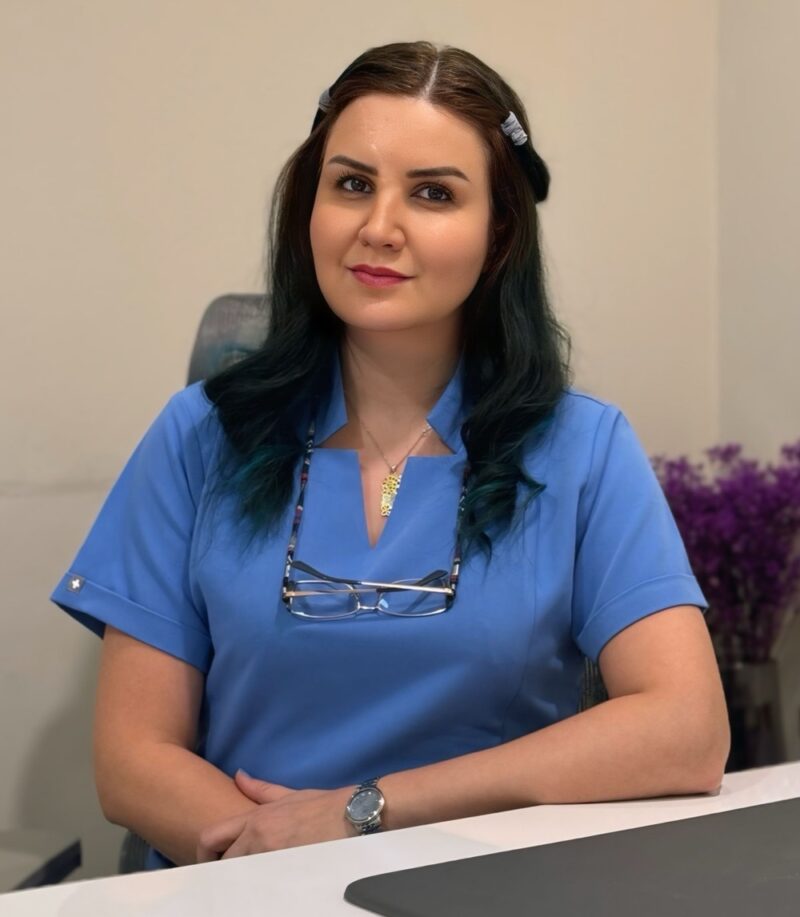
Dr. Azra Vaziri is a medical aesthetics practitioner based in Dubai and Abu Dhabi, specialising in regenerative skin treatments, collagen induction therapy, and personalised skin texture improvement protocols.
In This Guide
What Is Microneedling
Microneedling collagen induction therapy uses a device fitted with fine needles to create thousands of controlled micro-channels in the skin. These micro-injuries trigger the body’s wound-healing response, stimulating new collagen and elastin production in the treated area.
Microneedling works primarily in the dermis — the structural layer beneath the skin’s surface. It is particularly effective for improving skin texture, reducing the appearance of acne scars, minimising pore size, and softening fine lines. It also creates pathways that can enhance the absorption of topical active ingredients applied during or after the procedure — our guide on the best Dermapen serums covers which actives work best in this context.
What Are Chemical Peels
Chemical peels use acid-based solutions to dissolve the outermost layers of the skin in a controlled manner. By removing damaged surface cells, peels encourage the skin to regenerate with a smoother, more even texture. The depth of the peel — superficial, medium, or deep — determines how much tissue is affected and the intensity of the results.
Chemical peels work primarily on the epidermis and, in the case of medium-depth peels, the upper dermis. They are commonly used to address uneven tone, sun damage, superficial pigmentation, mild acne scarring, and dullness. Superficial peels require minimal downtime, while medium and deep peels may involve several days of visible peeling and recovery.
How Microneedling and Chemical Peels Compare
Both treatments aim to improve skin texture, but they approach the problem differently. Understanding these distinctions can help you and your clinician select the approach most appropriate for your concerns. For more on what causes uneven skin texture and how to improve skin texture, see our educational guides.
Microneedling
Mechanism: controlled micro-injury stimulates collagen remodelling
Targets: scarring, texture, pores, fine lines, product absorption
Depth: dermis (structural layer)
Pigmentation risk: generally lower across skin types
Chemical Peels
Mechanism: acid dissolution removes damaged surface cells
Targets: tone, dullness, sun damage, superficial pigmentation
Depth: epidermis to upper dermis (depending on peel strength)
Pigmentation risk: higher in darker skin tones with stronger peels
| Factor | Microneedling | Chemical Peels |
|---|---|---|
| How it works | Micro-injuries stimulate collagen and elastin renewal | Acid solution dissolves and removes damaged skin layers |
| Treatment depth | Dermis (structural layer) | Epidermis to upper dermis (varies by peel strength) |
| Ideal for | Acne scars, texture, pores, fine lines | Uneven tone, sun damage, dullness, mild scarring |
| Suitability for darker skin | Generally well tolerated across Fitzpatrick types | Superficial peels usually safe; deeper peels carry higher risk |
| Downtime | Redness 24–72 hours; possible pinpoint bleeding | Superficial: minimal. Medium/deep: peeling for 5–10 days |
| Sessions typically needed | 3–4 sessions spaced 4–6 weeks apart | Varies: 3–6 for superficial; 1–3 for medium-depth |
| Can be combined with | PRP, exosomes, skin boosters, biostimulators | Hydrating treatments, brightening protocols |
Which Treatment Is Right for Your Skin
The right choice depends on the specific texture concern you want to address, your skin type, and the level of downtime you are prepared for.
Microneedling may be more suitable if your primary concerns are deeper textural issues — such as acne scarring, enlarged pores, or fine lines — and you want a treatment that stimulates long-term collagen remodelling. It is also generally considered safer for darker skin tones where post-inflammatory hyperpigmentation is a concern. For deeper energy-based remodelling, RF microneedling is another option worth exploring.
Chemical peels may be more suitable if your concerns are primarily surface-level — such as dullness, uneven tone, sun damage, or mild texture irregularities. Superficial peels offer a gentler approach with minimal downtime and can be repeated regularly as part of a maintenance routine.
In some cases, both treatments may be used in a staggered protocol — peels to address surface concerns and microneedling to improve structural quality over time. Microneedling can also be enhanced by combining it with PRP skin therapy for growth factor stimulation, or with exosome therapy to support accelerated cellular renewal. For a detailed look at that combination, read our Dermapen vs exosome therapy comparison. Dr Azra Vaziri assesses each patient individually to recommend the most appropriate approach.
Skin Type and Pigmentation Considerations
This is a particularly important consideration for patients in the UAE, where the population includes a wide range of Fitzpatrick skin types. Medium and deep chemical peels carry a higher risk of post-inflammatory hyperpigmentation in darker skin tones (Fitzpatrick IV–VI), which can result in patches of darkened skin that take weeks or months to resolve.
Microneedling is generally considered to carry a lower risk of pigmentary complications across skin types, as it does not chemically disrupt the melanocyte layer in the same way. However, appropriate needle depth, technique, and aftercare all remain important factors. For patients who want to complement texture improvement with deeper hydration, skin boosters or Profhilo bioremodelling can be added to a protocol. For longer-term structural support, collagen biostimulator treatments may also be considered. A clinical assessment is essential to determine the safest and most effective combination for your individual skin.
What to Expect From Treatment
Before Your Appointment
Your clinician will assess your skin type, texture concerns, and treatment history. For microneedling, you may be advised to avoid retinoids and active exfoliants for several days beforehand. For chemical peels, a pre-treatment skin conditioning protocol may be recommended to prepare the skin and reduce pigmentation risk.
During Treatment
Microneedling typically takes 30–60 minutes with a topical anaesthetic applied beforehand. You may feel mild prickling or vibration. Chemical peels are applied as a solution to the skin and left for a controlled duration; you may experience tingling or warmth during application. Both are performed as outpatient procedures.
Aftercare and Recovery
After microneedling, expect mild redness for 24–72 hours. After a chemical peel, recovery depends on depth: superficial peels may cause light flaking for a day or two, while medium peels can involve visible peeling for five to ten days. Sun protection is essential following both treatments, particularly in the UAE climate. For indicative Dermapen pricing, visit our Dermapen treatment cost page.
Who May Benefit From These Treatments
Microneedling and chemical peels — individually or as part of a combined plan — may be suitable for you if you experience any of the following:
— Rough or uneven skin texture
— Acne scarring or post-blemish marks
— Dullness or loss of radiance
— Enlarged pores or fine lines
— Uneven pigmentation, melasma, or sun damage
— A desire for smoother, more refined skin as part of a long-term skin quality plan
To see what Dermapen microneedling achieves, visit our Dermapen before and after gallery.
Who May Not Be a Suitable Candidate
While both treatments are well established, certain factors may affect suitability:
Active skin infection or inflammation — Treatment should be postponed until the affected area has healed.
Pregnancy or breastfeeding — Both treatments are generally not recommended during pregnancy or breastfeeding.
Recent isotretinoin use — A waiting period is required before microneedling or medium-depth peels can be performed, as the skin may be more fragile.
Active acne or open wounds — Microneedling over active breakouts can worsen inflammation. Chemical peels may also need to be adjusted or postponed.
History of keloid scarring — Patients with a tendency to form keloid or hypertrophic scars should discuss risks with their clinician before microneedling.
Suitability is always confirmed during a medical consultation, where your skin type, medical history, and concerns are reviewed before treatment is recommended.
Related comparisons: Explore how other skin-resurfacing treatments stack up — Dermapen vs exosome therapy and Morpheus8 vs HIFU. Browse all treatments under Face Treatments and Skin Treatments.