Here for the treatment, not the bottle?
The Complete Guide to Dermapen Serums: What to Apply During Microneedling
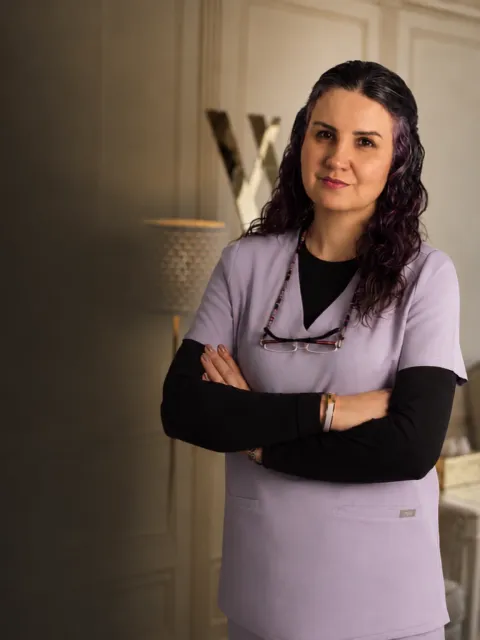
A serum only reaches the dermis through the micro-channels created in-clinic — nothing applied at home penetrates the same way. If your goal is the result rather than the product, every Dermapen treatment in Dubai with Dr Azra already includes the right serum for your skin, chosen and applied during the session.
In This Guide: FAQ · Why serums matter · The 7 serums · Quick reference · How Dr. Azra chooses · Aftercare
Dermapen Guide
Why Serums Are Essential During Dermapen Treatment
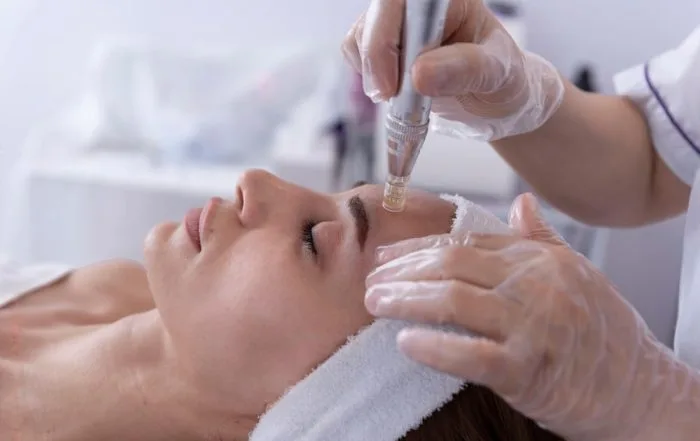
Dermapen microneedling creates thousands of tiny micro-channels in the skin with each pass. These channels remain open for approximately 10–15 minutes after treatment, creating a temporary window of dramatically increased permeability — research shows transdermal absorption of active ingredients can increase by up to 97% through these channels compared with standard topical application.
This means the serum applied during your Dermapen session isn’t just a “bonus” — it’s a fundamental part of the treatment protocol. The right serum reaches the dermal layer (which also affects treatment cost) where fibroblasts, melanocytes, and other target cells reside, delivering ingredients at therapeutic concentrations that no cream or lotion can match.
This is also why serum selection must be done with medical expertise — not all ingredients are safe for direct dermal delivery (see also: microneedling vs chemical peels).
The 7 Best Dermapen Serums — for Any Microneedling Pen
Clinical-grade serums most commonly used during professional Dermapen microneedling, and the specific concerns they address.
Hyaluronic Acid (HA) Serum
1DEHYDRATION · FINE LINES · GLOW · FIRST-TIMERS
Read moreShow less
Hyaluronic acid is the foundational Dermapen serum. HA can hold up to 1,000 times its weight in water, and when delivered directly into the dermis through microneedling channels, it creates an intense hydration reservoir beneath the skin’s surface. The result is immediate plumping, reduced fine lines, and a dewy glow within days.
Clinical-grade HA used during Dermapen is non-cross-linked (unlike dermal fillers), meaning it integrates naturally into the tissue rather than adding volume. Excellent for patients who want visible improvement with zero risk and minimal downtime.
PRP (Platelet-Rich Plasma) — The Vampire Facial
2ANTI-AGEING · SCAR REVISION · COLLAGEN INDUCTION
Read moreShow less
PRP is your own blood plasma concentrated to contain a high density of platelets and growth factors — PDGF, TGF-β, VEGF, EGF. During a Dermapen + PRP session (the “Vampire Facial“), a small blood sample is drawn, centrifuged, and applied as the Dermapen creates micro-channels.
The growth factors penetrate directly into the dermal layer, accelerating collagen synthesis, tissue repair, and neovascularisation. PRP is one of the most effective serums for anti-ageing — with the added advantage of being 100% autologous.
Comparing PRP to exosomes? Read our Dermapen Exosome vs Dermapen PRP guide for when each protocol is the right clinical choice.
Exosome Serum
3ADVANCED REGENERATION · AGEING SKIN · COMPROMISED BARRIER
Exosomes are nano-sized extracellular vesicles that carry signalling molecules — proteins, lipids, mRNA, microRNA — from cell to cell. Applied during Dermapen, exosomes deliver biological instructions to your fibroblasts, stem cells, and immune cells, directing them to accelerate tissue regeneration and reduce inflammation.
Read moreShow less
Exosome therapy represents the cutting edge of regenerative aesthetics — faster recovery, more pronounced collagen remodelling (see Dermapen before & after), and improved outcomes for concerns like acne scarring. See also: microneedling vs exosome therapy →
For the full combination protocol — Dermapen delivered with ASCE+ exosomes or PDRN — see the dedicated Dermapen Exosome Treatment page.
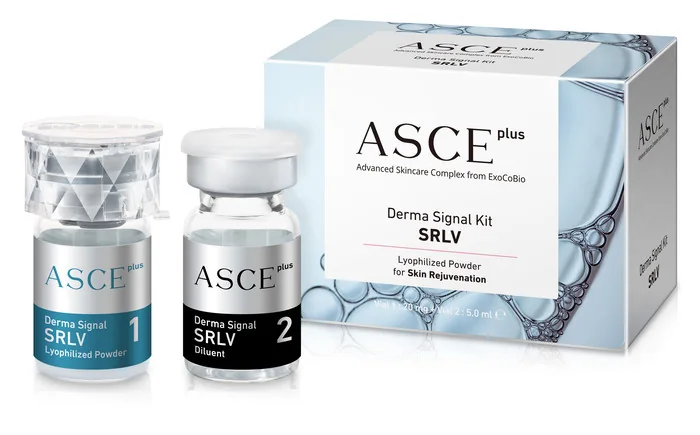
ASCE plus SRLV — the exosome kit used during microneedling
Growth Factor Serum
4ANTI-AGEING · COLLAGEN BOOST · POST-PROCEDURE RECOVERY
Read moreShow less
Synthetic or bio-derived growth factor serums contain concentrated signalling proteins (EGF, FGF, IGF) that stimulate fibroblast proliferation and collagen/elastin production. They offer a similar regenerative boost to PRP without requiring a blood draw.
Particularly effective for mature skin where the body’s natural regenerative capacity has declined.
Tranexamic Acid Serum
5MELASMA · PIGMENTATION · SUN DAMAGE
Read moreShow less
Tranexamic acid (TXA) works by inhibiting the plasmin pathway responsible for melanocyte activation. Delivered into the dermis through Dermapen, TXA reaches pigment-producing cells at concentrations far higher than topical application — one of the most effective treatments for melasma and resistant pigmentation.
Particularly relevant for Gulf-region patients where UV exposure and skin types prone to hyperpigmentation make melasma common. For under-eye pigmentation specifically, see Innovyal Undereye — TXA + niacinamide for the delicate under-eye area.
Salmon DNA / PDRN Serum
6REGENERATION · ANTI-INFLAMMATION · SENSITIVE SKIN
Read moreShow less
PDRN (polydeoxyribonucleotide) derived from salmon DNA activates the adenosine A2A receptor, which promotes anti-inflammatory and tissue-repair pathways. Combined with Dermapen, it supports wound healing, reduces redness, and stimulates fibroblast activity.
Particularly well-suited for sensitive or reactive skin types. The dedicated Dermapen + PDRN protocol at our clinic is AED 1,200 per session (standard AED 1,700).
Vitamin C & Antioxidant Blends
7BRIGHTENING · PHOTOPROTECTION · UNEVEN TONE
Read moreShow less
Stabilised vitamin C (L-ascorbic acid or sodium ascorbyl phosphate) is a potent antioxidant that neutralises free radicals (used also in mesotherapy), inhibits tyrosinase, and is essential for collagen synthesis. Delivered through Dermapen channels, vitamin C reaches the dermis at concentrations that dramatically outperform topical application.
Antioxidant blends with vitamin E and ferulic acid offer synergistic photoprotection — important for Dubai’s high-UV environment, and a practical route to brightening dull, tired-looking skin.
Quick Reference Table
| Serum | Key Benefit | Best Concern |
|---|---|---|
| Hyaluronic Acid | Deep hydration & plumping | Dehydration, fine lines, glow |
| PRP | Collagen & tissue repair | Ageing, scars, regeneration |
| Exosomes | Cell signalling & regeneration | Advanced ageing, compromised skin |
| Growth Factors | Fibroblast stimulation | Anti-ageing, collagen loss |
| Tranexamic Acid | Melanin pathway inhibition | Melasma, pigmentation |
| Salmon DNA (PDRN) | Anti-inflammatory repair | Sensitive skin, rejuvenation |
| Vitamin C / Antioxidants | Brightening & photoprotection | Sun damage, dull skin, tone |
How Dr. Azra Selects Your Serum
Choosing the right Dermapen serum isn’t one-size-fits-all. Dr. Vaziri considers five factors during your consultation:
- Primary concern — Hydration, anti-ageing, texture improvement, scar revision, or pigmentation correction? Each goal points to a different serum.
- Skin type & sensitivity — Reactive or sensitive skin benefits from gentler options (HA, PDRN) before progressing to more active ingredients.
- Treatment stage — First sessions may start with HA to assess response, with PRP or exosomes introduced later for intensified results.
- Combination potential — Serums can be layered or alternated across sessions. PRP for collagen one session, TXA for pigmentation the next.
- Budget & preferences — Exosomes and PRP involve additional cost. Dr. Vaziri discusses all options transparently.
For patients needing deeper collagen remodelling, RF microneedling may be recommended alongside or instead of standard Dermapen.
Serums at Home After Dermapen
For the first 24–48 hours after a session, your skin remains more permeable than usual — a window for gentle, supportive ingredients, but also vulnerable to irritation from the wrong product.
✓ Safe — first 48 hours
- Hyaluronic acid serum (fragrance-free)
- Gentle peptide serum
- Ceramide-based moisturiser
- Mineral SPF 50+ (physical sunscreen)
✗ Avoid — first 48 hours
For the complete day-by-day recovery timeline covering the first 30 days — including Dubai climate considerations and warning signs — see our Dermapen Aftercare Guide.
Read moreShow less
- Retinol / retinoids
- AHAs & BHAs (glycolic, salicylic)
- High-concentration vitamin C
- Fragranced products, essential oils
- Chemical sunscreens
Frequently Asked Questions
What is the best serum to use with Dermapen?
There is no single “best” serum — the ideal choice depends on your skin concern. Hyaluronic acid is the most versatile. PRP and exosomes offer the most advanced regenerative benefits. Tranexamic acid is the strongest option for pigmentation.
Can I bring my own serum to the Dermapen appointment?
We strongly recommend using only pharmaceutical-grade, sterile serums during Dermapen treatment. Retail skincare products are not formulated for direct dermal delivery and may contain preservatives, fragrances, or irritants that are problematic when introduced through micro-channels.
Does the serum choice affect the price of Dermapen?
Yes — different serums have different costs. PRP involves a blood draw and centrifugation. Exosome solutions are premium regenerative products, priced higher than a standard HA session. See Dermapen pricing.
Can serums be combined during one Dermapen session?
Yes. Combination protocols are common — for example, PRP during the main needling passes and hyaluronic acid as a finishing layer.
Is it safe to use vitamin C serum after Dermapen?
High-concentration, low-pH vitamin C serums should be avoided for the first 48 hours after Dermapen — they can cause stinging and irritation. After 48 hours, you can gradually reintroduce vitamin C.
Book A Consultation With Dr. Azra
DHA & DOH licensed aesthetic physician — 20+ years experience in injectables, regenerative aesthetics, and non-surgical facial rejuvenation. Dubai & Abu Dhabi.
Where to go next
Read next: the treatment page, Dermapen Treatment in Dubai and all options in this area, Skin Treatments.
See also: Dermapen with exosomes treatment, Medical facials in Dubai, HydraFacial in Dubai, Exosomes vs PDRN vs skin boosters and HydraFacial vs medical facial vs microneedling.
Book a Consultation
Dr Azra Vaziri — DHA & DOH licensed aesthetic physician with 20+ years of experience in Dubai & Abu Dhabi.