Comparison Guide · Dermapen · Exosome Therapy
Dermapen with Exosomes vs Microneedling Alone: Which Do You Need?
Dermapen microneedling creates controlled micro-injuries that trigger the skin’s wound-healing response — stimulating collagen production and improving texture, scarring, and pore size. Exosome therapy delivers cellular signalling molecules that direct repair and renewal without physical disruption — best for overall skin vitality, hydration, and recovery support.
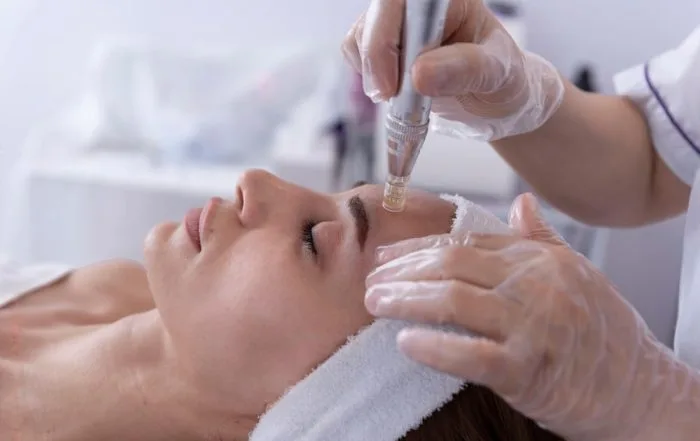
In simple terms: Microneedling = physical repair (collagen induction through micro-injury). Exosomes = biological repair (cellular signalling without injury). For textural concerns like acne scars and pores, microneedling. For tired, dull skin needing deep renewal, exosomes. They are commonly combined in the same session — see Dr Azra’s dedicated Dermapen Exosome treatment for the full combination protocol.
Exosomes
Side-by-Side Comparison
| Feature | Dermapen Microneedling | Exosome Therapy |
|---|---|---|
| How it works | Controlled micro-injuries trigger wound-healing and collagen production | Cellular signalling molecules direct repair and renewal without physical injury |
| Best for | Acne scars, rough texture, enlarged pores, fine lines, pigmentation | Dull, tired skin, early aging, recovery acceleration, dehydration |
| Collagen stimulation | Strong — direct wound-healing response | Supportive — signals collagen synthesis without injury |
| Sessions required | 3–4 sessions, 4–6 weeks apart | 2–3 sessions; often used alongside other treatments |
| How fast you see results | Progressive over 4–6 weeks per session; best after 2–3 sessions | Early signs within 1–3 weeks; progressive over time |
| Downtime | Redness 24–72 hours; possible pinpoint bleeding | Minimal; mild redness up to 24 hours |
| Evidence base | Well established; extensive clinical use in dermatology | Emerging; early clinical results are promising |
| Price point | See Dermapen pricing | See exosome pricing |
| Can they be combined? | Yes — this is one of the most common clinical protocols. After microneedling creates micro-channels, exosomes are applied topically to penetrate directly into the dermis, combining collagen induction with cellular renewal signalling. See: Dermapen Exosome combined treatment. |
How Each Treatment Works
Dermapen Microneedling
Dermapen microneedling collagen induction therapy uses a device fitted with fine needles to create thousands of controlled micro-channels in the skin.
Read moreShow less
These micro-injuries trigger the body’s wound-healing response, stimulating collagen and elastin renewal in the treated area. Dermapen exosomes, exosome Dermapen and exosomes Dermapen all name the same combined protocol — the device opens the channels, the exosomes are what goes into them.
The process improves skin texture, reduces the appearance of fine lines, minimises pore size, and helps fade scarring and uneven pigmentation. Microneedling also enhances the penetration of topical active ingredients applied during or immediately after the procedure — see our guide to the best Dermapen serums.
Protocol: 3–4 sessions spaced 4–6 weeks apart. Results develop progressively as new collagen matures. See before and after results and Dermapen pricing.
Exosome Therapy
Exosome therapy uses extracellular vesicles — tiny signalling particles derived from stem cells — to communicate repair instructions to skin cells.
Read moreShow less
Rather than creating physical injury, exosomes work by delivering biological signals that promote cellular renewal, reduce inflammation, and support tissue repair. Learn more about how regenerative skin treatments work.
Exosomes can be applied topically after microneedling — the dedicated Dermapen Exosome treatment protocol uses this approach — or delivered through other non-surgical methods. They are particularly valued for their potential to accelerate recovery, improve skin hydration from within, and support collagen synthesis without relying on the body’s wound-healing cascade alone.
Protocol: 2–3 sessions; often combined with other treatments. As a newer modality, clinical evidence continues to develop, though early results are promising. See exosome therapy pricing, or book a consultation.
When to Choose Each Treatment
Choose Microneedling When
- Primary concern is acne scarring or textural irregularities
- You want to reduce enlarged pores or rough skin texture
- You have fine lines or uneven pigmentation
Read moreShow less
- You want proven collagen stimulation
- You are comfortable with 24–72 hours of mild downtime
Choose Exosome Therapy When
Learn more about exosome therapy →
Not sure which applies to you? Book a consultation with Dr Azra.
- Your skin shows dullness, fatigue, or environmental stress
- You want cellular renewal without physical disruption
- You prefer minimal downtime (24 hours or less)
Read moreShow less
- You are recovering from another procedure and want to accelerate healing
- You have early signs of aging and want preventative renewal
Can Microneedling and Exosome Therapy Be Combined?
Yes — and this is one of the most common ways exosome therapy is used in clinical practice. After microneedling creates thousands of micro-channels in the skin, exosomes are applied topically to penetrate through those channels directly into the dermis. This combination allows the collagen-stimulating benefits of microneedling to be augmented by the cellular renewal signals carried by exosomes.
The result is both structural improvement (texture, scarring, pores) and deep biological renewal (vitality, hydration, recovery) — addressing the skin from two complementary directions in a single session.
Dr Azra offers this as a dedicated combined protocol: see the Dermapen Exosome treatment page for the full session details, expected outcomes, and pricing. If you are weighing exosomes against PRP as the booster active, see our Dermapen Exosome vs Dermapen PRP comparison.
Other treatments may also be incorporated into a broader protocol. Skin boosters can restore dermal hydration, PRP therapy delivers growth factors (see: PRP vs Exosomes), and Profhilo or polynucleotides provide bioremodelling and barrier repair. Dr Azra Vaziri designs combined protocols based on your skin’s specific needs — book a consultation to find out which combination suits yours.
What to Expect From Treatment
Before Your Appointment
Your clinician will carry out a skin assessment to evaluate texture, tone, hydration, and any scarring or damage.
Read moreShow less
You may be advised to avoid retinoids, chemical exfoliants, and blood-thinning medications for several days before microneedling. Exosome therapy alone typically requires less specific preparation.
During Treatment
Microneedling sessions typically take 30 to 60 minutes. A topical anaesthetic is applied beforehand.
Read moreShow less
You may feel a prickling or vibrating sensation as the device moves across the skin. If exosomes are being applied in the same session, they are introduced immediately after needling while the channels remain open — see the Dermapen Exosome session details, or book a consultation.
Aftercare and Recovery
After microneedling, you may experience redness, mild swelling, and sensitivity for 24–72 hours. Pinpoint bleeding during the procedure is normal.
Read moreShow less
Exosome therapy applied on its own generally involves minimal downtime — mild redness for up to 24 hours. Sun protection and gentle, hydrating skincare are essential during recovery for both treatments. See our complete Dermapen aftercare guide, or book a consultation.
Who These Treatments Are For — And Who Should Wait
Microneedling and exosome therapy — individually or combined — may be suitable if you experience acne scarring, dull or tired skin, fine lines, enlarged pores, collagen loss, or want to restore skin glow and vitality. They are especially relevant in the UAE, where environmental stress accelerates visible skin aging.
You may need to wait if you have:
Active skin infection or inflammation — microneedling should be postponed until the area has fully healed.
Pregnancy or breastfeeding — both treatments are generally not recommended as a precaution.
Recent isotretinoin use — a waiting period is required before microneedling, as the skin may be more fragile.
Active acne or open wounds — microneedling over active breakouts can worsen inflammation.
Autoimmune or clotting conditions — suitability is assessed individually and medical clearance may be required.
Suitability is always confirmed during a medical consultation, where your medical history and skin condition are reviewed before treatment is recommended.
Written & Clinically Reviewed By
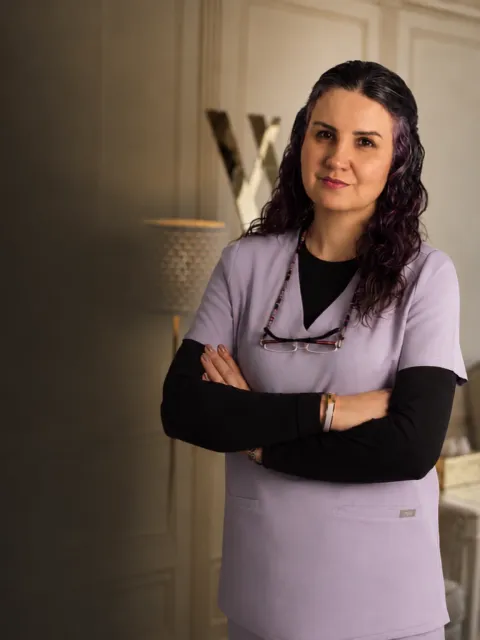
Dr Azra Vaziri is a medical aesthetics practitioner based in Dubai and Abu Dhabi, specialising in regenerative skin treatments and personalised rejuvenation protocols.
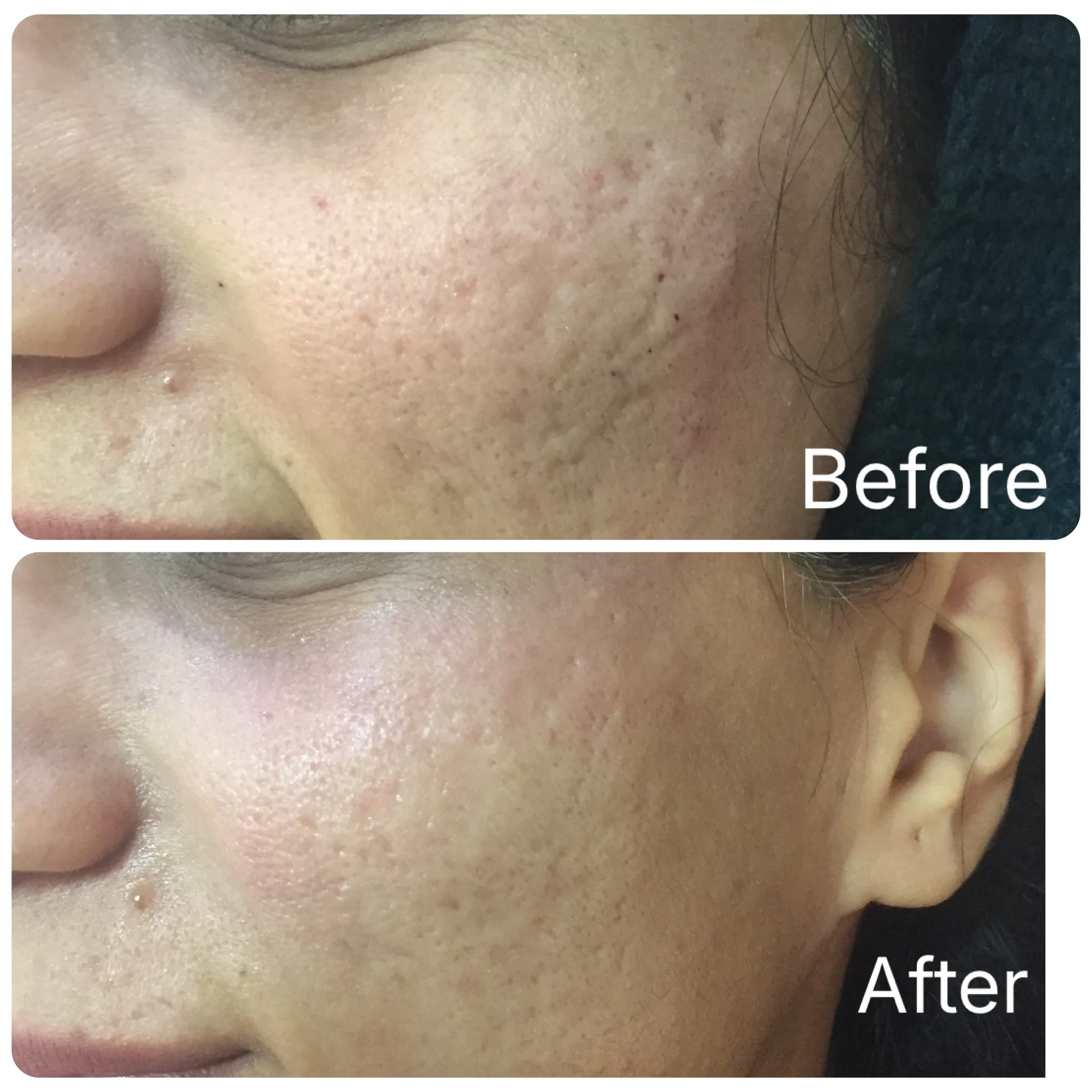
Dermapen with Exosomes — A Real Result
A patient of Dr Azra Vaziri, photographed before treatment and after a course of Dermapen microneedling with exosomes. Individual results vary with skin type, the number of sessions and how closely aftercare is followed.
Before and after Dermapen with exosomes — treated by Dr Azra Vaziri
Photograph published with the patient’s written consent, in line with UAE medical advertising regulations. Individual results vary.
Frequently Asked Questions
What is the difference between microneedling and exosome therapy?
Microneedling creates controlled micro-injuries that trigger the skin’s natural wound-healing and collagen production response. Exosome therapy delivers cellular signalling molecules that direct repair and renewal without physical disruption. They work through different mechanisms but are commonly combined for an enhanced result — see the dedicated Dermapen Exosome treatment.
Which is better for acne scars — microneedling or exosomes?
Microneedling is the more established option for acne scarring because its collagen-stimulating mechanism directly addresses textural irregularities. Exosome therapy may be used alongside microneedling to support healing, but is not typically a standalone scar treatment. Also consider RF microneedling for deeper scarring, or the Vampire Facial (PRP + microneedling) for combined growth factor and collagen stimulation.
Can microneedling and exosome therapy be done in the same session?
Yes — this is one of the most common clinical protocols. After microneedling creates micro-channels, exosomes are applied topically so they penetrate directly into the dermis. This combination enhances both the collagen-stimulating and cellular renewal effects. Dr Azra offers this as a dedicated Dermapen Exosome combined treatment.
Is microneedling with exosomes worth it?
Combining exosomes with microneedling enhances results by pairing collagen induction with cellular renewal signalling. The exosomes penetrate through the micro-channels created during needling, delivering repair signals directly into the dermis. For patients seeking both textural improvement and deep skin renewal, the combined Dermapen Exosome protocol is one of the most effective regenerative options available. Results are typically more noticeable and develop faster than with either treatment alone.
What do exosomes do after microneedling?
After microneedling creates thousands of micro-channels, exosomes applied topically penetrate through those channels into the dermis. Once there, they deliver growth factors, proteins, and signalling molecules that accelerate healing, reduce inflammation, and promote cellular renewal — augmenting the collagen-stimulating effect of the microneedling itself. This is why the combination protocol is so widely used in regenerative aesthetics.
How many sessions of Dermapen with exosomes are needed?
Is there more downtime with microneedling than exosomes?
Yes. Microneedling involves redness, mild swelling, and sensitivity for 24–72 hours, with possible pinpoint bleeding during treatment. Exosome therapy applied topically typically involves only mild redness for up to 24 hours. See our complete aftercare guide.
Is exosome therapy proven to work?
Exosome therapy is a newer modality in aesthetic medicine. Early clinical results are promising, particularly for skin renewal and recovery support. However, the evidence base is still developing compared to more established treatments like microneedling. Learn more: benefits of regenerative skin treatments.
How much does Dermapen with exosomes cost in Dubai?
The combined Dermapen Exosome treatment is AED 1,300 per session (standard AED 1,900). Choosing PRP instead of exosomes as the booster active brings the combined cost down to roughly AED 1,100 (standard AED 1,400). See the Dermapen Exosome vs Dermapen PRP comparison for a full breakdown, or contact Dr Azra’s clinic for a personalised quote.
How long do Dermapen and exosome results last?
Microneedling results can be long-lasting, particularly for scarring and texture improvement, though maintenance sessions every 6–12 months help sustain collagen levels. Exosome therapy results may vary and are often supported by periodic follow-up sessions or combination protocols.
How does this compare to PRP or polynucleotides?
PRP therapy delivers growth factors from your own blood to support healing (see: PRP vs Exosomes). Polynucleotides activate fibroblasts for deep cellular repair and barrier rebuilding. Profhilo provides HA bioremodelling. Each works through different biological mechanisms, and Dr Azra may recommend one or a combination. See: best regenerative skin treatments in Dubai.
Who should avoid microneedling or exosome therapy?
Patients with active skin infections, open wounds, or active acne should avoid microneedling. Those on isotretinoin or who are pregnant or breastfeeding are generally not suitable. Exosome therapy has fewer contraindications but suitability is always confirmed during consultation.
Book A Consultation With Dr Azra
Patients seeking personalised aesthetic assessment in Dubai or Abu Dhabi can contact Dr Azra for consultation regarding Dermapen, exosome therapy, and regenerative skin treatment planning.
DHA & DOH licensed aesthetic physician practising in Dubai and Abu Dhabi, with over 20 years of experience in aesthetic medicine, injectables, thread lifting, and non-surgical facial rejuvenation.
Book a Consultation
Dr Azra Vaziri — DHA & DOH licensed aesthetic physician with 20+ years of experience in Dubai & Abu Dhabi.