Comparison Guide · Pigmentation · Melasma
Melasma, Sun Spots or Acne Marks? How to Tell Your Dark Spots Apart
The short answer: they are three different conditions that happen to share a colour. Melasma is hormonal, comes in symmetrical patches and keeps coming back. Sun spots are separate, sharply edged marks left by years of UV. Post-acne marks sit exactly where a pimple or injury was, and fade on their own over months.
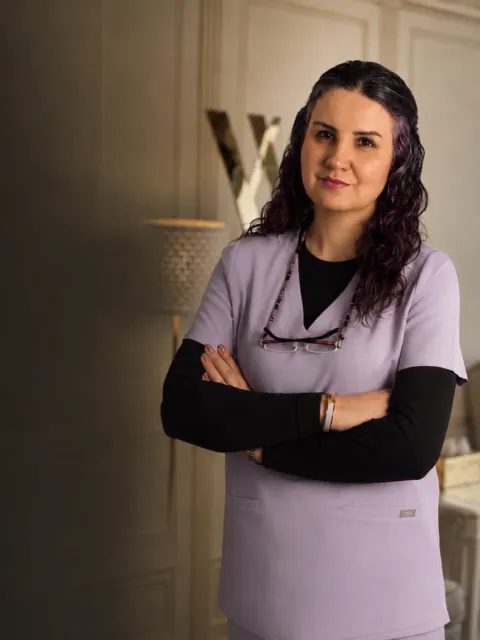
Dr Azra Vaziri identifies the type first, because the treatment that clears one can make another worse.
Already know it is pigmentation you want treated? See pigmentation treatment in Dubai or, for melasma specifically, melasma treatment.
- Managed, not curedMelasma
- Often clear wellSun spots
- Fade over monthsAcne marks
How to Tell Them Apart
The table is how the three usually present. It is a guide for you to read your own skin, not a diagnosis.
| Melasma | Sun spots | Post-acne marks | |
|---|---|---|---|
| Shape | Patches with soft, blurred edges | Separate spots with clear edges | A mark the size of the spot that caused it |
| Pattern | Symmetrical — both cheeks, forehead, upper lip, nose bridge, chin | Scattered over sun-exposed skin | Wherever the breakouts or injury were |
| Colour | Brown to grey-brown | Light to dark brown | Brown, sometimes reddish at first |
| Where else | Almost always the face only | Hands, forearms, chest and shoulders too | Back and chest if the acne was there |
| What started it | Hormones (pregnancy, the pill, hormone therapy) plus UV and heat | Years of cumulative UV | Acne, a scratch, a burn or any inflammation |
| What makes it worse | Sun, heat, visible light, irritation, aggressive treatment | More sun | Picking, new breakouts, sun |
| Without treatment | Persists and returns, often darker each summer | Persists; new ones appear with more sun | Fades on its own over many months |
| Outlook with treatment | Managed and kept faint; not permanently cured | Often significantly faded or cleared | Often significantly faded or cleared |
⎯ The Three Types
What Each Type Is
The colour comes from the same pigment, melanin. What differs is why it was made, how deep it sits and what keeps it coming back.
| What it is | Who gets it | Treatment | |
|---|---|---|---|
| Melasma | a chronic pigmentation condition driven by hormones and switched on by UV and heat. It sits in the upper skin (epidermal), deeper (dermal) or both (mixed); the deeper it sits, the greyer it looks and the more slowly it fades. | it affects every skin tone but shows most in medium to deeper skin (Fitzpatrick III–V). The “pregnancy mask” is melasma. | gentle and layered — see melasma treatment. |
| Sun spots | also called solar lentigines or age spots. Flat brown spots where years of UV have built up, on the face, hands and décolletage. | anyone with enough sun over the years; they often appear alongside other early signs of ageing. | respond well to Dermapen microneedling and targeted peels. |
| Post-acne marks | post-inflammatory hyperpigmentation (PIH) — the dark mark the skin leaves after acne, an injury or any inflammation. It is flat. If the skin is dented rather than discoloured, that is a scar, not a mark — see acne scar types. | more common, and longer-lasting, in deeper skin tones. | it fades on its own over many months; treatment speeds that up considerably. The breakouts have to be controlled at the same time, or new marks simply replace the old ones. |
⎯ Why It Comes Back
Why Melasma Keeps Coming Back in Dubai
Melasma is switched on, not just caused. The tendency is hormonal and often genetic; the sun, heat and light are what switch it on. In Dubai all three are present all year, so there is no off-season in which melasma quietly settles by itself.
Heat matters, not only sunshine. Heat from the climate, a hot car, cooking or a sauna can darken melasma even without direct sun. So can visible light, which an ordinary sunscreen does not block — which is why the protection that works for melasma is a broad-spectrum, visible-light sunscreen worn every day, indoors as well as out.
Irritation is a trigger too. Anything that inflames the skin — a strong peel, a harsh scrub, an over-ambitious routine — can leave melasma darker than it started. That is the part most people get wrong.
The honest framing is long-term management. With consistent care melasma can be kept faint; if protection lapses, it is likely to return. More on how the climate ages skin in general in Dubai’s climate and your skin.
⎯ Why Treatments Disappoint
Why Creams and Laser Often Disappoint
Most people who come in with pigmentation have already tried something. When it did not work, the reason is usually one of these.
The cream was for the wrong type
A brightening cream that fades a sun spot does little for deeper melasma.
Read moreShow less
Prescription agents such as hydroquinone and tranexamic acid have a place, but which one, at what strength and for how long depends on the type, your skin tone and whether you are pregnant or breastfeeding — so they are set by a doctor and reviewed, not bought off a shelf.
Laser was used on melasma
Sun spots can respond well to energy-based treatment. Melasma is different
Read moreShow less
— aggressive laser can trigger rebound pigmentation that leaves the skin darker than before, especially in medium to deeper skin tones. That is why laser is used on melasma only with great caution, if at all.
The sunscreen stopped
Every treatment for melasma fails without daily protection.
Read moreShow less
A good result in winter that is lost by August is the most common story — not because the treatment failed, but because the trigger was never switched off.
⎯ What Helps Which
Which Approach Suits Which Type
How the decision usually falls. Your skin tone and history can move it.
| Approach | Melasma | Sun spots | Post-acne marks |
|---|---|---|---|
| Daily broad-spectrum SPF | Essential, every day, indoors too | Essential | Essential |
| Doctor-led home routine | Does most of the long-term work | Helps | Helps |
| Gentle chemical peels | Low strength, spaced weeks apart | Targeted peels work well | Part of a combination |
| Dermapen with depigmenting serums | At conservative depths | Responds well | Responds well |
| Brightening mesotherapy | Calms pigment gradually | Sometimes | Sometimes |
| Aggressive laser | Avoided — rebound risk | Can work | Risky in deeper skin tones |
| Controlling active acne | — | — | Essential, or new marks form |
Pigmentation Results
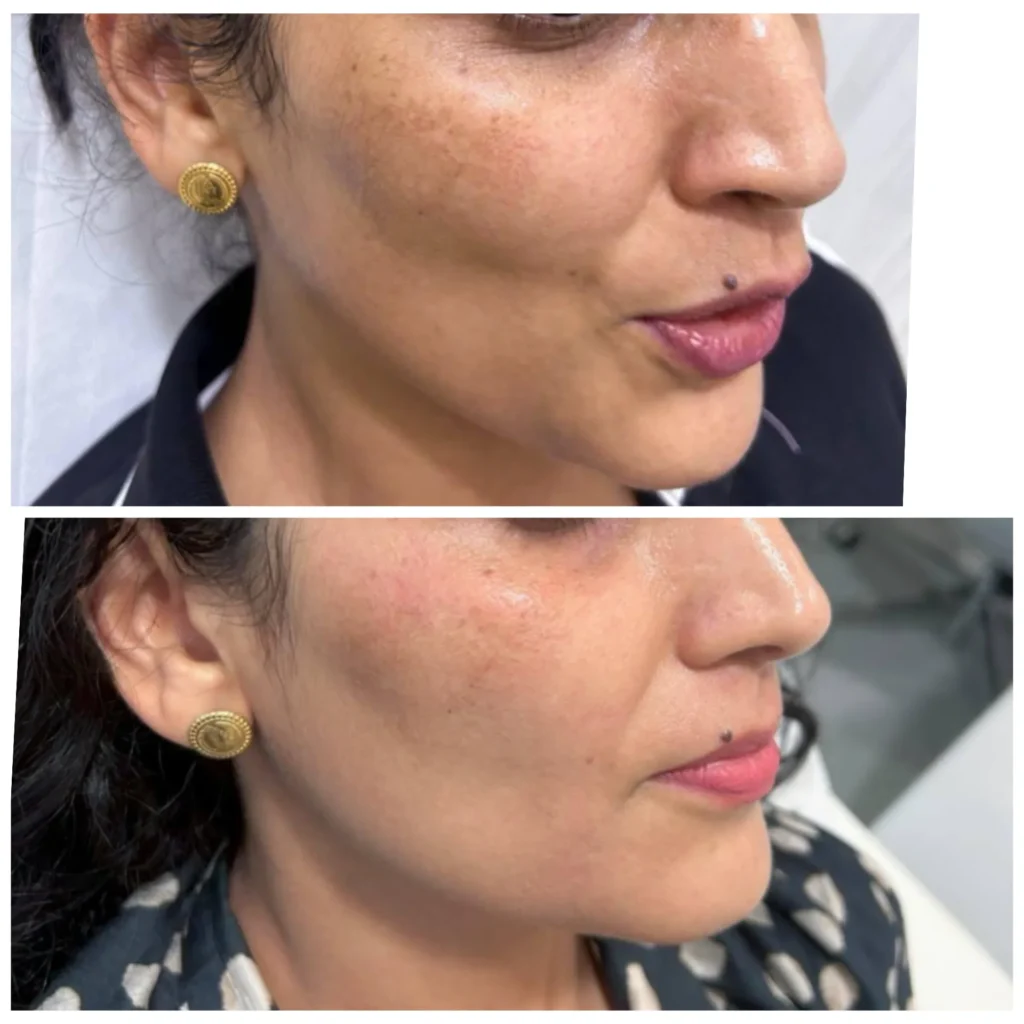
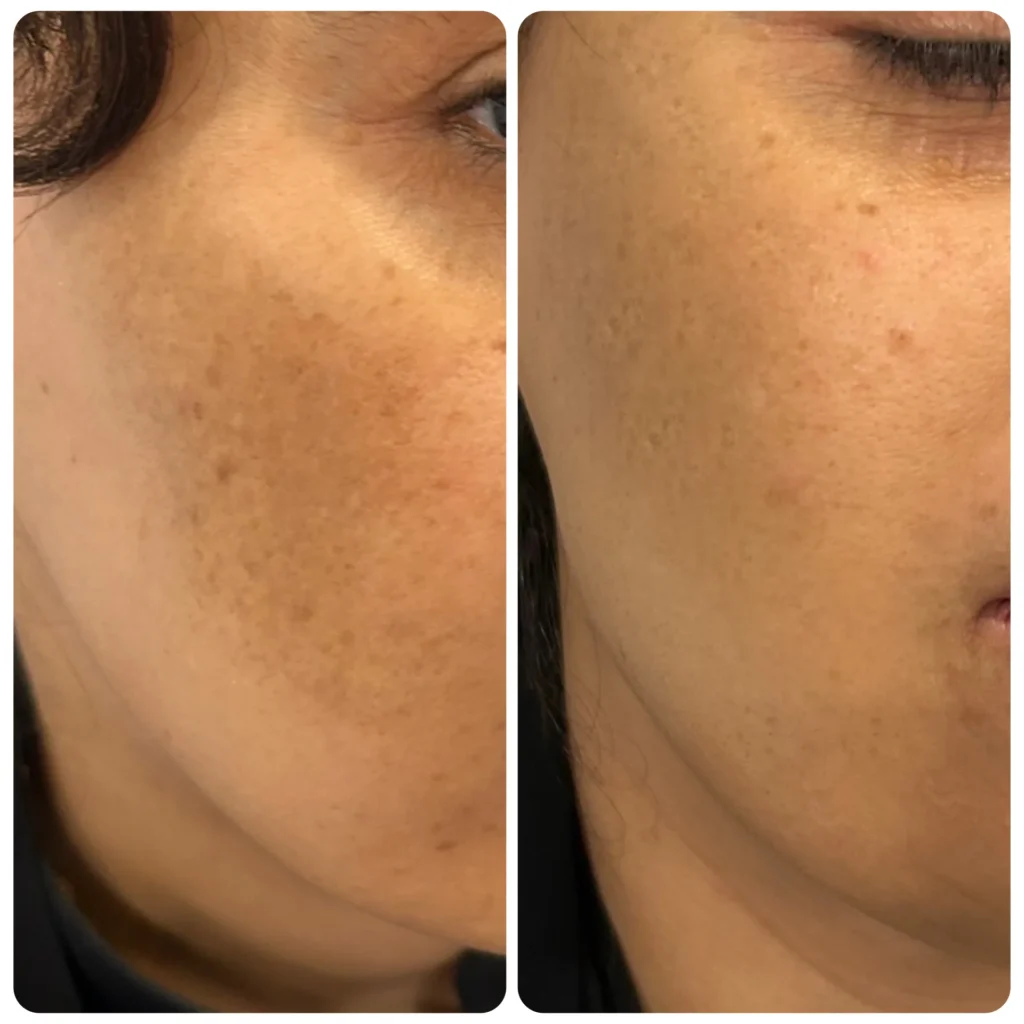
Melasma patches visibly lighter after a managed course of treatment (left); dark spots visibly faded (right). Treated by Dr. Azra Vaziri, Dubai.
* Photographs published with the patients’ written consent, in line with UAE medical advertising regulations. Individual results vary.
⎯ Safety
Pregnancy, Skin Tone and When to See a Doctor
Pregnancy and breastfeeding. Melasma often starts in pregnancy, and it is also when most active treatments pause. Many actives, hydroquinone among them, are avoided; strict sun protection alone is often the safest approach until treatment can resume. Some pregnancy melasma fades on its own afterwards; some stays. More in treatments in pregnancy and breastfeeding.
Medium to deeper skin tones. Overly strong peels, heat and aggressive laser can leave darker skin than you started with. The safer path is gentler and slower, built up step by step.
A spot that is changing. A dark spot that grows, changes shape or colour, has an irregular border, itches or bleeds is not a cosmetic question. Have it checked by a dermatologist before anything else is done.
Frequently Asked Questions
What is the difference between melasma and sun spots?
Melasma is hormonal and appears as symmetrical patches with blurred edges, usually on both cheeks, the forehead and the upper lip; it keeps returning with sun and heat. Sun spots are separate, clearly edged marks caused by years of UV, and they also appear on the hands and chest. Sun spots can often be cleared; melasma is managed and kept faint.
How do I know if my dark spots are melasma?
Melasma is likely if the patches mirror each other on both sides of the face, darken in summer or with heat, or appeared during pregnancy or while taking the pill. Separate spots with clear edges point to sun spots; marks exactly where pimples were point to post-acne pigmentation. The type is confirmed at a consultation.
Are acne marks the same as acne scars?
No. A mark is flat and discoloured — brown or reddish — and fades over time. A scar changes the surface of the skin, as a dent or a raised area, and does not fade on its own. See acne scar types.
Why does my melasma get worse in summer?
Melasma is switched on by UV, heat and visible light. In Dubai's summer all three peak, so patches darken even with ordinary sunscreen. A broad-spectrum, visible-light sunscreen every day, indoors as well as out, is what keeps it under control.
Can melasma be cured permanently?
No. Melasma is chronic — it can be lightened and kept faint with consistent treatment and daily protection, but it is likely to return if protection lapses or hormones change. Sun spots and post-acne marks, by contrast, can often be significantly faded or cleared.
Is laser good for melasma?
Usually not. Aggressive laser can trigger rebound pigmentation that leaves melasma darker, especially in medium to deeper skin tones. Dr Azra manages melasma with gentle peels, conservative microneedling, mesotherapy and a doctor-led home routine. See melasma treatment.
Which cream is best for melasma?
There is no single best cream. Prescription options such as hydroquinone, used in short supervised courses, and tranexamic acid are chosen by type, skin tone and medical history; azelaic acid, kojic acid, niacinamide and vitamin C are used between courses. A daily visible-light sunscreen matters more than any of them.
Do post-acne marks go away on their own?
Yes, usually, but slowly — often over many months, and longer in deeper skin tones. Treatment speeds that up considerably, provided the breakouts themselves are controlled so that new marks do not form.
Can I treat melasma while pregnant?
Most active treatments wait until after pregnancy and breastfeeding, and many actives, hydroquinone among them, are avoided. Strict sun protection is the safe step meanwhile. See treatments in pregnancy and breastfeeding.
Can I have more than one type at once?
Yes, and it is common — melasma on the cheeks with a few sun spots, or old acne marks alongside either. Each type is treated in the order that keeps the skin calm, which is why the plan starts with identifying them.
Which type does Dr Azra think I have?
That is decided by looking at your skin in person. Book a consultation with Dr Azra Vaziri in Dubai or Abu Dhabi.
Related: Pigmentation treatment · Melasma treatment · Chemical peels · Dermapen · Microneedling vs peels
Book a Consultation
Dr Azra Vaziri — DHA & DOH licensed aesthetic physician with 20+ years of experience in Dubai & Abu Dhabi.