Acne Scar Types & Treatments in Dubai
In short: rolling scars respond to subcision, boxcar scars to RF microneedling, and ice pick scars to TCA CROSS. Flat brown or red marks are not true scars and are treated with pigment care, sun protection and time. Most faces carry a mix, so plans usually combine two or three techniques.
- 20+Years' experience
- DHA · DOHLicensed
- 2Clinics
- 2004Practising since
Why Scar Type Decides the Treatment
The single most important fact about acne scars is that they are not all the same — and the right treatment depends entirely on the type of scar you have. Using the wrong technique wastes time and money; matching the technique to the scar is what produces real improvement.
This guide explains each scar type, the treatment built for it, and how the two are matched into a personalised plan. For prices, see the acne scar treatment cost page; for the full service overview, the acne scar treatment page.
Scar type also drives how many sessions are needed and how long the result takes to show, which is why the plan is agreed after an assessment rather than before it.
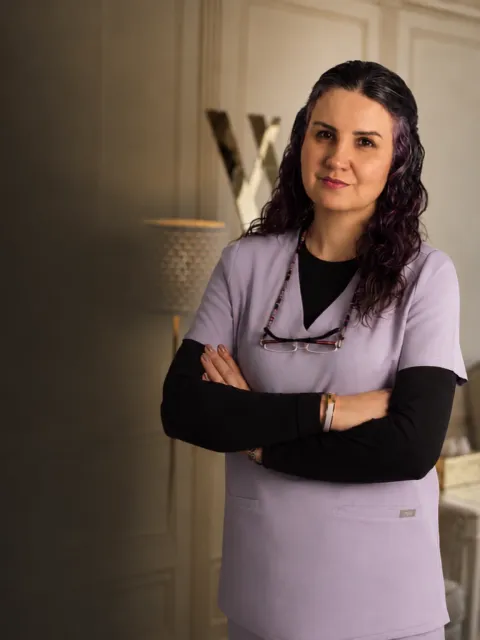
Matched, not guessed. Dr Azra Vaziri maps your scar mix in raking light and pairs each type with the technique built for it, in Dubai and Abu Dhabi.
Photograph published with the patient’s written consent, in line with UAE medical advertising regulations. Individual results vary.
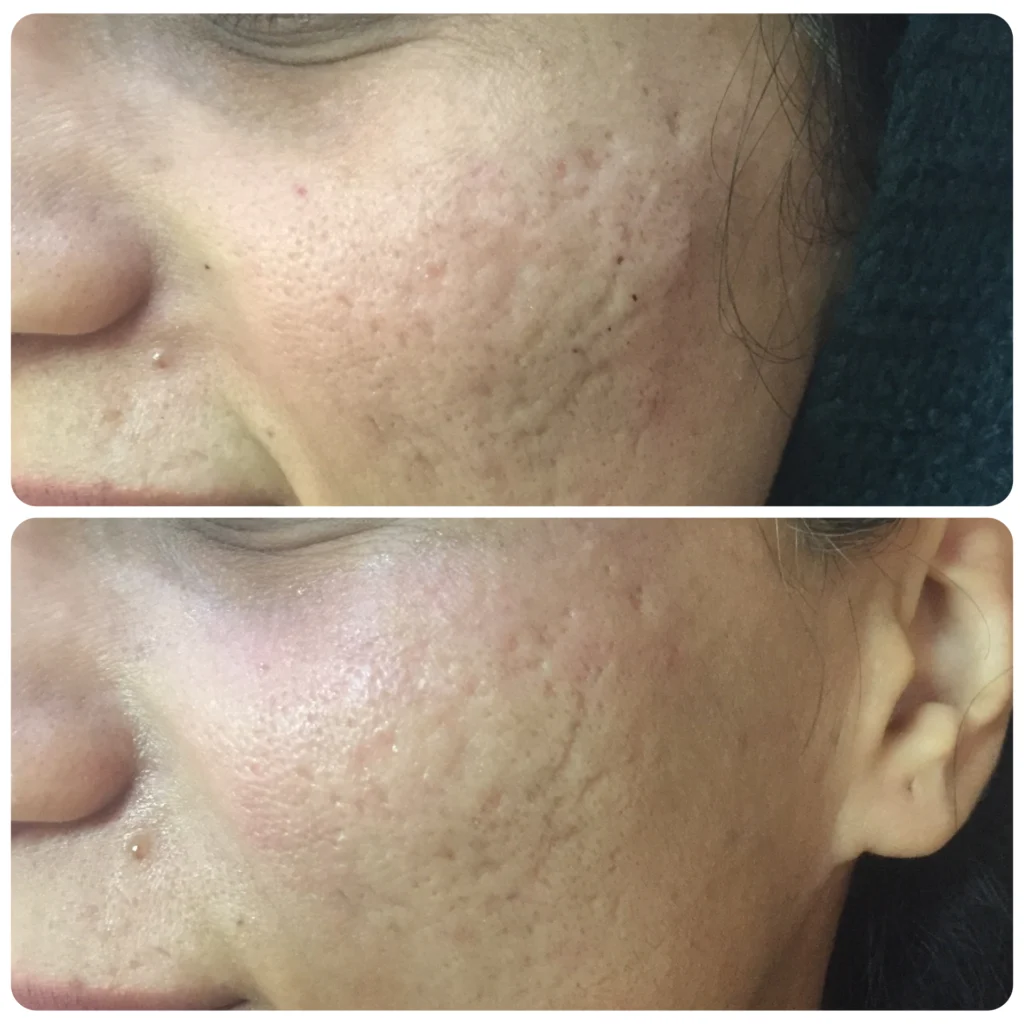
Which Treatment for Which Scar
This is the heart of acne scar treatment — the match between scar type and technique. Most people have a mix, so plans usually combine two or three of these.
| Scar type | Looks like | Best-matched treatment |
|---|---|---|
| Rolling | Broad, sloping, wave-like dips | Subcision + RF microneedling |
| Boxcar | Steep-walled, crater-like pits | RF microneedling; peels for shallow |
| Ice pick | Narrow, deep, puncture-like | TCA CROSS; punch for deepest |
| Pigmentation (PIH) | Flat brown/dark marks | Peels + pigment protocols |
| Redness (PIE) | Flat pink/red marks | Time, sun protection, vascular care |
Know Your Scar Type
The three atrophic (depressed) scar types below are the ones that need active treatment. Each has a different shape and a different underlying cause, which is exactly why one technique cannot fix them all.
Rolling Scars
Soft, sloping edges; flatten when you stretch the skin. Tethered by fibrous bands, so they respond to release, not resurfacing. If your dips flatten when you stretch the skin, mention it at your scar assessment.
Boxcar Scars
Steep walls, flat base, wide relative to depth. Need collagen rebuilt in the wall — RF microneedling leads. Wall depth and angle vary widely, which is what an in-clinic assessment measures.
Ice Pick Scars
Narrow and deep, like a puncture. Too deep for resurfacing — treated inside the channel with TCA CROSS. The very deepest may need punch excision instead — decided at assessment.
Flat Marks: Pigmentation and Redness
Not every mark left by acne is a true scar. Where the skin surface is smooth but the colour has changed, you are looking at flat discoloration — common after breakouts, especially in the UAE’s strong sun, and treated very differently from a depressed scar. Mistaking one for the other is a frequent reason treatment disappoints.
Post-Inflammatory Pigmentation (PIH)
Flat brown or grey-brown marks left where a spot has healed, caused by extra melanin rather than lost tissue. More common and more stubborn in medium-to-deep skin tones.
Read moreShow less
Managed with peels, targeted pigment protocols and, above everything, daily sun protection — resurfacing too aggressively can darken it further. If you are unsure whether a mark is pigment or a true scar, ask before treating.
Post-Inflammatory Erythema (PIE)
Flat pink or red marks from dilated capillaries under a healed spot, most visible on lighter skin. Many fade on their own over months with consistent sun protection and good skin care;
DetailsShow less
persistent redness responds to vascular-targeted care rather than needling or peels, which can inflame it. A short assessment tells you whether to wait or to treat.
How Your Scar Mix Is Assessed
Because the treatment follows the scar type, the first step is always an honest assessment — not a booking for a single machine. In the consultation, Dr Azra Vaziri examines the skin in raking (side) light, which throws each depression into relief and reveals its true shape: broad and sloping, steep-walled, or narrow and deep.
The aim is to map the mix. Almost every face carries more than one type, often with flat pigmentation or redness layered on top, so the assessment records which types dominate and where they sit. That map is what a staged, combination plan is built from — and it is why two people who both say they have “acne scars” can be given completely different treatments.
It is also the point at which active acne, skin tone and sun exposure are factored in. Any live breakouts are brought under control first, because treating over active acne can trigger fresh marks; and in a high-UV climate, a realistic sun-protection routine is agreed before any resurfacing begins. If you would like your own mix mapped, book a scar assessment in Dubai or Abu Dhabi.
Why Combination Plans Work Best
Almost nobody has just one scar type. A typical face carries a mix of rolling, boxcar and ice pick scars, sometimes with pigmentation on top. That is why the strongest results come from a staged combination — for example, subcision to release rolling scars, RF microneedling to remodel boxcars, and TCA CROSS for individual ice pick pits, spread across several months.
Two ground rules apply to every plan: active acne is controlled first, and sun protection is non-negotiable — especially in the UAE, where UV can drive pigmentation that undoes progress. Supporting treatments such as skin boosters and biostimulators improve overall skin quality between sessions. Which combination suits you is decided face to face, so arrange a consultation to have the stages set out.
Who Assesses Your Scar Mix — Dr Azra Vaziri
Almost nobody has one scar type, and the whole point of this guide is that the mix decides the plan.
Every Acne Scar Types & Treatments appointment at this clinic is assessed and injected by Dr Azra Vaziri herself — a DHA- and DOH-licensed aesthetic physician with more than 20 years of experience, practising aesthetic medicine since 2004.
Training behind the assessment
- Think-In, Anatomy & Aesthetic Treatment Workshop (2023) — facial anatomy training, which is what subcision and resurfacing depth both depend on.
- Aptos Threads International Certified Trainer
- Speaker — IMCAS World Congress 2024 (Paris), and Dubai Derma in 2023 and 2026
What Results to Realistically Expect
Acne scar treatment improves scars; it does not erase them to zero, and any clinic promising perfectly smooth skin in one session is overselling. Realistic, well-matched plans typically achieve a substantial reduction in scar depth and shadowing — enough that the skin reads as smooth in normal light — built up gradually rather than all at once.
Improvement is progressive because it depends on new collagen forming, which takes time. Most combination courses run over several months across three to six sessions, with the skin continuing to remodel for weeks after each one. Completing the full course, protecting the skin from sun between sessions, and controlling any new breakouts are what separate a good result from a disappointing one.
Downtime is modest and depends on the technique: expect redness and slight swelling for a day or two after microneedling or subcision, and small, self-limiting crusts at the treated points after TCA CROSS. Makeup is usually possible within a day or two, and most people plan sessions with a short social buffer. For an honest view of what your own scars can improve to, speak to the clinic.
Frequently Asked Questions
What are the main types of acne scars?
How do I know which acne scar type I have?
A quick guide: if a depression flattens when you stretch the skin, it is a rolling scar; if it has steep walls and a wide flat base, it is boxcar; if it is narrow and deep like a puncture, it is ice pick. A clinical assessment in raking light confirms the mix, which is often more than one type.
What is the best overall treatment for acne scars?
There is no single best treatment — the best result comes from matching techniques to your scar types and combining them. A common plan pairs subcision and RF microneedling with TCA CROSS for any ice pick scars.
Can different scar types be treated at the same time?
Yes. A single plan can address several scar types across staged sessions — for example subcision and RF microneedling in one phase, TCA CROSS for ice pick pits in another. Sequencing is chosen so each technique supports the others.
How long does acne scar treatment take overall?
Most combination plans run over several months, with 3 to 6 sessions depending on scar severity and types. Improvement is progressive, building with each session as collagen remodels, so patience and completing the course matter.
Book a Consultation
Dr Azra Vaziri — DHA & DOH licensed aesthetic physician with 20+ years of experience in Dubai & Abu Dhabi.