How to Choose an Aesthetic Doctor in Dubai (Without Getting Burned)
Dubai has hundreds of clinics offering Botox, fillers, and skin treatments. Some are excellent. Some are not. The problem is they all look the same from the outside — polished websites, confident claims, beautiful offices. This guide covers what actually matters when choosing a doctor for your face, and the red flags that tell you to walk away.
- 20+Years' experience
- DHA · DOHLicensed
- 2Clinics
- 2004Practising since
What to Check Before You Book
DHA or DOH licence. This is non-negotiable. Every doctor practising aesthetic medicine in Dubai must be licensed by the Dubai Health Authority (DHA). In Abu Dhabi, it’s the Department of Health (DOH). You can verify any doctor’s licence on the DHA Sheryan portal. If they’re not listed, don’t book.
Medical degree — not just a certification. In Dubai, aesthetic injections should be performed by a licensed physician. A weekend course in injectables does not make someone a doctor. Check whether your injector has a medical degree, not just a training certificate from a product company.
Years of experience with injectables. Aesthetic injection is a hands-on skill that improves with thousands of faces over many years. A doctor with five years of injection experience will handle your face differently from someone with five months. Ask directly: how long have you been doing this, and how many patients do you treat per week?
Specific training and credentials. Look for certifications from recognised bodies — not just product brands. Training from organisations like the American Academy of Aesthetic Medicine (AAAM), hands-on masterclass certifications (e.g., Allergan MD Codes, Aptos Threads), or conference participation (IMCAS, Dubai Derma) show ongoing professional development.
What products they use. A good clinic is transparent about the brands they use. In Dubai, all products should be DHA-approved. Ask whether the filler is HA-based (reversible) or something else. Clinics that won’t tell you exactly what they’re injecting are a red flag.
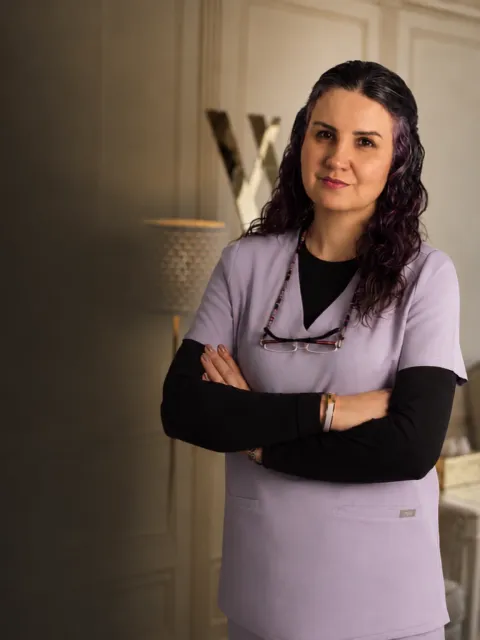
These are all fair things to ask any clinic in Dubai, including this one. Ask Dr Azra directly.
Red Flags to Watch For
Walk Away If
- They push treatments before examining your face
- They offer deals on products they haven’t explained
- They won’t tell you which brand of filler they use
- The injector isn’t a licensed doctor
- They promise results that sound too good (“permanent,” “risk-free”)
- They discourage you from getting a second opinion
Read moreShow less
- They never say no or suggest you don’t need anything
Good Signs
Every treatment plan with Dr Azra starts with a face-to-face assessment — book a consultation.
- They start with an assessment, not a price list
- They explain what they see and why they’d treat it
- They tell you what you don’t need
- They use named, DHA-approved products
- They have verifiable credentials and years of experience
DetailsShow less
- They welcome questions and second opinions
- Their results look natural — not dramatic
Why Instagram Isn’t Enough
A strong Instagram page shows that a clinic has a marketing budget — it doesn’t prove clinical skill. Filters, lighting, and angles can make any result look better. Consistent, natural-looking results across a range of face shapes and ages is what matters — and that’s hard to fake over time.
Look at the range of patients shown, not just the best results. Do all the patients look the same after treatment — same lips, same cheeks, same angles? That’s a template approach, not a personalised one. A skilled doctor’s work should look different on every face, because every face is different.
Also check whether the doctor has a presence beyond social media — published profiles on healthcare directories, conference participation, peer recognition. A polished grid with no verifiable credentials behind it should make you cautious.
Questions to Ask at Your First Consultation
You’re not being difficult by asking questions. A confident, experienced doctor will welcome them. Here are the ones that matter most:
- Are you DHA/DOH licensed? (You can verify this yourself on the Sheryan portal)
- How many years have you been performing injectable treatments?
- What brand and type of product will you use on me?
- How much product do you think I need — and why?
- What would you not recommend for my face right now?
- What are the risks, and how do you handle them if they happen?
- Can I see results on patients with a similar face shape to mine?
- Do you offer filler dissolving if the result isn’t right?
Frequently Asked Questions
How do I check if a doctor is licensed in Dubai?
Search their name on the DHA Sheryan portal. It will show their licence status, speciality, and the clinic they’re registered at. For Abu Dhabi, check the DOH provider directory. If the doctor isn’t listed on either, they are not licensed to practise in that emirate.
Does a more expensive clinic mean better results?
Not always. Price reflects many things — clinic location, overhead, marketing budget. What matters is the doctor’s skill, experience, and the quality of products used. A mid-range clinic with a highly experienced doctor will often deliver better results than a luxury clinic with a junior injector.
Should I go to a dermatologist or a cosmetic clinic?
What matters is the individual doctor’s training and experience with injectables, not the type of clinic. A dermatologist, GP, or aesthetic physician can all be excellent injectors if they have the right hands-on experience and specific training in facial anatomy and injection techniques.
Can nurses or technicians do Botox and fillers in Dubai?
In the UAE, injectable aesthetic treatments should be performed by a licensed physician. Regulations require a doctor to administer Botox and dermal fillers. If a clinic has someone other than a doctor performing these treatments, that’s a concern worth raising.
How many doctors should I consult before choosing?
At least two, especially if it’s your first time. Comparing how different doctors assess your face will tell you a lot — one may push a treatment the other doesn’t recommend, which helps you understand what you actually need. Don’t feel pressured to book on the spot at any consultation.
What if I already had a bad experience with a previous doctor?
A bad experience doesn’t mean you can’t get good results going forward. See a different experienced doctor for an honest assessment of what’s been done and what can be corrected. If HA filler was used, it can be dissolved. If Botox was used, it will fade within 3–4 months.
Is it better to see a doctor who specialises in one treatment or many?
A doctor who offers a range of treatments — Botox, fillers, skin boosters, threads — is more likely to recommend what you actually need rather than pushing the only tool they have. A broad toolkit means a tailored plan, not a one-treatment solution.
What should a first consultation include?
A proper first consultation includes a face-to-face assessment of your concerns, a discussion of your goals and expectations, an explanation of recommended treatments and alternatives, honest feedback on what you don’t need, and a clear breakdown of costs. If any of these are missing, the consultation isn’t thorough enough.
Book a Consultation
Dr Azra Vaziri — DHA & DOH licensed aesthetic physician with 20+ years of experience in Dubai & Abu Dhabi.