
Educational Guide
How to Restore Skin Radiance Naturally
Radiant skin is not simply a cosmetic quality — it is a visible indicator of how well your skin is functioning at a biological level. When your skin is well-hydrated, producing collagen efficiently, and turning over cells at a healthy rate, the result is a natural glow that no makeup can replicate. If you are wondering how to restore skin radiance that has faded with time, environmental exposure, or lifestyle factors, you are not alone. Patients across Dubai and Abu Dhabi commonly experience a gradual loss of skin luminosity driven by the region’s intense UV, air-conditioned environments, and natural aging. This guide explains what causes radiance to diminish and how clinical treatments can help restore it from within. See also our dull skin treatment page and glowing skin treatment guide.
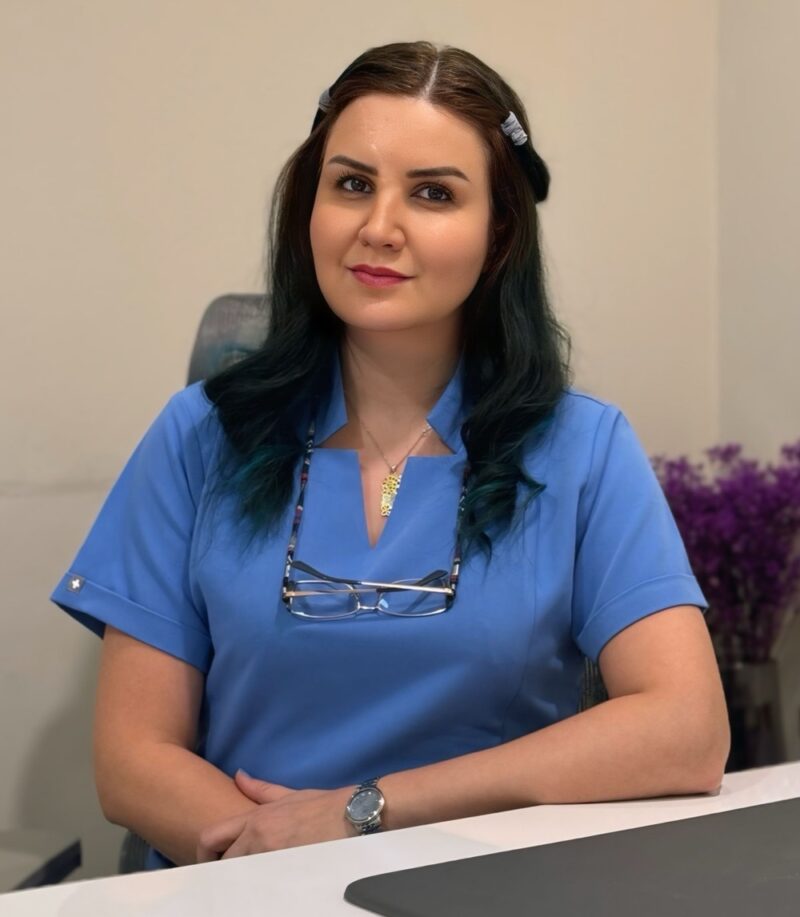
Written & Clinically Reviewed By
Dr. Azra Vaziri is a medical aesthetics practitioner based in Dubai and Abu Dhabi, specialising in regenerative aesthetic treatments and skin quality restoration. She designs personalised treatment protocols to address radiance loss based on clinical assessment.
What Makes Skin Look Radiant?
Skin radiance is the result of light reflecting evenly off a smooth, healthy skin surface. This requires several biological factors working together: adequate hydration in the dermis that keeps the skin plump and light-reflective, healthy collagen density that maintains a firm and even surface, active cell turnover that regularly replaces dull, damaged surface cells with fresh ones, good microcirculation that delivers oxygen and nutrients to skin cells, and an intact skin barrier that creates the smooth surface needed for even light reflection.
When any of these factors decline — through aging, environmental damage, or lifestyle — the skin’s ability to reflect light diminishes. The result is what patients describe as dullness, tiredness, or a loss of that natural glow.
Why Skin Loses Its Radiance
Radiance loss is rarely caused by a single factor. It is typically the cumulative effect of several biological and environmental influences:
UV exposure and photodamage — the most significant factor in the UAE. Ultraviolet radiation accelerates oxidative stress, breaks down collagen, disrupts melanin regulation, and damages the skin’s surface texture — all of which diminish radiance
Aging — natural decline in cell turnover rate, collagen production, and hyaluronic acid levels means the skin becomes drier, thinner, and less efficient at renewing itself
Air conditioning and low humidity — prolonged time in climate-controlled environments dehydrates the skin surface and disrupts barrier function, contributing to a flat, dull complexion
Oxidative stress and pollution — environmental pollutants generate free radicals that damage skin cells and contribute to uneven skin tone
Sluggish cell turnover — as turnover slows, dead skin cells accumulate on the surface, creating a rough texture that scatters light unevenly rather than reflecting it. For a deeper look at these causes, see why skin becomes dull.
Lifestyle factors — poor sleep, chronic stress, smoking, alcohol, and dietary deficiencies can all reduce the skin’s vitality and visible luminosity
Skincare habits — over-exfoliation can damage the barrier; under-protection (lack of SPF) accelerates photodamage; harsh products can strip the skin of its natural moisture
Surface Brightening vs. Biological Radiance Restoration
Topical brightening products — vitamin C serums, AHAs, niacinamide, retinoids — play a valuable role in maintaining radiance. They work by gently exfoliating dead surface cells, providing antioxidant protection, and supporting the skin barrier. However, they act primarily at the epidermal level and cannot address the deeper biological causes of radiance loss.
Clinical treatments restore radiance at a structural level by stimulating collagen production in the dermis, restoring deep hydration, accelerating cell turnover from within, and improving microcirculation. This is the difference between brightening the surface and rebuilding the biological foundation that creates lasting, natural luminosity.
Biological Radiance Restoration
Depth: Dermis — the structural layer
Duration: Results last weeks to months
Mechanism: Collagen stimulation, deep hydration, growth factors, cellular signalling
Best for: Chronic dullness, structural radiance loss, aging-related luminosity decline
Surface Brightening
Depth: Epidermis — the surface layer
Duration: Hours to days; requires daily use
Mechanism: Exfoliation, antioxidant protection, barrier support
Best for: Daily maintenance, mild unevenness, surface smoothness
Note: These approaches are complementary. Clinical treatments rebuild the foundation; daily skincare maintains and extends the results.
Clinical Treatments That Restore Skin Radiance
Several clinical treatments can restore skin radiance by addressing the underlying biological factors that contribute to dullness. Each works through a different mechanism, and they are often combined for more comprehensive results.
PRP skin therapy uses concentrated growth factors from your own blood to improve microcirculation, stimulate collagen renewal, and support overall skin vitality. By enhancing blood flow and cellular repair, PRP can help restore the natural luminosity that fades with age and environmental exposure.
Skin booster treatment and Profhilo deliver hyaluronic acid directly into the dermis, restoring the deep hydration that gives skin its plumpness and light-reflective quality. Profhilo additionally stimulates collagen and elastin through bio-remodelling. Dehydrated skin scatters light unevenly — well-hydrated skin reflects it smoothly, which is the physical basis of the “glow.”
Microneedling collagen induction therapy and RF microneedling create controlled micro-injuries that activate the wound-healing response, stimulating fresh collagen and elastin production while accelerating cell turnover. This replaces dull, damaged surface cells with healthy new tissue — directly addressing one of the primary causes of lost radiance.
Exosome therapy and polynucleotide injections deliver cell-derived signalling molecules that instruct skin cells to accelerate repair, reduce inflammation, and upregulate regenerative processes. Inflammation is a common but underappreciated contributor to dullness — by addressing it at the cellular level, these treatments can support a clearer, more luminous complexion.
Collagen biostimulator treatments rebuild the structural collagen framework that supports the skin’s surface. When collagen density improves, the skin becomes firmer and smoother — creating a more even surface that reflects light uniformly, contributing to visible radiance.
| Treatment | How It Restores Radiance | Best For | Results Timeline |
|---|---|---|---|
| PRP | Improves microcirculation and cellular renewal | Dullness, vitality loss, uneven tone | 4–8 weeks |
| Skin Boosters | Restores deep dermal hydration for light reflection | Dehydration-driven dullness, fine lines | 1–4 weeks |
| Microneedling | Accelerates cell turnover and collagen production | Rough texture, sluggish turnover, pores | 4–12 weeks |
| Exosomes | Reduces inflammation and signals cellular repair | Inflammation-driven dullness, advanced rejuvenation | 4–12 weeks |
| Biostimulators | Rebuilds collagen for smoother, firmer surface | Density loss, laxity, structural dullness | 8–12 weeks (lasting 1–2 years) |
Timelines are general guidelines. Your treatment plan will be determined during consultation.
What to Expect From Radiance-Restoring Treatments
Before Your Appointment
Every treatment begins with a clinical skin assessment. Dr. Azra Vaziri evaluates your skin’s current condition — hydration levels, texture, tone, collagen quality — to determine which treatment or combination is most appropriate. You may be asked to avoid certain medications (such as blood thinners or retinoids) in the days before your appointment, and to arrive with clean, product-free skin.
During Treatment
Most radiance-restoring treatments take 30 to 60 minutes. A topical anaesthetic is typically applied to minimise discomfort. Skin booster and PRP treatments involve micro-injections distributed across the treatment area, while microneedling uses a controlled device passed over the skin surface. Most patients describe the sensation as mild and manageable.
Aftercare and Recovery
Downtime is minimal for most treatments. Skin boosters may cause mild redness or small bumps that resolve within 24 to 48 hours. Microneedling may result in redness and light sensitivity for one to three days. PRP and exosome treatments generally have minimal visible recovery time.
Common aftercare includes avoiding direct sun exposure, refraining from active skincare ingredients (retinoids, AHAs) for a few days, and keeping the skin gently hydrated. Your specific aftercare plan is provided at the time of treatment.
Supporting Radiance Between Treatments
Clinical treatments provide the biological foundation for radiance, but daily habits play an essential role in maintaining and extending those results. Between treatment sessions, a few consistent practices can make a meaningful difference:
Sun protection — broad-spectrum SPF 30 or higher, reapplied throughout the day. UV exposure is the single largest contributor to radiance loss in Dubai.
Antioxidant support — a vitamin C serum or antioxidant formulation helps neutralise free radical damage and supports the skin’s natural repair.
Gentle exfoliation — a mild AHA or enzyme exfoliant used one to two times per week supports cell turnover without damaging the barrier. Over-exfoliation does more harm than good.
Hydration — both internal (adequate water intake) and topical (hyaluronic acid serum, barrier-supportive moisturiser) help maintain the dermal hydration that clinical treatments restore. See our guide on how to improve skin hydration.
Sleep and stress management — the skin repairs and regenerates most actively during sleep. Chronic stress and sleep deprivation directly impair this process.
Who May Benefit From Clinical Radiance Treatments
You may benefit from clinical skin radiance treatments if you are experiencing persistent dullness that does not improve with topical products alone, a loss of natural glow or luminosity that has developed gradually, uneven skin tone or texture that affects how your skin reflects light, early signs of skin aging that are affecting radiance, or a general decline in skin vitality.
These treatments are also well-suited for patients living in the United Arab Emirates who are regularly exposed to high UV levels and air-conditioned environments — factors that accelerate radiance loss. They can be used preventatively to maintain skin luminosity before significant decline occurs.
Who May Not Be a Suitable Candidate
While radiance-restoring treatments are well-tolerated by most patients, they are not appropriate for everyone. You may not be a suitable candidate if you have:
Active skin infections or inflammation — including herpes simplex outbreaks, active acne cysts, eczema flare-ups, or open wounds in the treatment area
Pregnancy or breastfeeding — as a precaution, most injectable and microneedling treatments are not performed during pregnancy or nursing
Autoimmune conditions — certain autoimmune disorders may affect treatment suitability; this is assessed individually during consultation
Recent isotretinoin use — patients are generally advised to wait several months after completing isotretinoin before undergoing microneedling or procedures that rely on wound healing
Known allergy to hyaluronic acid — though rare, patients with a confirmed HA allergy should not receive skin booster treatment
Suitability is always confirmed during a medical consultation, where your full medical history and skin condition are assessed before any treatment is recommended.