
Treatments › Face › Under Eye Guide · Dubai Dark circles, hollows, fine lines, and puffiness each have different causes — and each needs a different treatment. Tear trough filler replaces lost volume. Innovyal and polynucleotides rebuild skin quality. Exosomes accelerate repair. The right treatment depends on what’s actually causing your concern. This guide covers every option available, from AED 500 (PRP, standard AED 600) to AED 3,200 (combined dark circle protocol, standard AED 3,600). Dark circles, hollowing, puffiness, fine lines, crepey skin — the under-eye area is one of the most common reasons patients visit an aesthetic clinic, and one of the most complex to treat properly. The delicate periorbital skin is thinner than almost anywhere else on the body, has minimal fat padding, and sits over muscle and bone in a way that makes every change — volume loss, pigmentation, vascular congestion — immediately visible. In Dubai and Abu Dhabi, under-eye concerns are compounded by chronic UV exposure, dehydration from air conditioning, and the fatigue patterns of a fast-paced lifestyle. This guide covers every under-eye treatment available at Dr Azra Vaziri’s clinics, how each one works, and how to match the right treatment to the specific cause of your concern. For a focused look at the most common under-eye complaint, see our dedicated dark circles treatment page →
Under Eye Treatments in Dubai: Complete Guide

The most important thing about under-eye treatment is understanding the cause before choosing the treatment. “Dark circles” is not a diagnosis — it is a symptom with multiple possible causes, each requiring a different approach. For a detailed breakdown of how to distinguish between these causes, see our guide on dark circles vs hollow under-eyes → Tear trough hollowing — A shadow caused by volume loss beneath the eye. The orbital bone becomes more visible as the fat pad above it thins. The darkness is not actually in the skin — it is a shadow cast by the structural deficit. This is the most common cause of dark circles from your mid-thirties onward. Pigmentation — True hyperpigmentation in the under-eye skin, often genetic or worsened by UV exposure, allergies, or inflammation. More common in patients with higher Fitzpatrick skin types. The darkness is in the skin itself, not from a shadow. Vascular congestion — Blood vessels visible through the thin under-eye skin, creating a blue or purple discolouration. Worsened by fatigue, allergies, poor circulation, and dehydration. Skin quality deterioration — Thin, crepey, dehydrated skin that has lost its thickness and elasticity. This makes everything beneath (vessels, muscle, bone) more visible and gives the area a tired, aged appearance. Puffiness and eye bags — Herniation of the orbital fat pad, creating a bulge beneath the eye. This can be genetic or develop with age as the septum weakens. Significant eye bags may require surgical evaluation. Hyaluronic acid filler placed carefully in the tear trough restores the volume deficit that creates the shadow. When performed by an experienced clinician, the result is immediate — the hollow is filled, the shadow disappears, and the eyes look rested and refreshed. However, tear trough filler is technically demanding. The under-eye area is unforgiving — overfilling, incorrect placement, or the wrong product can cause puffiness, Tyndall effect (bluish discolouration), or irregularity. Not sure whether filler is the right option for your under-eyes? See our guide: Innovyal vs under-eye filler — which do you actually need? → Key point: Tear trough filler is excellent when the cause is volume loss, but only when performed by a clinician experienced in this specific area. Not all dark circles are suitable for filler. From AED 1,350 (Teosyal Under Eye, standard AED 1,500) · Combined protocol from AED 3,200 (standard AED 3,600). Innovyal Undereye is a specialised hyaluronic acid formulation designed specifically for the periorbital area. Unlike structural tear trough filler, Innovyal works by deeply hydrating and improving the quality of the under-eye skin without adding volume or weight. It is particularly effective for patients with dehydrated under-eye skin, early fine lines, and mild hollowing who are not candidates for volumising filler. Key point: A gentler, lower-risk option than filler for patients whose under-eye concern is skin quality rather than structural volume loss. From AED 700/session (standard AED 800) · Package of 3: AED 1,800 (standard AED 2,100). Polynucleotides — particularly Rejuran I, which is specifically formulated for the periorbital area — improve under-eye skin thickness, hydration, and quality without adding volume or weight. They activate fibroblasts, stimulate collagen, and repair the barrier of this fragile skin. This addresses the root cause of crepey, thin, tired-looking under-eye skin. Key point: Ideal for patients who need under-eye quality improvement without structural volume. See our full guide on the salmon DNA facial and what are polynucleotides. Profhilo can be carefully placed in the periorbital area to hydrate and bioremodel the under-eye skin. It improves skin quality, adds a subtle plumpness, and stimulates collagen and elastin without the risks associated with volumising filler. Many clinicians use Profhilo under the eyes for patients who need hydration and glow rather than structural volume correction. Key point: A safe, effective option for mild under-eye concerns focused on quality rather than volume. From AED 1,500/session (standard AED 1,800). Jalupro Young Eye is a bio-revitalising injectable combining amino acids with hyaluronic acid, specifically formulated for the periorbital zone. It stimulates fibroblast activity and supports collagen and elastin production in the thin under-eye skin, improving firmness and reducing fine crepey lines without adding volume. Key point: A targeted bio-revitalisation option for under-eye skin that has lost firmness and elasticity. AED 1,200/session (standard AED 1,500). Sunekos is an injectable combination of hyaluronic acid and amino acids that stimulates collagen and elastin production in the periorbital area. It is gentle enough for the under-eye zone and can improve both skin quality and mild pigmentation. For more significant hyperpigmentation, targeted medical-grade topicals (vitamin C, retinoids, azelaic acid, niacinamide) prescribed by a clinician complement injectable treatments. From AED 1,400/session (standard AED 1,600). Key point: True pigmentation-based dark circles require a different approach from volume loss. Correct diagnosis is essential. PRP (Platelet-Rich Plasma) injected under the eyes can improve circulation, reduce inflammation, and stimulate tissue renewal — addressing the vascular component of dark circles. Alongside clinical treatment, improving sleep quality, managing allergies, increasing hydration, and reducing screen-induced eye strain all contribute to reducing vascular congestion. From AED 500/session (standard AED 600) · Package of 3: AED 1,000 (standard AED 1,200). Key point: Vascular dark circles often improve with a combination of clinical treatment and lifestyle adjustment. Exosome therapy delivers stem cell-derived growth factors and signalling molecules to accelerate healing after under-eye procedures. Applied topically after microneedling or as part of a Dermapen Exosome protocol, exosomes can reduce downtime, enhance collagen remodelling, and improve overall under-eye skin quality. From AED 1,200/session (standard AED 1,400). Key point: Best used as an adjunct to other under-eye treatments rather than a standalone solution for hollowing or pigmentation. Mild puffiness can sometimes be managed with lymphatic drainage, lifestyle changes, and skin-tightening treatments. However, significant eye bags caused by fat pad herniation may require a surgical evaluation (blepharoplasty). Non-surgical treatments can improve the skin quality around the bags but cannot remove the structural bulge. Honest assessment is essential — and Dr Azra Vaziri will advise clearly on what is achievable non-surgically. Many patients have more than one cause contributing to their under-eye appearance. A combination protocol — for example, tear trough filler for volume plus polynucleotides for skin quality, or Innovyal for hydration followed by PRP for vascular improvement — often produces the most comprehensive result. For more on the problem-first approach, see our dark circles treatment page.
Step One: What Is Actually Causing Your Under-Eye Concern?
Treatments Matched to the Cause
For Tear Trough Hollowing → Tear Trough Filler
For Hydration & Skin Quality → Innovyal Undereye
For Skin Quality → Polynucleotides (Rejuran I)
For Skin Quality → Profhilo Under Eyes
For Collagen & Elastin → Jalupro Young Eye
For Pigmentation → Sunekos & Targeted Topicals
For Vascular Congestion → PRP & Lifestyle Optimisation
For Post-Procedure Recovery → Exosome Therapy
For Puffiness / Eye Bags → Assessment Required
Under Eye Treatments at a Glance
Treatment
Best For
How It Works
From
Sessions
Tear Trough Filler
Hollowing, shadow-based dark circles
HA filler restores volume deficit
AED 1,350 (standard AED 1,500)
1 session; lasts 9–12 months
Innovyal Undereye
Dehydration, early fine lines, mild hollowing
Specialised periorbital HA — hydration without volume
AED 700 (standard AED 800)
3 sessions; maintenance every 4–6 months
Polynucleotides (Rejuran I)
Thin/crepey skin, quality, barrier repair
DNA fragments activate fibroblasts, build collagen
AED 1,700 (standard AED 2,000)
3–4 sessions; lasts 6–12 months
Jalupro Young Eye
Firmness, elasticity, fine crepey lines
Amino acids + HA bio-revitalisation
AED 1,200 (standard AED 1,500)
3–4 sessions; lasts 6–9 months
Profhilo
Dehydration, mild hollowing, quality
HA bioremodelling — hydration + collagen/elastin
AED 1,500 (standard AED 1,800)
2 sessions; lasts 6–12 months
Sunekos
Quality, mild pigmentation, gentle option
HA + amino acids stimulate collagen/elastin
AED 1,400 (standard AED 1,600)
4 sessions; lasts 6 months
PRP
Vascular dark circles, overall rejuvenation
Autologous growth factors improve circulation and renewal
AED 500 (standard AED 600)
3–4 sessions; lasts 6–12 months
Exosome Therapy
Post-procedure recovery, skin repair
Stem cell-derived growth factors accelerate healing
AED 1,200 (standard AED 1,400)
3–4 sessions; builds over 2–3 months
The under-eye area demands particular caution. A few important points: Not all dark circles need filler. If the cause is pigmentation, vascular congestion, or skin quality — filler will not help and may make things worse. Treatments like Innovyal Undereye, polynucleotides, or PRP may be more appropriate. Correct diagnosis is the first and most important step. Overfilling is a real risk. The tear trough is a delicate space. Too much filler, the wrong type of filler, or poor placement can cause puffiness, lumps, or Tyndall effect that may require dissolving. Less is more in this area. Not all providers are experienced in this area. The under-eye is one of the most technically demanding zones in aesthetic medicine. Choose a clinician who treats this area regularly and can demonstrate experience. Eye bags are different from hollowing. Significant fat pad herniation (true eye bags) cannot be resolved with injectable treatments and may require surgical evaluation. A good clinician will tell you this honestly.
What to Be Cautious About
Why Choose Dr Azra for Under-Eye Treatment
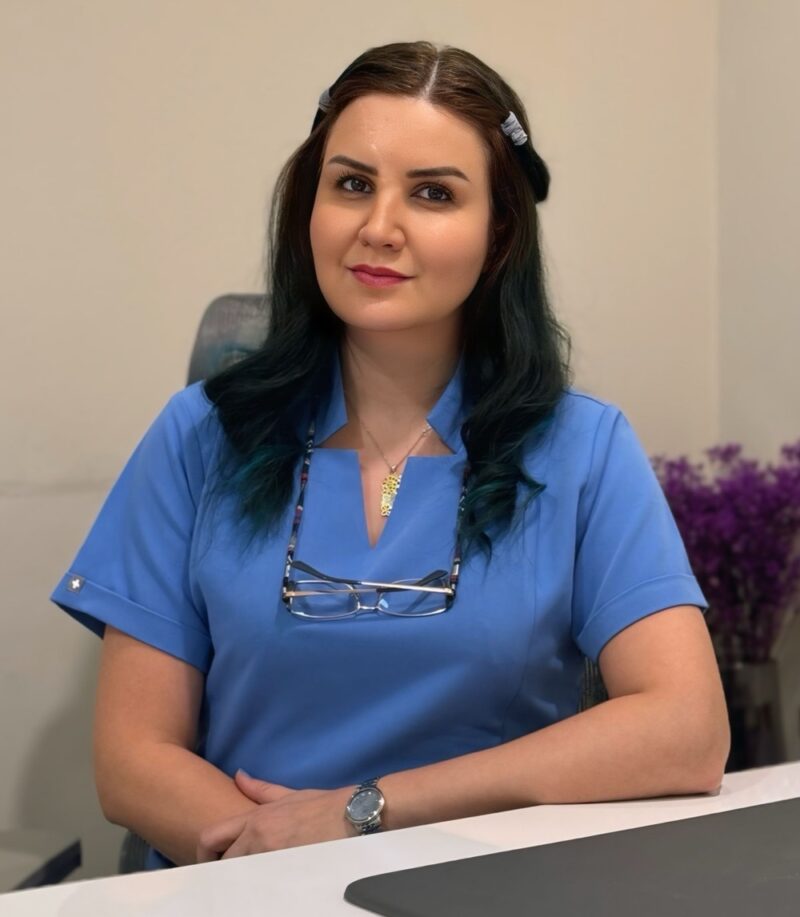
Dr Azra Vaziri is a DHA and DOH licensed aesthetic physician with over 20 years of experience treating under-eye concerns. She takes a diagnostic-first approach — identifying whether your dark circles are caused by volume loss, pigmentation, vascular congestion, or skin quality deterioration before recommending treatment.
DHA & DOH Licensed
Licensed in Dubai and Abu Dhabi
20+ Years Experience
Injectable aesthetics since 2004
Diagnostic-First Approach
Treats the cause, not just the symptom
Frequently Asked Questions
Browse all treatments under All Treatments and Face Treatments.
Book a Consultation
Dr Azra Vaziri — DHA & DOH licensed aesthetic physician with 20+ years of experience in Dubai & Abu Dhabi.