Dark Circles vs Hollow Eyes — How to Tell the Difference
A doctor’s guide to identifying what’s actually causing your under-eye shadow — and why the answer determines whether you need filler, brightening injections, or both.
- 20+Years' experience
- DHA · DOHLicensed
- 2Clinics
- 2004Practising since
Why This Distinction Matters
Most patients walk into aesthetic clinics asking for under-eye filler. The image they have in mind — usually from social media or a friend’s result — shows a treatment that fixed someone else’s shadows. What they don’t know is that their shadows might have a completely different cause.
Treating a pigmented dark circle with filler doesn’t make the darkness disappear — it just adds volume to skin that wasn’t lacking it. The pigment is still there, and the area can end up looking worse: puffier, but still discoloured. Similarly, trying to brighten a true hollow with skin treatments won’t work, because there’s no pigment to brighten — there’s only shadow from missing volume.
The diagnostic comes first. The treatment comes second. Dr Azra Vaziri spends a significant portion of every under-eye consultation distinguishing between the three causes of under-eye shadows — because using the wrong treatment is a waste of your money and, in some cases, a reason patients become disappointed with aesthetic medicine entirely.
The Three Causes of Under-Eye Shadows
Clinical assessment recognises three distinct mechanisms behind the appearance of dark under-eyes. Each has different visual signatures and each responds to different treatments.
| What it is | What it looks like | Treatment | |
|---|---|---|---|
| CAUSE 1 Structural (hollow) | Volume loss in the tear trough or midface fat compartments creates a depression. The depression catches shadow under any overhead light, giving the impression of darkness even though the skin itself is normal. | The shadow has depth — you can almost see the groove. Often worse when tired or dehydrated. Can be genetic (deep-set eyes) or age-related (fat pad descent). | Undereye filler (HA-based, conservative dose). |
| CAUSE 2 Pigmented | Excess melanin in the epidermis or dermis under the eye. Often genetic, often visible from a young age. Common in melanin-rich skin types (Fitzpatrick III–VI), worsens with sun exposure. | Brown, ochre, or grey-brown discoloration of the skin itself. The colour is in the tissue, not from shadow. Visible under any lighting, doesn’t disappear when skin is stretched. | Innovyal Undereye (Lightening Action), chemical peels, topical tranexamic acid. |
| CAUSE 3 Vascular | Visible blood vessels showing through thin under-eye skin. The bluish or purplish tint comes from deoxygenated blood in the dermal vessels. Worsens with allergies, fatigue, screen strain, alcohol, dehydration. | Bluish or purplish hue (not brown). More visible in the morning after poor sleep or in cold weather. Skin appears translucent. | Innovyal Regenerative, polynucleotides, lifestyle changes. |
The Four Home Tests Doctors Use
These are the simple physical tests dermatologists and aesthetic doctors use during consultation. You can do them in front of a mirror at home in 30 seconds. They won’t replace a proper consultation, but they will tell you which category your under-eye concern most likely falls into.
| How | What it tells you | |
|---|---|---|
| TEST 1 The Stretch Test | Stand in good lighting in front of a mirror. Gently pull the skin of your under-eye area outward and downward — or place a finger on your cheekbone and push the skin upward toward the eye. | If the darkness disappears when you stretch or lift, you have a structural hollow — shadow from volume loss. If the darkness remains visible, you have pigmentation in the skin itself. |
| TEST 2 The Tilt Test | Hold a mirror in front of your face. Tilt your head upward toward the ceiling so the overhead light falls more directly on the under-eye area, then tilt downward. | If darkness varies dramatically with angle and lighting, hollows are creating shadow. If darkness looks the same at every angle, it’s pigmentation or vascular in origin. |
| TEST 3 The Colour Test | Look closely at the colour of the darkness itself in natural daylight. Compare it to your normal skin tone elsewhere on your face. | Brown or ochre indicates melanin pigmentation. Blue or purple indicates vascular darkness from thin skin. Greyish, shadow-like with depth indicates structural hollows. |
| TEST 4 The Family History Test | Look at your parents and grandparents. Did they have visible under-eye darkness from a young age? Do you remember having dark circles as a teenager? | Pigmentation and vascular darkness are strongly genetic. Structural hollows can be either genetic (deep-set eye sockets) or age-related (volume descends from your 30s onwards). Childhood-onset darkness points to pigmentation or vascular causes. |
The Reality: Most Patients Have a Combination
In a published clinical assessment framework for under-eye darkness, only 26% of surveyed practitioners used a formal classification system — which is one reason patients often receive treatments that don’t fully resolve their concern. The truth is that under-eye darkness in adults is almost always a combination of two or three causes acting together.
A typical Dubai patient in their late 30s might have: genetic pigmentation from a melanin-rich skin tone, vascular darkness worsened by office screen time and dry indoor air, and early structural hollowing from facial fat pad descent. Each cause contributes a layer of darkness. Treating only one of them will produce partial improvement — and patients often leave thinking the treatment “didn’t work” when actually the treatment worked perfectly on one component, but the other two components were left untreated.
This is why Dr Azra’s assessment focuses on identifying the dominant cause, the secondary contributors, and a treatment sequence that addresses each component. A typical combination protocol might involve a conservative undereye filler for the hollow, followed 4–6 weeks later by a course of Innovyal Undereye for the pigmentation, with lifestyle guidance for the vascular component. Treating in the right order matters: filler placed on top of unaddressed pigmentation can make the discoloration more visible.
Matching the Cause to the Right Treatment
A reference table for which treatments address which under-eye concerns. The correct treatment depends entirely on what’s causing the darkness — not on what your friend had done.
| Cause | First-Line Treatment | Alternative / Combination |
|---|---|---|
| Structural hollow | Undereye filler (HA-based) | Cheek/midface filler if volume loss is broader |
| Pigmentation (brown/ochre) | Innovyal Lightening Action | Chemical peels, topical tranexamic acid, mesotherapy |
| Vascular (blue/purple) | Innovyal Regenerative | Polynucleotides, PRP, lifestyle changes |
| Thin or crepey skin | Polynucleotides | Profhilo, skin boosters |
| Combination (hollow + pigment) | Filler first, Innovyal 4–6 weeks later | Sequencing depends on dominant concern |
| Severe bags / fat herniation | Surgical referral (lower blepharoplasty) | No non-surgical treatment will resolve true herniation |
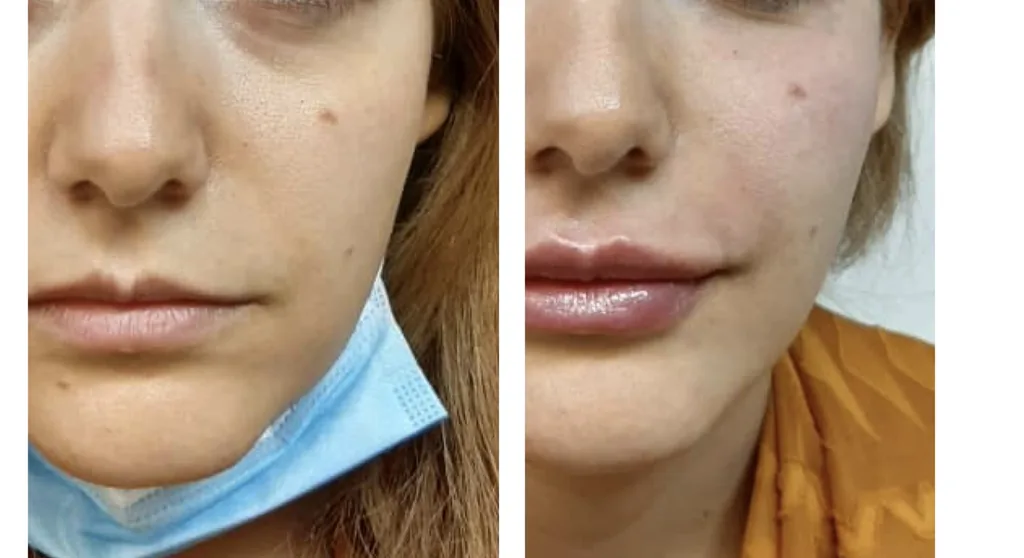
Hollow Eyes Before and After
A hollow, not pigment: filler under the eye and in the mid-cheek, and the shadow goes with the hollow; before (left), after (right). Treated by Dr. Azra Vaziri, Dubai.
* Photograph published with the patient’s written consent, in line with UAE medical advertising regulations. Individual results vary.
When to See a Doctor (And What to Ask)
If you’ve tried over-the-counter eye creams for a few months without improvement, it’s worth booking a proper aesthetic consultation. The home tests above narrow down the cause, but a doctor will assess factors a mirror can’t: skin thickness, orbital vector, lid-cheek junction position, midface volume, and skin quality of the surrounding tissue.
During your consultation, ask three questions: What’s actually causing my dark circles? Is filler the right treatment for my specific cause, or would something else work better? If you recommend a combination, what’s the right sequence and how long should I wait between treatments? A doctor who answers all three precisely is doing the work properly. A doctor who immediately recommends filler without doing physical assessment tests is treating from a template, not from your face.
Frequently Asked Questions
How do I know if my dark circles are from hollows or pigmentation?
Can I have both pigmentation and hollows at the same time?
Why doesn't undereye filler fix pigmented dark circles?
What causes hollow under-eyes in your 20s?
Are dark circles caused by lack of sleep?
Why are my dark circles worse in Dubai?
Can dark circles be inherited?
Do eye creams work for dark circles?
Should I get treatment for dark circles in my 20s?
What treatment do most patients actually need?
Book a Consultation
Dr Azra Vaziri — DHA & DOH licensed aesthetic physician with 20+ years of experience in Dubai & Abu Dhabi.