
Comparison Guide · Profhilo · Skin Boosters

Profhilo vs Skin Boosters: Which Should You Choose?

Profhilo is a bioremodelling injectable that spreads across the tissue to hydrate broadly and stimulate collagen plus elastin — producing overall glow and mild tightening. Skin boosters are hyaluronic acid micro-droplets injected into the dermis for targeted hydration and surface smoothness. The key difference: Profhilo remodels skin quality across a wide area with just 2 sessions; skin boosters hydrate specific zones over 3 sessions.

In simple terms: Profhilo = broad glow + tightening (2 sessions). Skin boosters = targeted hydration + smoothness (3 sessions). They can also be combined — and often are.

Both are injectable skin quality treatments — not fillers and not volumisers. This guide explains how each works, what results to expect, and how Dr Azra Vaziri recommends choosing between them. For a broader three-way comparison, see Profhilo vs Skin Boosters vs Polynucleotides.
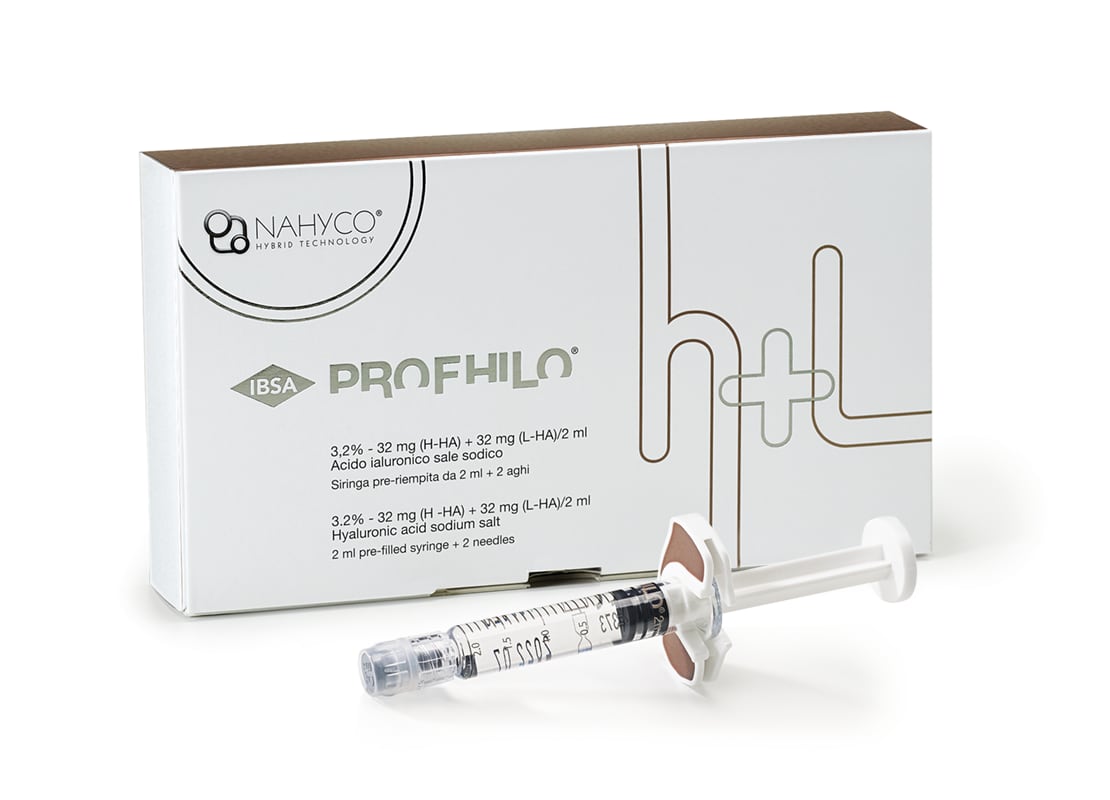
Profhilo NAHYCO pre-filled syringe and box, the bioremodelling injectable compared with skin boosters

Profhilo is a single branded product with one fixed formula. “Skin booster” is a category — a dozen different brands sit inside it.

2 vs 3
sessions needed — Profhilo against a booster course
64 mg
ultra-pure HA in one Profhilo syringe
6–12 mo
how long Profhilo holds, against 4–6 for boosters
5 + 5
BAP points per session — boosters use a full grid

Side-by-Side Comparison

Feature Profhilo Skin Boosters
Active ingredient Ultra-pure hyaluronic acid (64 mg, high + low molecular weight) Hyaluronic acid micro-droplets — brand-dependent (Juvederm Volite, Jalupro, Restylane Skinboosters, Sunekos)
How it works Injected at 5 BAP points per side; spreads broadly and triggers bioremodelling (hydration + collagen + elastin stimulation) Injected in a grid pattern or via mesotherapy gun; stays at injection site and hydrates the dermis locally
Collagen stimulation Yes — stimulates 4 types of collagen + elastin Minimal — primarily a hydration treatment
Best for Overall glow, mild laxity, skin quality across face/neck/hands Dull, dehydrated skin; surface smoothness; fine lines; pre-event prep
Sessions required 2 sessions, 4 weeks apart 3 sessions, 2–4 weeks apart
How fast you see results 1–2 weeks (the distinctive “Profhilo glow”) 1–2 weeks (visible smoothness and dewiness)
Results last 6–12 months 4–6 months
Treatment areas Face, neck, hands, body Face, neck, décolletage, lips, perioral area
Under-eye use Yes — commonly used Not typically first-line for under-eyes
Price point Mid-range (2 sessions total) Most accessible — see pricing
Can they be combined? Yes. Profhilo provides the bioremodelling foundation; skin boosters add targeted hydration in specific zones (lips, perioral, or dehydration-prone areas). They treat different layers of skin quality and are often used together.

Profhilo vs the Named Skin Booster Brands

Most people arrive at this question holding a specific product name — a clinic has quoted them Volite, or Sunekos, or NCTF — and want to know how it compares with Profhilo. That is the right way round to ask it. Profhilo is one product with one formula; “skin booster” is a shelf with a dozen different products on it, and they are not interchangeable. Here is what sits inside the ones used most often in Dubai, and where each one parts company with Profhilo.

Product What is actually in it How it differs from Profhilo Typical course
Profhilo 64 mg ultra-pure HA — 32 mg high + 32 mg low molecular weight, thermally bonded with no chemical cross-linker 2 sessions, 4 weeks apart
Restylane Skinboosters (Vital) Stabilised, lightly cross-linked NASHA hyaluronic acid Cross-linked, so it stays where it is placed instead of spreading across the tissue 3 sessions
Juvéderm Volite Lightly cross-linked VYCROSS hyaluronic acid Designed as a single-session hydration treatment rather than a two-step bioremodelling course 1 session
Viscoderm Hydrobooster Hyaluronic acid with IBSA’s patented stretch technology Same manufacturer as Profhilo, but built for dynamic lines and placed intradermally in a line pattern, not at 5 points 3 sessions
Belotero Revive Cohesive polydensified matrix HA with added glycerol The glycerol acts as a humectant; a redensifying hydrator rather than a collagen and elastin stimulator 2–3 sessions
Jalupro Non-cross-linked HA plus four amino acids The amino acids feed fibroblasts directly; often run before or alongside another treatment 3–4 sessions
Sunekos HA plus a patented six amino acid complex Aimed at rebuilding the extracellular matrix; frequently chosen for the under-eye area 4 sessions
NCTF 135HA (Fillmed) Non-cross-linked HA inside a 59-ingredient polyrevitalising complex A mesotherapy cocktail — vitamins, minerals, antioxidants and coenzymes travel with the HA 3–4 sessions
Toskani TKN HA3 Hyaluronic acid at three molecular weights with peptides Delivered as a mesotherapy grid across the whole area rather than at fixed points 3–4 sessions
Aquashine HA with a peptide complex Peptide-led, so it is often chosen where tone and brightness matter as much as hydration 3 sessions
RRS HA Long Lasting HA with an antioxidant and vitamin complex A mesotherapy solution that stays in the dermis at the injection site 3–4 sessions
Hyaron Plain non-cross-linked hyaluronic acid, larger volume No added actives — straightforward hydration with nothing stimulating collagen 3 sessions

Two names that get filed here by mistake: Gouri and Ellansé are not skin boosters at all. Both are polycaprolactone (PCL) products that work by stimulating your own collagen over months — they belong with the biostimulators, not with hyaluronic acid hydrators. If a clinic has offered you one as a “booster”, you are being quoted a different category of treatment.

How Each Treatment Works

Profhilo

Profhilo contains one of the highest concentrations of hyaluronic acid available in any injectable — 64 mg of ultra-pure HA per syringe, combining both high and low molecular weight chains. It is not injected in a grid pattern like skin boosters. Instead, it is injected at five strategic points on each side of the face (the BAP technique), then spreads across the tissue like honey.

This spreading action triggers a process called bioremodelling — Profhilo does not just hydrate, it stimulates the production of four types of collagen plus elastin. This dual action (hydration + structural renewal) is what produces the distinctive “Profhilo glow” and mild skin tightening. It is part of the broader regenerative aesthetics category.

Protocol: 2 sessions spaced 4 weeks apart. Maintenance every 6 months. Can also be used on the neck, hands, and body.

What the five points actually do

  • Five injection points per side of the face — the BAP map is the same for every patient.
  • The product is not placed where you want the result. It is placed where it can travel.
  • 64 mg of HA in one 2 ml syringe, thermally bonded rather than chemically cross-linked.
  • Spreading is what triggers the response: four collagen types plus elastin, not hydration alone.
  • One formula, no brand decision to make — which is exactly what boosters do not offer.

Skin Boosters

Skin boosters deliver micro-droplets of hyaluronic acid directly into the dermis through a grid of small injections or via a mesotherapy gun. Unlike Profhilo (which spreads broadly), skin boosters stay where they are placed and hydrate the skin at the injection site. Unlike dermal fillers, they do not add volume — they improve skin quality. Learn more: how skin boosters improve skin quality.

“Skin booster” is a category, not a single product. Dr Azra works with Juvederm Volite, Jalupro, Restylane Skinboosters and Sunekos, among others — each a different formulation, which is why results and session counts vary between brands in a way they do not with Profhilo, where there is only one product.

The result is improved skin smoothness, hydration, fine line reduction, and a dewy surface quality. Skin boosters are the most straightforward injectable skin treatment — they hydrate, they plump, they improve texture. They do not stimulate collagen to the same degree as Profhilo. They are particularly popular for patients dealing with skin dehydration or dullness in Dubai’s climate.

Protocol: 3 sessions spaced 2–4 weeks apart. Maintenance every 4–6 months. See skin booster pricing →
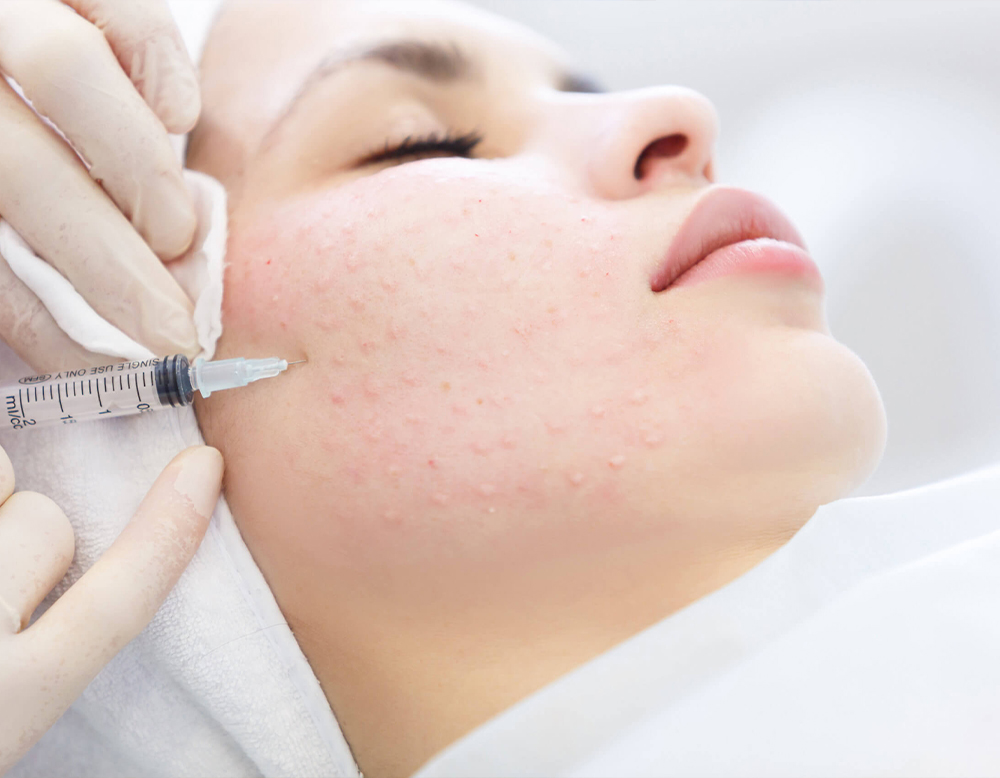
Skin booster injected as a grid of micro-droplets across the cheek, the raised blebs showing where the product stays

A booster is delivered as a grid across the whole area. The raised blebs are the product sitting exactly where it was placed — it does not travel. Profhilo goes into five points and spreads from there.

When to Choose Each Treatment

Choose Profhilo When
  • Your skin has lost its glow and feels lax or tired
  • You want visible radiance with mild tightening
  • You prefer fewer sessions (2 vs 3)
  • You also want to treat the neck or hands
  • You want longer-lasting results (6–12 months vs 4–6)
  • You want collagen stimulation, not just hydration

Learn more about Profhilo →

Choose Skin Boosters When
  • Your main concern is dehydration and surface dullness
  • You want smoother, plumper skin with a dewy finish
  • You are preparing for an event or want a hydration top-up
  • You want targeted treatment in specific zones (lips, perioral)
  • Budget is a consideration — see pricing · Profhilo pricing
  • You are new to injectables and want a gentle starting point

Learn more about skin boosters →

Can Profhilo and Skin Boosters Be Combined?

Yes — and for many patients, using both produces a more complete result than either one alone. Because they work in different ways (broad bioremodelling vs targeted hydration), they complement rather than duplicate each other.

A common approach is to use Profhilo as the foundation treatment for overall skin quality, glow, and collagen stimulation across the face and neck. Then skin boosters are layered into specific zones that need extra hydration — the perioral area, lips, or areas prone to surface dryness in Dubai’s climate.

These treatments are staggered across sessions rather than performed on the same day. Dr Azra Vaziri maps out the sequencing based on your skin’s condition during your assessment at her clinics in Dubai and Abu Dhabi.

For patients who want to go further, both can also be combined with polynucleotides for deep cellular repair, exosomes for cellular signalling, or microneedling for surface renewal. See the full comparison: Profhilo vs Skin Boosters vs Polynucleotides.

Profhilo Alternatives — What to Consider Instead

“What is the alternative to Profhilo?” is one of the most common follow-up questions in consultation, and the honest answer depends on why you are asking. Four different reasons lead to four different answers.

You want the same bioremodelling effect

There is no generic Profhilo — the NAHYCO bond is patented. The closest thing in kind is another bioremodeller rather than a hydrator: Profhilo Structura works on the deeper fat pads, and Rejuran repairs at the cellular level. Both stimulate; neither simply hydrates.

Profhilo did not do enough for you

That usually means the problem was never skin quality. Slackness along the jaw or a hollow cheek needs structure, not hydration — that is biostimulators such as Sculptra or Radiesse, or in some cases fillers. Adding more Profhilo will not change a structural result.

You want repair, not just water

If the concern is texture, scarring or damaged skin rather than dryness, polynucleotides and exosomes work further upstream. See Profhilo vs polynucleotides for the direct comparison.

Cost is the reason you are asking

Then a booster course is the honest answer, and the brand matters less than how many sessions you will actually commit to. A three-session course you finish beats a two-session Profhilo course you abandon halfway. Skin booster pricing sets out the options.

Related Treatments & Comparisons

Comparison

Profhilo vs Boosters vs PN

Three-way comparison.

Comparison

Profhilo vs Polynucleotides

Glow vs deep repair.

Comparison

Skin Boosters vs Polynucleotides

Hydration vs repair.

Comparison

Skin Boosters vs PRP

HA vs growth factors.

Guide

How Skin Boosters Work

Science of HA hydration.

Comparison

Profhilo vs Rejuran

Bioremodelling vs PDRN.

Comparison

Profhilo vs Exosomes

Bioremodelling vs regenerative.

Frequently Asked Questions

Both use hyaluronic acid, but they work differently. Skin boosters deliver HA micro-droplets that stay at the injection site and hydrate locally. Profhilo contains a much higher HA concentration (64 mg) that spreads across the tissue and triggers bioremodelling — stimulating collagen and elastin alongside hydration. Profhilo produces a broader, more structural effect; skin boosters produce targeted surface hydration.

Profhilo results typically last 6–12 months. Skin booster results last approximately 4–6 months. Profhilo also requires fewer sessions (2 vs 3), so the total treatment commitment and longevity both favour Profhilo. However, skin boosters are more affordable per session — see pricing.

Neither is universally better — they serve different purposes. Profhilo is stronger for overall skin quality, glow, and mild tightening because it stimulates collagen and elastin. Skin boosters are better for targeted hydration in specific zones, pre-event prep, or as a maintenance hydration treatment between other procedures. For many patients, combining both produces the best result.

Yes. They are commonly combined because they work in complementary ways. A typical approach is Profhilo for broad bioremodelling across the face, followed by skin boosters in specific zones that need extra hydration (lips, perioral area, or dehydration-prone areas). The treatments are staggered across separate sessions. Dr Azra Vaziri designs the sequencing based on your skin assessment.

If dehydration is your primary concern, skin boosters are the more targeted solution — they deliver HA directly into the dermis where moisture is needed most. However, if your skin is also showing signs of collagen loss, laxity, or early aging alongside dehydration, Profhilo addresses both hydration and structural quality in one treatment. Learn more: how to improve skin hydration.

For a first-time skin quality treatment, Profhilo is often the recommended starting point — fewer sessions, visible glow, and collagen stimulation. If budget is a primary consideration or you mainly want surface hydration before an event, skin boosters are a straightforward entry point. A consultation with Dr Azra will clarify which is the better first step for your specific skin.

Not in the strict sense. Both are injectable skin-quality treatments rather than fillers, so Profhilo is often grouped with skin boosters in clinic menus — but it works differently. Skin boosters deposit hyaluronic acid where they are injected to hydrate that spot; Profhilo spreads through the tissue from 5 points per side and stimulates collagen and elastin, which hydration-only boosters do not do. If someone tells you Profhilo is “just a skin booster”, that is the distinction they are missing.

No. Neither Profhilo nor skin boosters add structural volume. Both improve skin quality — hydration, texture, firmness, and glow — from within. If volume restoration is needed (cheek, jawline, or chin definition), that requires dermal fillers or biostimulators like Radiesse or Sculptra.

Polynucleotides are a different category entirely — DNA fragments that activate fibroblasts and repair the skin barrier at the cellular level. They go deeper than both Profhilo and skin boosters. If your skin is damaged, thin, or reactive, polynucleotides may be more appropriate. See: Profhilo vs Polynucleotides and Skin Boosters vs Polynucleotides.

It depends which part of Profhilo you are trying to match. If it is the bioremodelling — collagen and elastin stimulation rather than hydration alone — nothing in the booster category does that, and Profhilo Structura or Rejuran are nearer in kind. If it is the low session count, Juvéderm Volite is designed as a single treatment. If it is the ingredient list, NCTF 135HA and Toskani TKN HA3 carry the most actives alongside the hyaluronic acid. The table above sets out what is inside each one.

There is no generic version — the NAHYCO bond that lets Profhilo spread without a chemical cross-linker is patented. What the right alternative is depends on why you are asking. If Profhilo did not do enough, the concern was probably structural rather than skin quality, which points to biostimulators or fillers. If you want repair rather than hydration, that is polynucleotides or exosomes. If cost is the reason, a booster course is the honest answer.

Book a Consultation

Get a personalised skin-quality plan — boosters, PRP, exosomes or microneedling — from Dr Azra Vaziri, DHA & DOH licensed.