
Skin Treatments · Melasma · Dubai & Abu Dhabi
Melasma Treatment in Dubai
Melasma is one of the most stubborn pigmentation conditions — and Dubai’s intense UV exposure makes it especially challenging. Dr Azra Vaziri uses a multi-step protocol combining microneedling, chemical peels, and targeted topical therapy to manage melasma safely and effectively.
What Is Melasma
Melasma is a chronic pigmentation disorder that causes brown or grey-brown patches on the face — most commonly on the cheeks, forehead, nose bridge, upper lip, and chin. Unlike post-inflammatory hyperpigmentation that fades on its own, melasma is driven by hormonal and UV triggers and tends to recur without ongoing management.
Melasma is stubborn facial pigmentation triggered by hormones and UV. It’s different from regular dark spots — it needs a specialised, multi-step treatment approach and strict daily SPF. Dr Azra uses gentle microneedling, chemical peels, and medical-grade depigmentation protocols to manage melasma safely in Dubai’s climate.
Melasma is especially common in Dubai because of year-round UV exposure, high temperatures, and the diverse population — it affects all skin tones but is most visible in Fitzpatrick types III–V. Hormonal triggers include pregnancy (often called “pregnancy mask”), oral contraceptives, and hormone replacement therapy. Heat exposure from the climate, cooking, and saunas can also worsen it.
The key difference from general hyperpigmentation is that melasma sits deeper in the skin (dermal melasma) and responds poorly to aggressive treatments like high-intensity laser. Dr Azra takes a conservative, layered approach — building gradual improvement without triggering rebound pigmentation.
Melasma Treatment Options
Dr Azra designs a phased melasma protocol combining in-clinic treatments with at-home topical therapy. The approach depends on your melasma type, depth, and skin tone.
Chemical Peels
Melanin-inhibiting peels using ingredients like azelaic acid, kojic acid, and mandelic acid applied in controlled sessions. Targets surface pigmentation without the rebound risk of aggressive peels. Spaced 3–4 weeks apart.
Dermapen Microneedling
Gentle microneedling with depigmenting serums enhances product penetration and stimulates skin renewal. Used at conservative depths to avoid triggering inflammation that could worsen melasma.
PRP Therapy
Platelet-rich plasma promotes skin healing and may help regulate melanocyte activity. Often combined with microneedling as a vampire facial for enhanced results.
Is This Treatment Right for You
- You have brown or grey-brown facial patches
- Pigmentation worsens with sun or heat exposure
- Pigmentation appeared during pregnancy or with hormonal changes
- Over-the-counter products haven’t worked
- You want a safe, gradual approach without aggressive laser
- Melasma is manageable but not permanently curable
- Daily SPF 50+ is non-negotiable for results
- Aggressive laser treatments can worsen melasma
- Pregnancy may delay treatment start
- Results require patience — improvement is gradual
Consultation with Dr Azra includes skin assessment and personalised protocol design.
Melasma Treatment Before and After
Melasma patches, visibly lighter. Melasma needs patient, protocol-driven care — aggressive treatment makes it worse. This result comes from a managed course of melasma treatment tailored to the patient’s skin type.
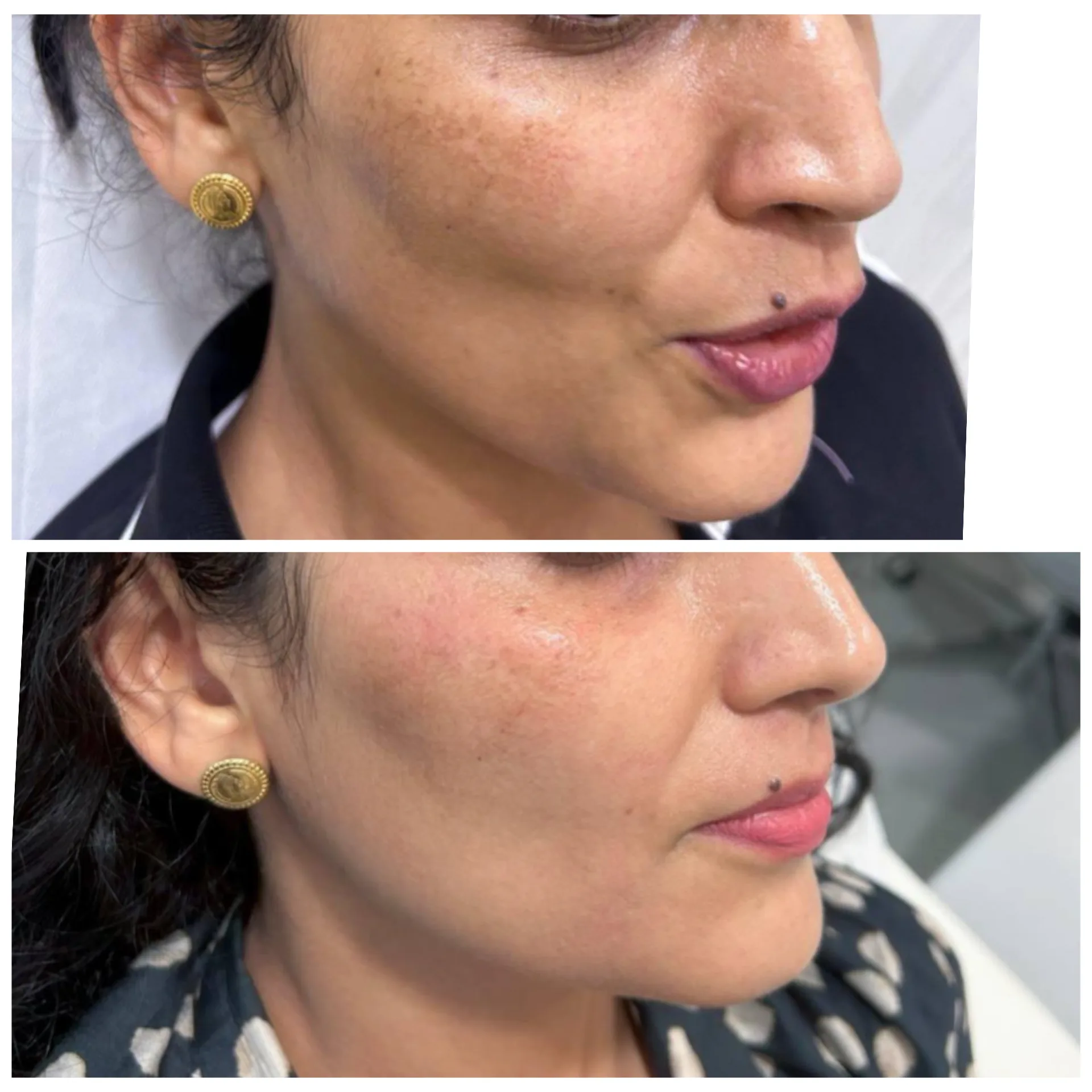
Melasma treatment — treated by Dr. Azra Vaziri, Dubai.
* Photographs published with the patient’s written consent, in line with UAE medical advertising regulations. Individual results vary — book a consultation to see cases similar to yours.
Frequently Asked Questions
Melasma Treatment at a Glance
| Detail | What to Know |
|---|---|
| Treatment time | 30–45 minutes |
| Downtime | Little to none |
| Results visible | Gradual over weeks to a few months |
| Course | Series of sessions plus home care |
| Maintenance | Ongoing — melasma is a chronic condition |
| Essential | Daily broad-spectrum, visible-light SPF |
Melasma Treatment Approaches Compared
| Approach | Role | Onset | Notes |
|---|---|---|---|
| Sun protection | The foundation of every plan | Ongoing | Non-negotiable; results fail without it |
| Mesotherapy / brightening | Reduce melanin activity | Weeks | Gentle, gradual |
| Gentle chemical peel | Lift surface pigment | Weeks | Low-strength, carefully selected |
| Laser | Used with great caution | — | Can trigger rebound if misused |
Results Timeline
| When | What happens |
|---|---|
| First 1–2 weeks | Skin settles; sun protection and home care take effect |
| Weeks 2–4 | Initial, gentle lightening of the patches |
| Months 2–3 | Pigment is visibly clearer with continued treatment |
| Ongoing | Maintenance keeps melasma stable and faint |
| If SPF lapses | Relapse is likely — protection is permanent, not optional |
Combining Treatments for Melasma
Melasma is best managed with several gentle elements working together rather than one strong treatment. Dr Azra typically combines daily medical-grade sun protection (the non-negotiable foundation) with mesotherapy or brightening protocols to calm pigment, occasional low-strength peels to lift surface colour, and a tailored home routine that does much of the long-term work. The emphasis throughout is on calming the skin, never irritating it — because inflammation is what makes melasma rebound.
Safety & Side Effects
The greatest risk in melasma is over-treatment. Aggressive lasers, strong peels or harsh actives can trigger rebound pigmentation that leaves the skin darker than before, which is why Dr Azra deliberately favours gentle, low-risk options. Mild, short-lived redness can follow some treatments. During pregnancy and breastfeeding, many actives are avoided and strict sun protection alone is often the safest approach until active treatment can resume.
Before Your Treatment
Aftercare
Why Patients Choose Dr Azra for Melasma
Melasma is one of the easiest conditions to make worse, so experience and restraint matter more than aggressive technology. Dr Azra Vaziri takes a caution-first approach honed over 20+ years: she avoids the harsh lasers and strong peels that can trigger rebound pigmentation, and instead builds gentle, layered plans that calm the skin and fade pigment gradually. She has extensive experience treating medium-to-deeper skin tones, where melasma is most stubborn, and frames treatment honestly as long-term management rather than a one-off cure. Patients value that she protects the skin first — and that her plans are designed specifically for Dubai’s high-UV, high-heat environment.
Visiting Dr Azra’s Clinic in Dubai
Melasma is especially common in Dubai because of intense, year-round UV and heat. Dr Azra Vaziri treats patients from across Dubai — Downtown, Business Bay, Jumeirah, Dubai Marina and JBR — at her clinic on Sheikh Zayed Road (Exit 41), with a gentle, sun-smart protocol built for the local climate. Book a consultation by phone or WhatsApp.
Book a Consultation
Get a personalised treatment plan for your skin concern from Dr Azra Vaziri — DHA & DOH licensed, 20+ years of experience.