

Comparison Guide · Skin Boosters · PRP

Skin Boosters vs PRP: Hydration or Growth Factors?

Skin boosters deliver hyaluronic acid directly into the dermis through micro-injections — they hydrate from within, improve glow, and smooth fine lines without adding volume. PRP (Platelet-Rich Plasma) uses concentrated growth factors from your own blood to stimulate collagen production, healing, and tissue repair — a regenerative approach rather than a hydration one.

In simple terms: Skin boosters = injectable hydration (HA into the dermis for glow and moisture). PRP = growth factor stimulation (your own blood for collagen and repair). Different mechanisms, different strengths — and they can be combined for comprehensive skin quality improvement.

This guide explains how each works and when Dr Azra Vaziri recommends one, the other, or both. For related comparisons, see Profhilo vs Skin Boosters vs Polynucleotides · PRP vs Exosome Therapy · Stem Cell Facial vs PRP vs Exosomes.
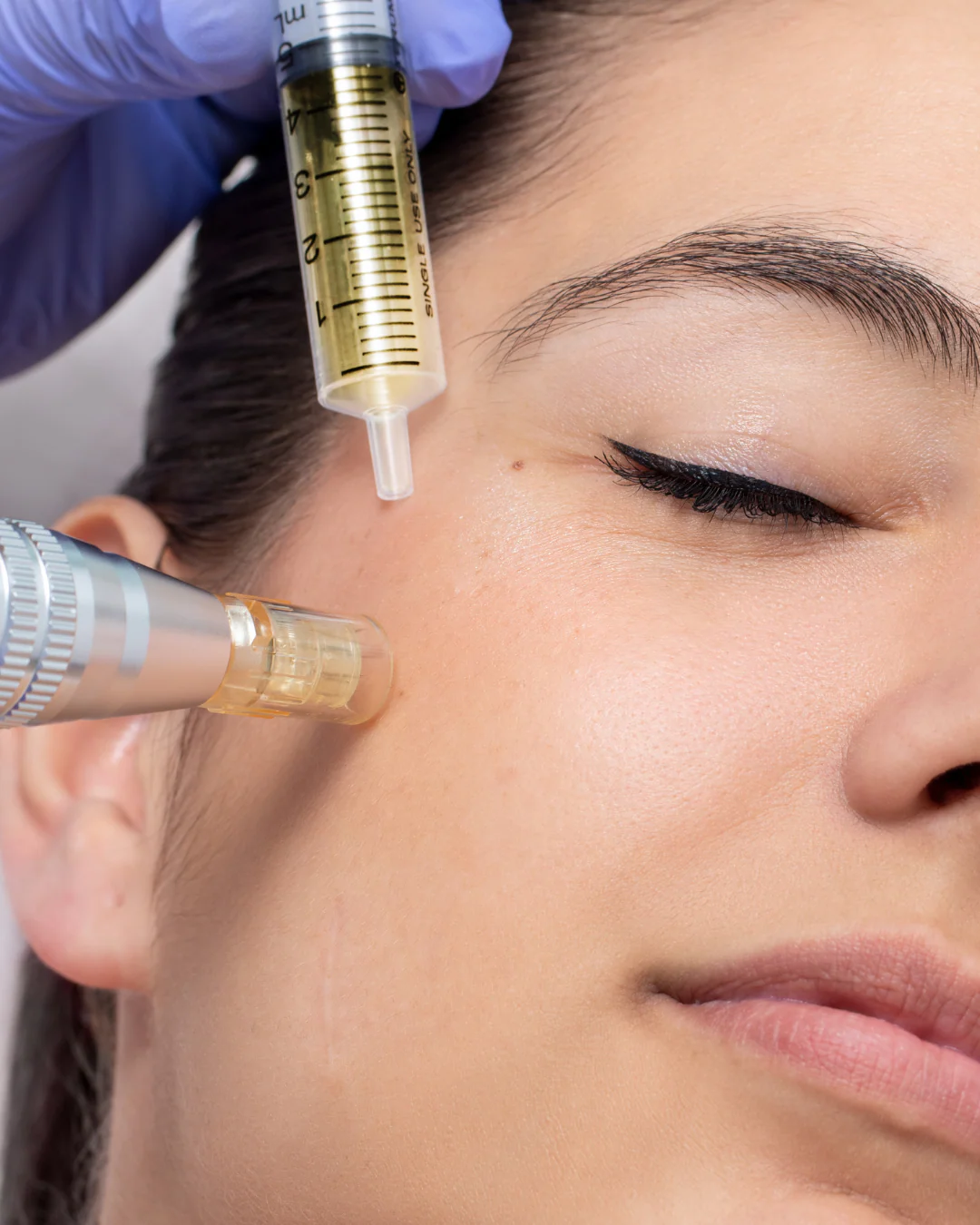
A syringe of platelet-rich plasma and a mesotherapy booster device beside a patient’s face — the two treatments this page compares

The gold syringe is plasma spun from the patient’s own blood. The booster is a manufactured product. That difference drives everything below.

2–3 vs 3–4
sessions in a course — boosters against PRP
days vs weeks
boosters glow within days; PRP builds over 4–6 weeks
4–6 vs 6–12 mo
how long each holds — collagen outlasts hydration
no blood vs blood
PRP needs a draw and a spin; a booster does not

Side-by-Side Comparison

Feature Skin Boosters PRP Therapy
What it does Delivers hyaluronic acid into the dermis for deep hydration, glow, and fine line smoothing Delivers concentrated growth factors from your own blood to stimulate collagen, healing, and repair
Active ingredient Low-molecular-weight hyaluronic acid (non-cross-linked) Autologous platelet-rich plasma (PDGF, TGF-beta, VEGF, EGF)
Best for Dehydrated skin, dullness, fine lines, glow restoration, surface quality Fine lines, collagen loss, scarring, hair thinning, overall rejuvenation
Blood draw required? No — product is prepared externally Yes — a small blood sample is drawn and centrifuged
Sessions required 2–3 initial sessions, 2–4 weeks apart; maintenance every 4–6 months 3–4 sessions, 4–6 weeks apart; maintenance every 6–12 months
Results visible Glow visible within days; full hydration effect after 2–4 weeks Gradual improvement over 4–6 weeks as collagen builds
How long results last 4–6 months before maintenance needed 6–12 months (collagen persists longer than hydration)
Downtime Mild bumps and redness for 24–48 hours Mild redness 24–48 hours; possible bruising at blood draw site
Price point See skin booster pricing See PRP pricing
Can they be combined? Yes — and they complement each other well. Skin boosters address hydration at the dermal level while PRP stimulates collagen rebuilding and repair. Together they provide both immediate glow and long-term structural improvement. They can also each be combined with microneedling for enhanced delivery.

Which One for Which Concern

The feature table above compares the treatments. This one starts from the thing that actually brought you here. One test does most of the work: press a finger gently beside the line and hold. If it softens, it is a hydration line. If it stays, it is a collagen line.

Your concern Skin boosters PRP Usual choice
Dry, dull, tight skin The direct answer — hyaluronic acid placed where the dryness is. Indirect. Better skin quality eventually, but not hydration. Boosters
Fine lines from dehydration Lines that soften when you moisturise are water lines. Boosters fill them from inside. Slower, and aimed at the wrong mechanism. Boosters
Fine lines from collagen loss Masks them while the hydration lasts. Treats the cause — growth factors drive new collagen. PRP
Crepey texture, thin skin Adds water to thin skin; it stays thin. Thickens the dermis over months. This is what PRP is for. PRP
Acne scarring No meaningful effect on scar architecture. Remodels scar tissue, especially with microneedling. PRP
An event in two weeks Glow within days — the reliable short-notice option. Nothing visible by then. Wrong tool for a deadline. Boosters
Both, honestly Most patients over 35 have a hydration problem and a collagen problem at once. Running both is common — see the section below. Both

When to Choose Each Treatment

Choose Skin Boosters When
  • Primary concern is dehydration or dullness
  • You want faster visible glow (days, not weeks)
  • You prefer no blood draw
  • You want to treat neck, hands, or décolletage
  • You live in Dubai’s dry climate and need deep moisture

Learn more about skin boosters →

Choose PRP When

Learn more about PRP →

How They Fit Into the Bigger Picture

Skin boosters and PRP sit at the intersection of two treatment categories. Skin boosters belong to the injectable skin quality family alongside Profhilo and polynucleotides — see Profhilo vs Skin Boosters vs Polynucleotides for how they compare. PRP belongs to the regenerative family alongside exosomes and stem cell facials — see Stem Cell Facial vs PRP vs Exosomes.

This is why combining skin boosters with PRP is so effective — you’re getting the best of both worlds: hydration-based glow from the skin quality side plus collagen-building repair from the regenerative side. Dr Azra Vaziri often layers both into a comprehensive skin quality protocol, sometimes adding microneedling as a delivery vehicle.

Running Them Together

The comparison table says they combine well, which is true but not useful on its own. This is what combining actually looks like.

Not in the same appointment

They are staggered, not mixed. A booster session and a PRP session two to three weeks apart lets each be judged on its own — if something reacts, you know which one did it.

PRP first, usually

PRP is the slow one, so it goes first and builds in the background. Boosters layered on afterwards carry the visible glow while the collagen work continues underneath.

PRP with microneedling

The most common pairing is not booster + PRP but PRP + microneedling: the channels take the plasma deeper than injection alone. Boosters are usually kept as a separate, injected step.

When not to combine

If the budget or the calendar only stretches to one course, finishing one properly beats half of each. An unfinished course of either is the most common reason people report that “it did not work”.

What Neither Treatment Can Do

Both treatments are sold as skin-quality answers, and both have a hard edge where the honest answer is a different treatment entirely.

Neither adds volume

A hollow cheek or a flat temple is a volume problem. No amount of hydration or growth factor fills it — that is filler or a biostimulator.

Neither lifts

Skin that has descended needs support, not quality. Boosters and PRP will improve how that skin looks while it continues to sit where it sits.

PRP depends on your blood

It is autologous, so the result tracks your own platelet quality. Smoking, some medications and certain conditions reduce what can be concentrated — which is why it is assessed rather than assumed.

Boosters do not accumulate

The hydration effect does not build session over session the way collagen does. When maintenance stops, it returns to baseline within months. PRP leaves something behind; boosters largely do not.

Related Treatments & Comparisons

Comparison

Profhilo vs SB vs PN

Three-way skin quality.

Comparison

PRP vs Exosomes

Growth factors vs signals.

Comparison

Stem Cell vs PRP vs Exosomes

Three-way regenerative.

Guide

How Skin Boosters Work

Science explained.

Pricing

Skin Booster · PRP

Treatment costs.

Comparison

Polynucleotides vs Exosomes

DNA repair vs cellular signals.

Comparison

Profhilo vs Rejuran

Bioremodelling vs PDRN.

Frequently Asked Questions

Skin boosters deliver hyaluronic acid directly into the dermis for deep hydration, glow, and fine line smoothing. PRP uses concentrated growth factors from your own blood to stimulate collagen production and tissue repair. Skin boosters hydrate; PRP regenerates. They work through completely different mechanisms.

Yes — they complement each other well. Skin boosters provide deep dermal hydration while PRP stimulates collagen rebuilding and repair. Together they deliver both immediate glow and long-term structural improvement. Both can also be combined with microneedling for enhanced delivery.

Both help dull skin, but through different pathways. Skin boosters deliver immediate hydration that improves glow and radiance within days. PRP stimulates cellular renewal and collagen for longer-term vitality. For acute dullness, skin boosters give faster visible improvement. For sustained quality, PRP builds a stronger foundation.

PRP results tend to last longer because they involve actual collagen rebuilding — 6 to 12 months with maintenance. Skin booster hydration typically lasts 4–6 months before maintenance is needed. PRP requires fewer long-term maintenance sessions but has a slower initial onset.

Yes — PRP requires a small blood sample drawn at the start of your appointment. The blood is processed in a centrifuge to concentrate the platelets. Skin boosters do not require a blood draw; the hyaluronic acid product is prepared externally. If you prefer to avoid blood draws, skin boosters are the simpler option.

Profhilo provides HA bioremodelling — it hydrates like skin boosters but also stimulates collagen and elastin. Polynucleotides activate fibroblasts for deep barrier repair and tissue regeneration. Each treats a different layer of skin quality. See: Profhilo vs Skin Boosters vs Polynucleotides.

PRP is the clear choice for hair restoration — scalp PRP injections have been used for years to stimulate dormant follicles. Skin boosters are not used for hair treatment; they are designed for facial, neck, and hand skin hydration.

If your primary concern is dehydration and dullness — especially in Dubai’s dry climate — start with skin boosters for immediate hydration. If you want collagen stimulation, anti-aging repair, or hair restoration, start with PRP. For most patients, Dr Azra Vaziri recommends combining both for the best overall skin quality result.

Book a Consultation

Get a personalised skin-quality plan — boosters, PRP, exosomes or microneedling — from Dr Azra Vaziri, DHA & DOH licensed.