How to Get Aesthetic Treatment Without Looking “Done”
The biggest fear in aesthetic medicine isn’t pain or cost — it’s looking like you’ve had something done. The frozen forehead, the overfilled cheeks, the lips that don’t quite match the rest of the face. That fear keeps a lot of people from ever booking a consultation, even when they’d benefit from treatment.
- 20+Years' experience
- DHA · DOHLicensed
- 2Clinics
- 2004Practising since
Why Some People Look Overdone
Before talking about how to avoid it, it helps to understand why it happens. The overdone look isn’t random — it follows a pattern:
Template treatment. The same lip shape, same cheekbone height, same forehead smoothness applied to every patient regardless of their face shape, bone structure, or ethnicity. In a city as diverse as Dubai — Emirati, South Asian, European, African — a one-size-fits-all approach produces faces that look oddly alike. A good injector treats your face, not a trend.
Too much, too fast. Adding large volumes in a single session creates sudden changes the face hasn’t adjusted to. Building gradually — a little at a time, with follow-ups between sessions — lets your doctor fine-tune the result and catch anything that’s shifting before it becomes a problem.
Buildup over years. This is the most common cause. Each individual top-up looks fine, but the total volume across all areas keeps growing. Nobody hits the brakes because nobody is tracking the big picture. See how much filler is too much for a deeper look at this pattern.
Wrong treatment for the problem. Filler added to a face that really needs skin quality treatment, or more Botox in an area that’s already fully relaxed, or volume where the real issue is loose skin that needs lifting. When the diagnosis is wrong, the treatment looks wrong.
The clinic that always says yes. Every patient who walks in gets treated. Nobody is ever told “you don’t need anything today.” This isn’t patient-centred care — it’s revenue-centred care. The best protection against looking overdone is a doctor who’s willing to say no.
What “Looking Natural” Actually Requires
Every clinic in Dubai claims to offer natural results. What separates the ones that deliver from the ones that just say it comes down to a few specific things:
Assessment Before Treatment
A full facial assessment — looking at your face in motion, not just at rest.
Read moreShow less
Checking bone structure, skin thickness, symmetry, and what’s already there from previous treatments. The assessment shapes the plan, not the other way around. This is the single biggest factor in natural results.
Conservative Dosing
Starting with less than you think you need. Placing small amounts and reviewing at a follow-up before adding more.
DetailsShow less
You can always add — but once you’ve crossed the line, the only fix is dissolving or waiting for it to fade. Building gradually is how natural results happen.
Right Tool for the Job
Using Botox for muscle issues, filler for volume, skin treatments for texture, and biostimulators for long-term collagen.
Read moreShow less
A doctor who offers a full range of treatments is less likely to force one tool to do every job.
Respecting Facial Harmony
Treating the face as a whole, not a series of isolated zones. The lips need to match the cheeks, the jawline needs to match the chin.
Read moreShow less
When one area is treated without thinking about proportions, the result looks off — even if the individual area looks fine on its own.
Long-Term Planning
A treatment plan that looks 12–24 months ahead, not just at what you want today.
Read moreShow less
Tracking total volume, spacing sessions properly, switching from filler to skin quality treatments when appropriate. Short-term fixes create long-term problems. See best filler for your age.
Experience — Not Just Training
A doctor who has treated thousands of faces across two decades has seen what works, what doesn’t, and what goes wrong over time.
Read moreShow less
They know what certain products do to tissue after five, ten years. That pattern recognition — the ability to see how a face will age with treatment — only comes from time in the field.
Treatments That Look Natural When Done Well
Some treatments are easier to keep subtle than others. Here’s how the main options rank for “looking natural” when performed by a skilled injector:
Natural potential depends heavily on the injector, not just the treatment. Even lip filler can look completely natural with the right doctor and the right amount.
| Treatment | Natural Potential | Risk of Looking “Done” |
|---|---|---|
| Skin boosters / Profhilo | Very high | Very low — improves skin without changing structure |
| Polynucleotides / PRP | Very high | Very low — regenerative, no volume change |
| Baby Botox (low-dose) | High | Low — softens lines while keeping expression |
| Standard Botox | High | Medium — risk increases with higher doses |
| Biostimulators (Sculptra, Radiesse) | High | Low — gradual collagen build, no sudden change |
| Dermal fillers (conservative) | High | Medium — natural with small volumes, risky with large |
| Lip filler | Moderate | Higher — lips are the most visible and hardest to get right |
| Full-face high-volume filler | Lower | High — the more volume added at once, the harder it is to keep natural |
The Dubai Factor
Dubai adds a layer of complexity that matters for natural results. The patient base is one of the most diverse in the world — an aesthetic doctor here might see an Emirati, a British expat, a South Asian professional, and an East African resident in the same day. What looks natural on one face looks wrong on another. The same lip ratio, cheekbone angle, or jawline structure doesn’t work across every background.
The climate plays a role too. Dubai’s heat, UV exposure, and air conditioning dry the skin in ways that make texture issues worse. Patients who look tired aren’t always losing volume — sometimes it’s just dull, dehydrated skin. Adding filler when the real problem is skin quality doesn’t create a refreshed look. It creates a fuller version of tired-looking skin. Addressing the skin first with skin boosters, Profhilo, or microneedling often reduces how much filler is actually needed.
And there’s the social factor. In a city where aesthetics is normal and widely discussed, the temptation to keep up with what others are having done is real. A good doctor helps you filter that pressure and focus on what your specific face needs — not what someone else’s face had.
How to Protect Yourself as a Patient
Bring photos of yourself — not celebrities or influencers. Show your doctor what you looked like before you started treatment, or at a time when you felt you looked your best. The goal should be to return to your own face at its peak, not to borrow someone else’s.
Ask your doctor what you don’t need. Any doctor can tell you what they’d recommend. Fewer will tell you what they wouldn’t. If your doctor never turns anything down, they’re not making decisions based on your face — they’re making decisions based on their schedule.
Understand the difference between enhancement and change. Enhancement respects your features and makes them look fresher. Change replaces your features with different ones. If the plan involves making your lips a different shape, your cheekbones higher than they’ve ever been, or your jawline sharper than your natural bone — that’s change, not enhancement. It’s much harder to keep looking natural once you’ve moved past enhancement.
Give yourself permission to stop. Not every visit needs to result in treatment. Going in for a check and being told “you look good, come back in six months” is a sign that your doctor is managing your face well. It’s not a wasted visit — it’s good medicine.
Read about what you’re getting. Understanding the basics of how Botox and filler work, how long they last, and what aftercare involves makes you a better patient. The more you understand, the better you can communicate with your doctor about what you want — and recognise when something doesn’t feel right.
Frequently Asked Questions
Can aesthetic treatment really look natural?
Yes — when it’s done by an experienced doctor with a conservative approach. The best results are the ones nobody notices. Patients hear “you look great” or “have you been sleeping better?” instead of “did you get work done?” Natural results are about technique, dosing, and product choice — not the treatment itself.
What's the most natural-looking treatment to start with?
Skin boosters and Profhilo are the safest entry points — they improve skin quality without changing any structure. For lines, baby Botox at a low dose is the most subtle option. These treatments are almost impossible to overdo and very forgiving for first-timers.
How do I tell my doctor I want subtle results?
Be direct: “I want nobody to know I’ve had anything done.” Show photos of yourself — not celebrities. Ask for a conservative first session with a follow-up to assess. A good doctor will welcome this. If they push for more than you’re comfortable with, that’s a signal to reconsider.
Can I fix an overdone look?
If the filler is HA-based, yes — it can be dissolved with hyaluronidase. Botox fades on its own within 3–4 months. After clearing excess product, you can start fresh with a more careful plan. See signs you’ve been overfilled for more detail.
Why do some people in Dubai look overdone?
Dubai’s highly competitive aesthetic market and social media culture create pressure to do more. Some clinics are driven by revenue more than patient outcomes. And in a city where aesthetics are common, the threshold for what looks “normal” shifts over time. The solution is choosing a doctor who prioritises your face over trends.
Is less treatment always better?
Not always — but less at each session usually is. Some faces genuinely need treatment across multiple areas. The difference is doing it gradually and with assessment, rather than treating everything in one go. A well-planned treatment course over 6–12 months looks far more natural than a heavy single session.
How do I choose a doctor who delivers natural results?
Look for years of experience, verifiable credentials (DHA/DOH licence), and a range of treatments offered. Check whether their results show variety — different faces looking like better versions of themselves, not copies of each other. And ask a simple question: “When was the last time you turned a patient away?” See our full guide on how to choose an aesthetic doctor in Dubai.
What if I've never had anything done and don't know where to start?
Start with a consultation, not a treatment. A proper assessment will tell you what your face actually needs — which might be different from what you came in thinking. Many first-timers are surprised to learn that a skin treatment or low-dose Botox is a better starting point than filler. Read do I need Botox or filler to start narrowing it down.
Where to go next
Read next: Natural results from a conservative doctor in Dubai.
Book a Consultation
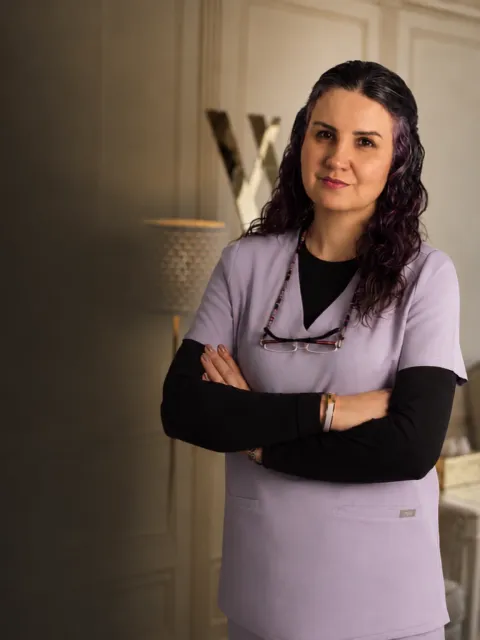
Dr Azra Vaziri — DHA & DOH licensed aesthetic physician with 20+ years of experience in Dubai & Abu Dhabi.