Volume Loss vs Skin Sagging — How to Tell the Difference
Your face looks different than it did five years ago. It is heavier, more tired, less defined — but you are not sure whether the problem is that things have “deflated” or that things have “dropped.” That distinction matters, because the treatments for volume loss and skin sagging are fundamentally different.
Treating one when you actually have the other is one of the most common reasons patients feel disappointed with their results. This guide explains how to tell which one is happening — and what to do about each.
- 20+Years' experience
- DHA · DOHLicensed
- 2Clinics
- 2004Practising since
What Volume Loss Looks Like
Volume loss is a shrinking problem. The deep fat pads that sit beneath the skin — in the cheeks, temples, and around the mouth — reduce in size over time. The orbital bone around the eyes also resorbs slightly. The result is a face that looks:
A useful self-test: look at a photograph of yourself from 5–10 years ago and compare the cheek fullness. If the main change is that the face looks deflated rather than drooped, volume loss is the primary issue.
Volume loss begins in the mid-20s but typically becomes visible in the early to mid-30s. It accelerates with weight loss, high-stress lifestyles, and — significantly in the UAE — chronic UV exposure and dehydration.
- Flat or hollow in the cheeks, especially when viewed from a three-quarter angle
- Sunken around the temples
- Hollowed under the eyes, with deepening tear troughs
- Thinner overall — the face loses its “padding” and begins to look angular or skeletal
- Deeper nasolabial folds (the lines from nose to mouth)
What Skin Sagging Looks Like
Skin sagging is a gravity problem. The collagen and elastin fibres that keep skin firm weaken over time. The ligaments that hold soft tissue to bone loosen. The result is tissue that moves downward:
A useful self-test: lean forward and look in a mirror. If the skin shifts noticeably — hanging away from the bone structure — laxity is a significant factor. Another test: gently lift the skin at the jawline upward. If the face looks immediately younger, sagging is the dominant issue.
Sagging generally becomes noticeable in the late 30s to 40s, though genetics, sun exposure, and smoking can accelerate it. Learn more about what causes early skin aging.
- Jowls forming along the jawline — soft tissue that was once on the cheek now sits below the jaw
- A less defined jawline, sometimes described as a “blurred” or “soft” jaw contour
- Deeper marionette lines (the vertical lines from the mouth corners downward)
- Loose skin on the neck, sometimes called “turkey neck”
- Sagging in the mid-face that makes the face look heavy or tired
Volume Loss vs Sagging at a Glance
| Sign | Volume loss | Skin sagging |
|---|---|---|
| What has changed | Fat pads and bone have shrunk | Collagen, elastin and the ligaments holding tissue to bone have loosened |
| How the face reads | Flat, hollow, deflated | Heavy, with jowls or a blurred jawline |
| Where you notice it | Cheeks, temples, under-eyes, nasolabial folds | Jawline, marionette lines, neck |
| The self-test | Compare an older photo — the face looks deflated rather than drooped | Lift the skin at the jawline — if the face looks immediately younger, sagging is dominant |
| Treated with | Fillers, Sculptra, Radiesse, cheek filler | Thread lifting, RF microneedling, Profhilo, skin tightening |
Why Getting the Diagnosis Right Matters
Treating sagging skin with filler does not lift the skin — it adds weight to tissue that is already heavy. This is one of the main reasons patients end up with an overfilled, puffy appearance. The injector keeps adding volume to compensate for what is actually a laxity problem, and the face gets progressively heavier.
Conversely, treating volume loss with only threads or skin tightening will lift the tissue but leave the face looking hollow and gaunt — because the underlying volume that creates softness and youthfulness was never replaced.
This is why a proper facial assessment — not a treatment menu — is the right starting point. A good doctor will identify the ratio of volume loss to laxity and build a treatment plan that addresses both in the right order.
Treatments for Volume Loss vs Sagging
Volume Loss Treatments
- Dermal fillers — HA fillers replace lost volume directly. Best for cheeks, temples, under-eyes, and lips. Results are immediate. See best filler for your age
- Sculptra — stimulates your body to rebuild collagen, restoring volume gradually over 2–3 months. Ideal for widespread deflation
Read moreShow less
- Radiesse — provides immediate volume plus collagen stimulation. Good for jawline, cheeks, and hands
- Cheek filler — targeted restoration of mid-face volume, which improves nasolabial folds and under-eye hollowing indirectly
Skin Sagging Treatments
Which of these is right depends on how much laxity you have and where it sits — that is what a facial assessment establishes.
- Thread lifting — absorbable PDO or PLLA threads mechanically reposition tissue and stimulate collagen along the thread pathway. Best for jowls, mid-face, and neck. See threads vs filler
Read moreShow less
- RF microneedling — radiofrequency energy tightens collagen in the dermis. Good for early to moderate laxity. See Morpheus8 vs HIFU
- Profhilo — bio-remodelling agent that improves skin quality and mild laxity through deep hydration and collagen stimulation
- Skin tightening — various non-surgical options for patients not ready for threads or surgery
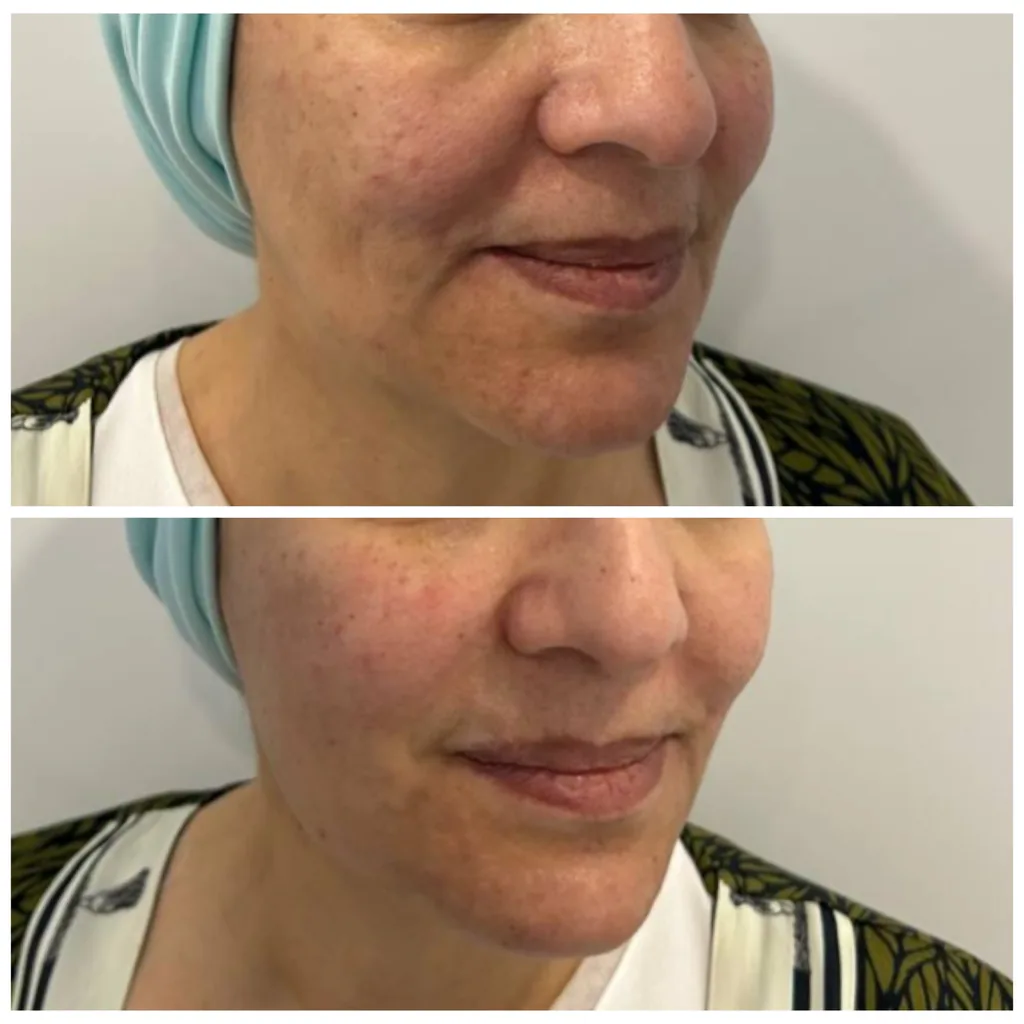
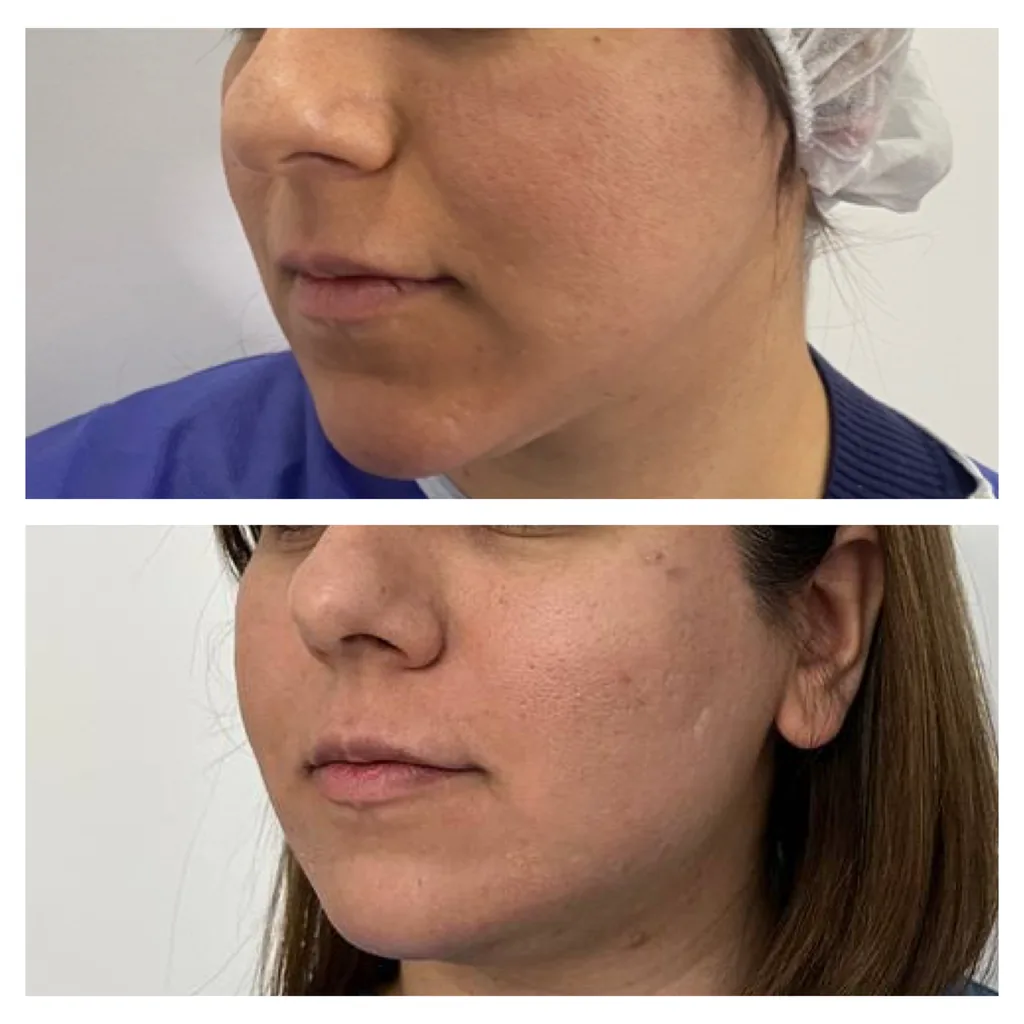
Volume Loss and Sagging, Before and After
Volume loss, treated with cheek filler — before (top), after (bottom). Treated by Dr. Azra Vaziri, Dubai.
Sagging, treated with threads — before (top), after (bottom). Treated by Dr. Azra Vaziri, Dubai.
* Photographs published with the patients’ written consent, in line with UAE medical advertising regulations. Individual results vary.
When You Have Both: The Combination Approach
Most patients over 35 have some degree of both volume loss and laxity. The question is not which one to treat — it is which to treat first and how much of each you need.
A common clinical sequence is:
This layered approach avoids the trap of adding filler to compensate for sagging — and produces results that look natural rather than overfilled. Read more about this philosophy in how to get treatment without looking done.
- Lift first — address the laxity with threads or tightening treatments so the tissue is repositioned before adding volume
- Then restore volume — fill strategic areas to recreate the youthful contour, now that the tissue sits higher on the face
- Then refine skin quality — improve texture, hydration, and glow with Profhilo, skin boosters, or Dermapen
How Dr Azra Diagnoses Volume Loss vs Sagging
Dr Azra uses a structured assessment at every consultation. She examines bone structure, fat pad position, skin quality, and tissue mobility to determine the ratio of volume loss to laxity in each zone of the face. The treatment plan is built around what the face actually needs — not what the patient asks for and not what is trending on social media.
This diagnostic-first approach is particularly important for patients who have already had filler elsewhere and feel something is “not right.” Often, the problem is that filler was used to treat what was actually a laxity issue. Correction in these cases begins with an honest assessment of what is already in the face and what the tissue actually needs. See what to do if you are unhappy with your filler.
Consultations are available at Prof Sakla Spanish Eye Clinic in Dubai via WhatsApp or the online booking form.
Frequently Asked Questions
How do I know if I have volume loss or sagging?
Can filler fix sagging skin?
What is the best non-surgical treatment for jowls?
At what age does volume loss start?
Is Sculptra or filler better for volume loss?
Can threads and filler be done at the same time?
Will Profhilo help with sagging?
How much does it cost to treat volume loss and sagging in Dubai?
Recommended next steps
Read next: PDO thread lift for sagging skin (Dubai).
Book a Consultation
Dr Azra Vaziri — DHA & DOH licensed aesthetic physician with 20+ years of experience in Dubai & Abu Dhabi.