
Collagen-Stimulating Treatments for Skin Rejuvenation
If you are exploring collagen stimulation treatment options for skin rejuvenation, you are looking at one of the most clinically significant categories of non-surgical aesthetics. Collagen is the protein that provides your skin with its structural firmness, smoothness, and resilience. When collagen levels decline — as they naturally do from your mid-twenties onward — fine lines, loss of firmness, rough texture, and a tired appearance gradually follow.
For patients in Dubai and Abu Dhabi, collagen loss is often accelerated by chronic UV exposure, extreme heat, and the drying effects of air conditioning. These environmental pressures compound the natural decline, making collagen-focused treatment particularly relevant for patients in the UAE who want to maintain or restore skin quality over time.
This guide explains how collagen works, why it declines, and the regenerative aesthetic treatments available to stimulate your body’s own collagen production for lasting skin improvement. For a Dubai-specific treatment overview, see our collagen loss treatment page.
Written & Clinically Reviewed By
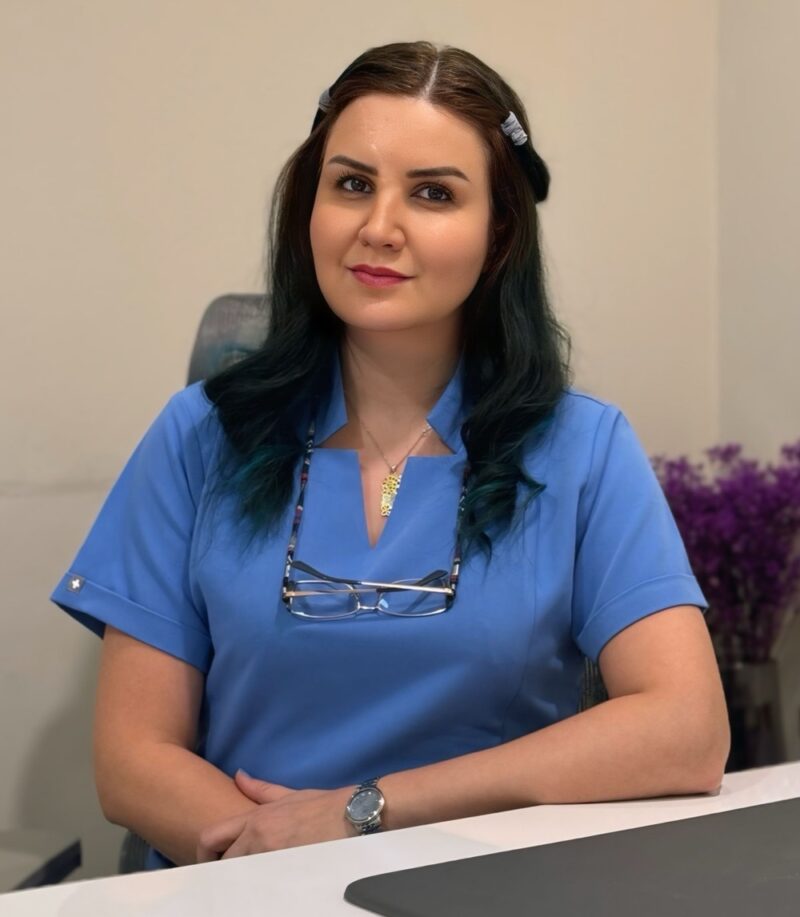
Dr. Azra Vaziri is a medical aesthetics practitioner based in Dubai and Abu Dhabi, specialising in regenerative skin treatments, collagen induction therapy, and personalised protocols for long-term skin quality restoration.
What Collagen Does for Your Skin
Collagen is the most abundant structural protein in the skin, making up roughly 75-80% of the dermis. It forms a dense, organised matrix that gives skin its firmness, tensile strength, and smooth surface quality. Elastin, which works alongside collagen, provides the skin’s ability to stretch and return to shape.
When the collagen matrix is intact and well maintained, the skin appears smooth, firm, and evenly textured. Light reflects uniformly off the surface, producing what we perceive as healthy radiance. Adequate collagen also supports the skin’s hydration capacity, as a well-structured dermis retains water more effectively.
Why Collagen Declines
Collagen production begins to decline naturally from around the age of 25, decreasing by approximately 1% per year. This intrinsic decline is gradual and genetically programmed. However, extrinsic factors can dramatically accelerate the rate of loss:
UV radiation — The single largest external contributor to collagen breakdown. UVA rays penetrate deep into the dermis, triggering enzymes called matrix metalloproteinases (MMPs) that actively degrade collagen fibres.
Environmental stress — Heat, pollution, and the cycle of outdoor sun and indoor air conditioning common in Dubai create oxidative stress and chronic dehydration that impair the skin’s ability to maintain and produce collagen.
Lifestyle factors — Smoking, poor sleep, chronic stress, excess alcohol, and a diet lacking in vitamin C and antioxidants all contribute to faster collagen degradation.
Hormonal changes — Oestrogen plays a role in collagen synthesis. Hormonal shifts, particularly around menopause, can lead to a more rapid decline in collagen levels and skin thickness. For the full science behind this process, see our guide on how collagen production decreases with age.
How Collagen Stimulation Works
Collagen-stimulating treatments work by triggering the body’s own biological repair processes. Rather than introducing external collagen, these treatments create the conditions — through controlled injury, growth factor delivery, or biostimulatory agents — that prompt the skin to produce new collagen from within.
This newly synthesised collagen matures gradually over weeks to months, which is why results from collagen-stimulating treatments develop progressively rather than appearing immediately. The advantage of this approach is that the improvement is structural: the skin becomes genuinely firmer, smoother, and more resilient rather than simply appearing different on the surface.
Collagen-Stimulating Treatments
Trigger the body to produce new collagen from within
Results develop progressively as collagen matures
Structural improvement in firmness, texture, and resilience
Effects can last months to years with maintenance
Topical Collagen Support
Retinoids and vitamin C can support collagen at the surface
Effects are gradual and limited to the upper skin layers
Cannot replace collagen already lost in the dermis
Essential for daily maintenance between clinical sessions
Clinical Treatments That Stimulate Collagen
Several non-surgical treatments can effectively stimulate new collagen production. Each works through a different mechanism, and the right choice depends on the nature and severity of your concerns.
Collagen biostimulators — Collagen biostimulator treatments introduce biocompatible agents into the dermis that trigger a controlled inflammatory response, prompting the body to lay down new collagen over the following weeks and months. They are particularly effective for restoring volume loss and improving overall skin firmness. Key options include Sculptra and Radiesse.
Microneedling — Microneedling collagen induction therapy creates thousands of controlled micro-channels that activate the wound-healing cascade, stimulating new collagen and elastin. It is especially effective for texture refinement, scarring, and fine lines. RF microneedling adds radiofrequency energy for enhanced skin tightening.
PRP skin therapy — PRP skin therapy delivers concentrated growth factors from your own blood that may support collagen synthesis and cellular renewal. It works through biological signalling rather than physical injury.
Exosome therapy — Exosome therapy uses cell-derived signalling molecules that may direct fibroblasts to increase collagen production. As a newer modality, its evidence base continues to develop, though early clinical results are considered promising.
Skin booster injections and Profhilo — While primarily hydration treatments, skin booster treatment and Profhilo deliver hyaluronic acid into the dermis, supporting the environment in which collagen is produced and maintained. Profhilo additionally stimulates four types of collagen and elastin through bio-remodelling.
| Treatment | Collagen Mechanism | Best For | Results Timeline |
|---|---|---|---|
| Collagen Biostimulators | Biostimulatory agents trigger new collagen production | Volume loss, firmness decline, structural ageing | Progressive over 8-12 weeks; can last 1-2 years |
| Microneedling | Wound-healing response stimulates collagen and elastin | Texture, scarring, fine lines, pores | Progressive over 4-6 weeks per session |
| PRP Therapy | Growth factors support collagen synthesis and renewal | Overall vitality, tone, early ageing | Gradual over 4-6 weeks |
| Exosome Therapy | Cellular signals may direct fibroblasts to produce collagen | Environmentally stressed skin, recovery support | Early signs within 1-3 weeks |
| Skin Boosters | Hydrated dermis supports collagen environment | Dehydration, dullness, fine lines | Visible within 2-4 weeks |
Choosing the Right Collagen Treatment
The right collagen-stimulating treatment depends on the nature of your concern, your age, and what you are hoping to achieve. There is no single treatment that is universally superior — each addresses a different aspect of collagen-related skin change.
If your primary concern is loss of firmness or volume, collagen biostimulators tend to offer the most significant structural benefit. If texture, scarring, or pore refinement is the priority, microneedling may be the most direct route. For patients seeking overall skin vitality and renewal, PRP or exosome therapy can support collagen through biological signalling. And for those whose collagen environment is compromised by dehydration, skin boosters can restore the foundation that collagen needs to thrive.
Many patients benefit from a combination approach. Polynucleotide injections are another option that directly activate fibroblasts to support collagen production and barrier repair. Dr Azra Vaziri assesses each patient individually to design a protocol that addresses the specific factors contributing to your collagen loss.
What to Expect From Treatment
Before Your Appointment
Your clinician will carry out a skin assessment to evaluate firmness, texture, hydration, and signs of ageing. You may be advised to avoid retinoids and blood-thinning medications for several days before certain procedures.
During Treatment
Most collagen-stimulating treatments take 30 to 60 minutes. A topical anaesthetic is typically applied beforehand. Depending on the procedure, you may feel mild prickling, pressure, or a warming sensation. All treatments are performed as outpatient procedures.
Aftercare and Recovery
Downtime is minimal for most procedures. You may experience mild redness, swelling, or sensitivity for 24-72 hours. Sun protection and gentle skincare are essential during recovery. Results develop progressively as new collagen matures — patience is an important part of the process.
Supporting Collagen Between Treatments
Clinical treatments provide the stimulus for new collagen, but daily habits determine how well that collagen is maintained. A supportive routine between sessions can significantly extend the benefits of clinical work.
Key daily measures include broad-spectrum sunscreen (SPF 30+ every day to protect new collagen from UV degradation), a topical retinoid to support ongoing cell turnover, vitamin C serum for antioxidant protection and collagen synthesis support, and adequate hydration and sleep. A diet rich in protein, vitamin C, zinc, and omega-3 fatty acids also provides the building blocks that collagen synthesis requires. For a full daily protocol, see how to restore collagen in skin. For an overview of all available options, see best regenerative skin treatments in Dubai.
Who May Benefit From Collagen-Stimulating Treatments
Collagen-stimulating treatments may be suitable for you if you experience any of the following:
— Loss of skin firmness or a feeling that the skin is less taut than it once was
— Fine lines or wrinkles that have developed beyond what topical products can address
— Rough or uneven skin texture
— Acne scarring or post-blemish textural irregularities
— A desire to take a preventative approach to skin ageing
— Living in the United Arab Emirates, where environmental factors accelerate collagen loss
Suitability for specific treatments is always confirmed during a medical consultation, where your skin condition, medical history, and goals are reviewed before any plan is recommended.
Frequently Asked Questions