
Dermapen Exosome vs Dermapen PRP — Which Combination Works Better?
Two of the most popular Dermapen combinations in Dubai — one uses lab-derived cell-signalling molecules, the other uses your own platelets. A clinical breakdown of when each is the right choice.
Dermapen Exosome uses lab-derived exosomes (ASCE+ or similar) for stronger regenerative signalling and faster anti-ageing results — best for fine lines, photo-damage, and visible ageing. Dermapen PRP uses your own platelets — fully natural, no product sourcing concerns, ideal for first-time patients, pregnancy-considering future planning, and patients who prefer biological autologous treatments. Exosomes typically deliver more pronounced results; PRP delivers a more conservative, fully natural option. Pricing differs significantly: AED 1,300 for Dermapen Exosome vs around AED 500 for PRP alone.
Why This Comparison Comes Up So Often
When you search “Dermapen with exosomes” or “Dermapen with PRP” in Dubai, you find dozens of clinics offering each protocol — usually with marketing language that doesn’t actually explain the difference. Both involve microneedling. Both involve a regenerative active. Both target the same broad concerns: texture, fine lines, scarring, dullness. So which one do you choose?
The answer comes down to three factors: your goals, your budget, and your preferences around natural vs lab-derived products. There is no universally “better” option — both work, and both have been used in aesthetic medicine for years. But for any individual patient, one of them will produce better results faster, while the other will be the appropriate conservative starting point.
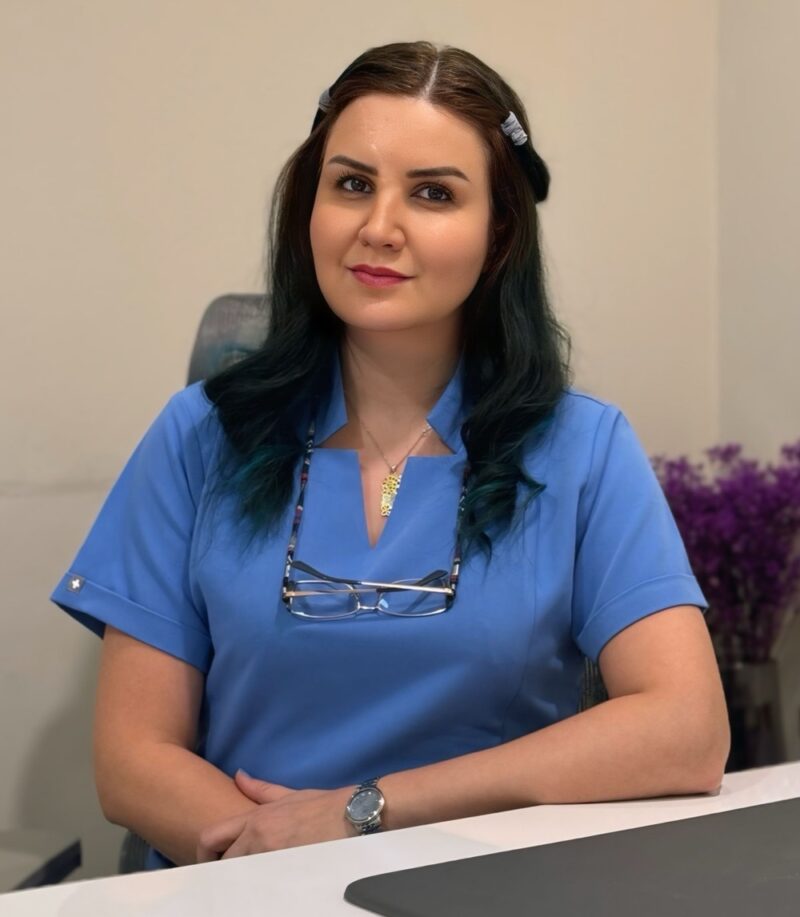
This article walks through both treatments in detail, then provides a clear decision framework based on what you’re trying to achieve. By the end, you should know which one to ask about during consultation with Dr Azra — or recognise that you might benefit from alternating between them over time.
Side-by-Side: How Each Treatment Works
Lab-derived regenerative signalling
Source: Lab-cultured cell-derived vesicles (typically ASCE+ from human adipose stem cells, processed and sterilised).
Active components: Hundreds of growth factors, peptides, microRNA, and cell-signalling molecules in standardised concentrations.
Mechanism: Activates cellular communication pathways across the dermis. Stimulates fibroblast proliferation and collagen production beyond what microneedling alone achieves.
Effect strength: Strong — designed for noticeable rejuvenation.
Result speed: Visible improvement at 2–4 weeks; significant change by 3 sessions.
Price at Dr Azra’s clinic: AED 1,300 per session (standard AED 1,900).
Your own platelets, autologous
Source: Your own blood — drawn at the appointment, spun in a centrifuge to separate platelet-rich plasma.
Active components: Your own growth factors (PDGF, VEGF, TGF-β, EGF) at the natural concentration your body produces.
Mechanism: Delivers your own healing factors into the microchannels, triggering wound-healing and collagen response using biological signals your body already recognises.
Effect strength: Moderate — depends on your platelet quality (varies with age, health, lifestyle).
Result speed: Gradual; typically 4–6 sessions for full effect.
Dermapen with Meso is AED 700 (standard AED 1,000); with Cell Booster AED 800 (standard AED 1,200); with LC Cell AED 1,000 (standard AED 1,500); with PDRN AED 1,200 (standard AED 1,700); and with Exosomes AED 1,300 (standard AED 1,900), per complete session. Dermapen 4 + Revitacare is a separate menu treatment at AED 500. Other protocols and packages are quoted at consultation.
Full Comparison Table
The Decision Framework
Three questions that determine the right choice for you. Answer honestly — there’s no wrong answer, only a right match between your goals and the treatment.
How visible are your concerns?
Significant fine lines, photo-damage, visible ageing → Exosomes deliver faster, more pronounced results.
Mild concerns, preventative, maintenance → PRP is sufficient and more cost-effective.
How do you feel about lab-derived products?
Open to it, prefer efficacy → Exosomes are the stronger option.
Prefer natural-only, planning pregnancy, conservative → PRP uses only your own blood.
What’s your timeline?
Event in 2–3 months, want noticeable change → Exosomes work faster (3 sessions vs 4–6).
Long-term skin maintenance plan, no rush → PRP is excellent for steady, sustained improvement.
Real-World Patient Scenarios
Three typical patient profiles and what Dr Azra would recommend for each.
38-year-old with visible photo-damage
Patient has fine lines, uneven texture, and sun damage from years in Dubai. Wants noticeable improvement before a milestone event in 3 months. Budget is not a primary concern.
Recommendation: Dermapen + Exosomes, 3-session course over 12 weeks.
29-year-old, first aesthetic treatment
Patient is curious about regenerative treatments but cautious. Wants something natural, plans to start a family in 1–2 years, prefers a conservative approach.
Recommendation: Dermapen + PRP, 4-session package. If results plateau, upgrade to exosomes later.
45-year-old with deep acne scarring
Patient has rolling and boxcar acne scars from teenage years, post-inflammatory pigmentation, and adult-onset skin laxity. Wants the strongest non-laser option.
Recommendation: Dermapen + PDRN (better for scars/pigmentation than exosomes), 4–6 session course. Could alternate with exosomes mid-course.
The Alternation Strategy
For patients on long-term regenerative protocols, alternating between Exosome and PRP sessions offers a middle path. The combination delivers stronger regenerative signalling than PRP alone while reducing long-term cost compared to exclusive exosome use. It also rotates the biological pathways being activated, which some clinicians believe produces a more balanced result over time.
A typical alternation plan: start with 2 Exosome sessions for visible early results, then transition to PRP for maintenance every 3–4 months, returning to Exosomes annually for a “reset” session. Dr Azra discusses long-term protocol planning during consultation based on individual response, budget, and timeline.
Frequently Asked Questions
Related Treatments & Reading
Dermapen Microneedling
Standard Dermapen treatment foundation for all combinations.
Learn more →
Exosome Therapy
Exosome treatment as a standalone regenerative option.
Learn more →
Book a Consultation
Get a personalised skin-quality plan — boosters, PRP, exosomes or microneedling — from Dr Azra Vaziri, DHA & DOH licensed.