Rolling Scars: What They Are and How They’re Treated in Dubai
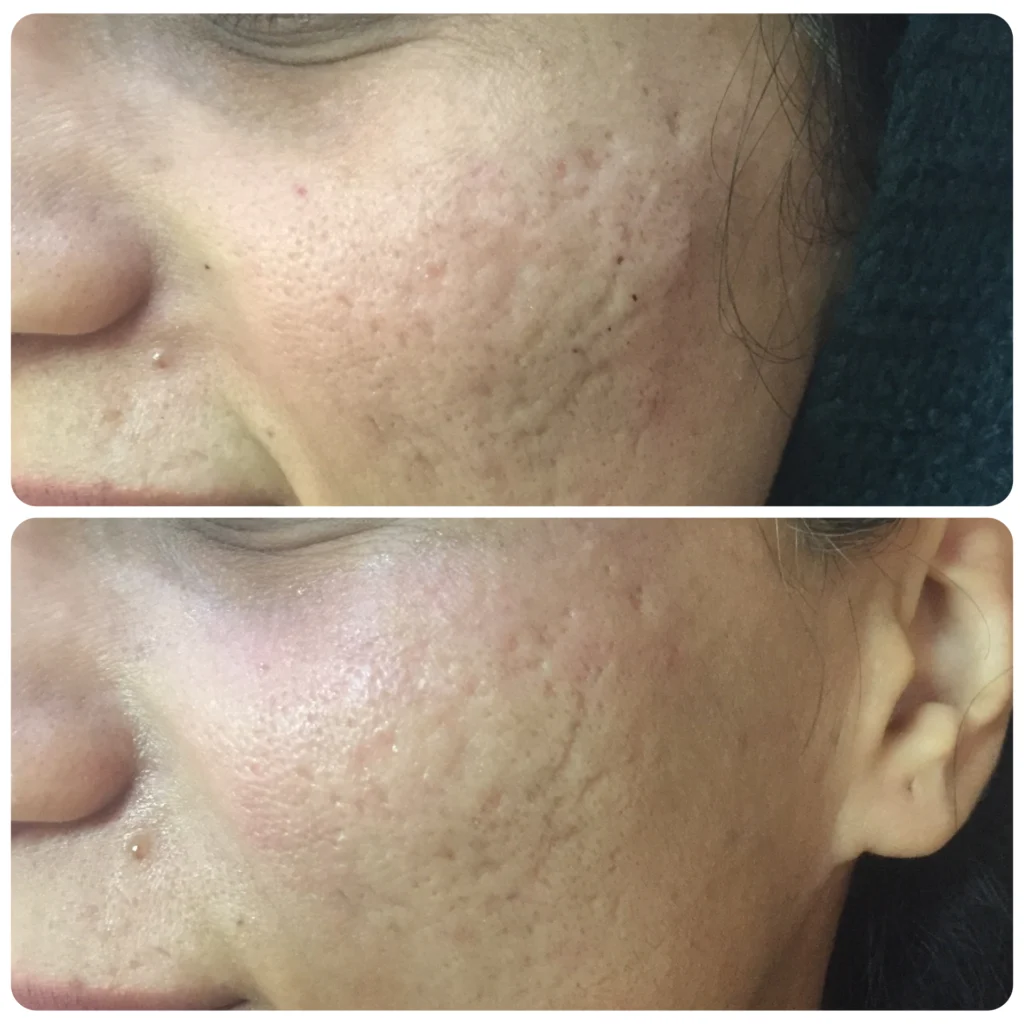
Rolling scars are the broad, shallow, wave-like depressions that give acne-scarred skin an uneven, undulating look — most obvious in raking side light. Unlike sharp-edged pits, they are caused by fibrous bands tethering the skin to the tissue beneath, which pull the surface downward.
- 2–3Subcision sessions
- 4–6 wksBetween sessions
- 6–12 wksFull result
Photograph published with the patient’s written consent, in line with UAE medical advertising regulations. Individual results vary.
Rolling Scars: What They Are and How They’re Treated in Dubai at a glance
Rolling scars are wide, shallow, wave-like acne scars caused by bands pulling the skin down. How subcision and RF microneedling treat them in Dubai.
- Subcision sessions
- 2–3
- Between sessions
- 4–6 wks
- Full result
- 6–12 wks
Performed by Dr Azra Vaziri at Prof Sakla Spanish Eye Clinic, Dubai
What Are Rolling Scars?
Rolling scars form when healing after inflammatory acne leaves fibrous strands of tissue connecting the underside of the skin to the deeper dermis and fat. These strands act like tiny anchors: they hold sections of skin down, creating broad, gently sloping depressions rather than sharp holes. In good lighting the skin looks smooth; in angled light the surface reads as rolling hills and valleys.
How to recognise them: the edges are soft and sloping (not steep like boxcar scars), the depressions are usually wider than 4–5 mm, and if you stretch the skin gently the depression flattens — a sign the scar is tethered rather than a true loss of tissue. This “stretch test” is a key reason rolling scars respond so well to release-based treatment.
Best Treatments for Rolling Scars
Rolling scars are among the most treatable acne scars because their cause — tethering — can be directly released. The most effective plans combine a release step with a collagen-building step.
Subcision
The single most effective step for rolling scars. A fine needle or cannula releases the tethering bands so the skin lifts, while the controlled injury stimulates new collagen to hold the lift. Directly targets the cause.
Ask if subcision suits your scars →
Paired with
RF Microneedling
Delivers radiofrequency energy into the released area to drive deep collagen remodelling, filling the pocket subcision opens up. Safe for all skin types thanks to insulated needles — important for the UAE’s deeper skin tones.
| Why it works | Sessions | |
|---|---|---|
| First-line Subcision | releases the tether that creates the depression | 2–3, spaced 4–6 weeks apart |
| RF Microneedling | rebuilds collagen to support the lift | 3–4, often staged with subcision |
Ask how the two steps are staged →
For milder cases
Dermapen Microneedling
For shallow rolling scars, Dermapen microneedling — often with exosomes or PRP — stimulates collagen and refines overall texture without the downtime of deeper work.
Sessions: 4–6, spaced 4–6 weeks apart
Ask if microneedling alone is enough →
Structural support
Collagen Biostimulators
For deeper or more extensive rolling scars, a biostimulator or a small amount of filler placed under a released scar restores lost structural volume and supports the lift long-term.
Role: long-term volume and support in atrophic areas
Ask about structural support →
Which step leads depends on your scar pattern. Rolling scars almost always begin with release; where sharper ice-pick or boxcar scars sit alongside them, a focal treatment such as TCA CROSS is added to the same plan.
| Treatment | Best for | Why it helps rolling scars |
|---|---|---|
| Subcision | Tethered rolling scars of any depth — the first-line step | Physically releases the fibrous bands that pull the surface down |
| RF microneedling | Released areas that need collagen to hold the lift | Rebuilds collagen in the pocket subcision opens, supporting the surface from below |
| Dermapen microneedling | Shallow rolling scars and overall skin texture | Stimulates collagen with minimal downtime for milder cases |
| TCA CROSS | Co-existing ice-pick or narrow boxcar scars | Focally remodels sharp-edged scars that band release alone cannot lift |
What to Expect
- Assessment — your rolling scars are mapped in raking light and the stretch test confirms which are tethered. Active acne is controlled first.
- Release + rebuild — a typical plan pairs subcision (release) with RF microneedling (collagen), staged across a course.
- Recovery — expect bruising and swelling for several days after subcision; microneedling adds 1–3 days of redness. Sun protection is essential in the UAE climate.
- Progressive result — some lift is immediate, but the fuller improvement builds over 6–12 weeks as collagen forms. Most people need 2–3 rounds.
Candidacy, Recovery and Results
The best candidates for rolling-scar treatment are adults whose active acne is under control and who have realistic expectations. Because the depressions are tethered rather than a permanent loss of surface, they usually respond well once the bands beneath them are released. Skin of every Fitzpatrick type can be treated in Dubai, and the release-based approach used here carries a low risk of pigment change because it works beneath the surface rather than aggressively resurfacing it.
A few situations mean treatment is adjusted or delayed rather than performed straight away. Active inflammatory breakouts are settled first, so new scarring is not created on top of the old. If you have recently taken oral isotretinoin, Dr Azra Vaziri will usually allow the skin’s healing capacity to recover before needle- or energy-based work. A personal tendency to keloid or hypertrophic scarring, pregnancy, an active skin infection in the area, or certain clotting conditions are all discussed at your consultation and may change the plan — every protocol is matched to your skin and history rather than applied from a template.
What the assessment involves
Planning starts with a close look at your skin in raking side light, where rolling scars show up most clearly.
Read moreShow less
Each depression is checked with the stretch test to confirm it is tethered, and any co-existing scar types are noted so the plan can address the whole picture rather than one pattern in isolation. From there Dr Azra Vaziri sets the order and spacing of steps — how many subcision sessions, when RF microneedling is layered in, and whether a focal treatment is needed for sharper scars — and explains the realistic downtime and number of rounds before anything begins.
Recovery and aftercare in the UAE
Recovery from a subcision-and-RF session is short but visible.
Read moreShow less
Bruising and swelling over the treated area are expected for several days after subcision — this is the released tissue settling — and RF microneedling adds one to three days of redness like mild sunburn. Most people return to normal activities quickly and simply plan a little social downtime around the first few days. Aftercare here centres on sun protection: the strong Gulf sun can drive pigmentation in healing skin, so a high-factor sunscreen, a hat and shade for the first weeks are essential. Gentle cleansing, good hydration, and avoiding heat, saunas and vigorous exercise for the first 24–48 hours all help the skin recover cleanly.
Your results timeline
Results build in two phases. Part of the lift is immediate
Read moreShow less
— once a tethering band is released, the skin above it can rise straight away. The larger, more even improvement then develops over the following 6–12 weeks as new collagen forms in the released pocket and supports the surface from below. Because rolling scars improve progressively, most people need two to three rounds of release-and-rebuild, spaced several weeks apart, to reach a smooth, natural-looking result. Improvement continues quietly between sessions, so the skin you see at your review is rarely the final outcome.
Why the steps are combined
No single tool corrects a rolling scar on its own.
Read moreShow less
Releasing the tether without rebuilding collagen leaves a pocket that can re-tether; building collagen without releasing the band leaves the surface still pulled down. Pairing the two — and, where scarring is mixed, adding a focal treatment for any co-existing ice-pick or boxcar scars — is what gives the most reliable, lasting smoothing. It is the same logic behind the wider acne scar treatment plans Dr Azra builds for mixed scarring. If you are not sure which pattern your scars follow, book a scar assessment and the sequence is mapped to your skin before anything starts.
Whose Hand Releases a Rolling Scar — Dr Azra Vaziri
A rolling scar is tethered from underneath, so treating the surface does nothing until the tether is released — and that release is done blind, by feel.
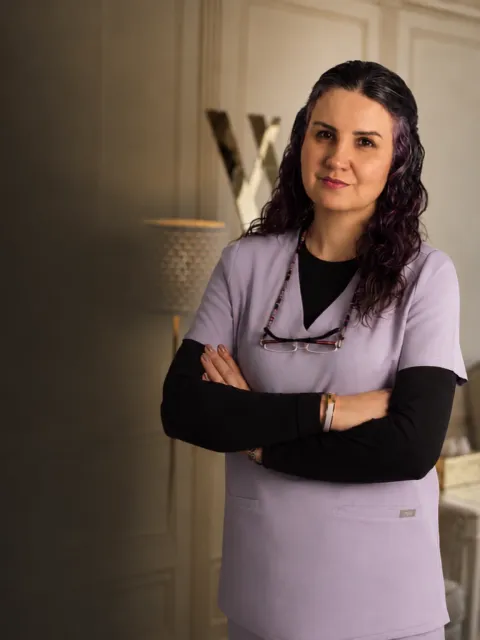
Every Rolling Scars: What They Are and How They’re Treated appointment at this clinic is assessed and injected by Dr Azra Vaziri herself — a DHA- and DOH-licensed aesthetic physician with more than 20 years of experience, practising aesthetic medicine since 2004.
Training behind a blind technique
- Think-In, Anatomy & Aesthetic Treatment Workshop (2023) — facial anatomy training, which is what a technique performed by feel rather than by sight depends on.
- Aptos Threads International Certified Trainer
- Speaker — IMCAS World Congress 2024 (Paris), and Dubai Derma in 2023 and 2026
Frequently Asked Questions
What causes rolling acne scars?
Rolling scars are caused by fibrous bands that form during healing and tether the skin to deeper tissue, pulling the surface down into broad, sloping depressions. Because the cause is tethering rather than lost surface, they respond best to subcision, which releases those bands.
What is the best treatment for rolling scars?
The gold standard is subcision to release the tethering bands, combined with RF microneedling to rebuild collagen in the released area. Milder rolling scars can improve with Dermapen microneedling alone.
How do I know if my scars are rolling scars?
Rolling scars have soft, sloping edges (not steep), are usually wider than 4–5 mm, and flatten when you gently stretch the skin. If a depression disappears on stretching, it is tethered — the hallmark of a rolling scar. A clinical assessment confirms the pattern.
Can rolling scars be fully removed?
Rolling scars are among the most improvable acne scars, and many patients achieve a dramatic, natural-looking result over a course of treatment. Complete erasure is rarely realistic, but because the tether can be released directly, the improvement is significant and long-lasting.
How many sessions do rolling scars need?
Most rolling-scar plans involve 2–3 subcision sessions, often paired with 3–4 RF microneedling sessions, spaced 4–6 weeks apart. Improvement is progressive and continues for weeks after each session as new collagen forms.
Is rolling scar treatment safe for darker skin tones?
Yes. Subcision and RF microneedling both work beneath or through the skin without aggressively resurfacing the surface, so they carry a low risk of pigmentation change in higher Fitzpatrick skin types. Dr Azra Vaziri tailors every protocol to your skin type.
Book a Consultation
Dr Azra Vaziri — DHA & DOH licensed aesthetic physician with 20+ years of experience in Dubai & Abu Dhabi.