
Treatments › Skin Treatments › Dark Circles
Dark Circles & Under-Eye Treatment in Dubai
As a dark circle treatment clinic in Dubai, we start by identifying the cause. Effective dark circles treatment in Dubai starts by identifying the cause. Dark circles are caused by one or more of four factors: volume loss creating shadows, visible blood vessels under thin skin, melanin pigmentation, or skin thinning. The right treatment depends entirely on which type you have — filler corrects hollowing, polynucleotides rebuild skin quality, PRP brightens vascular circles, Innovyal regenerates the extracellular matrix, and Jalupro Young Eye targets periorbital bio-revitalisation. A clinical assessment determines which applies to you.
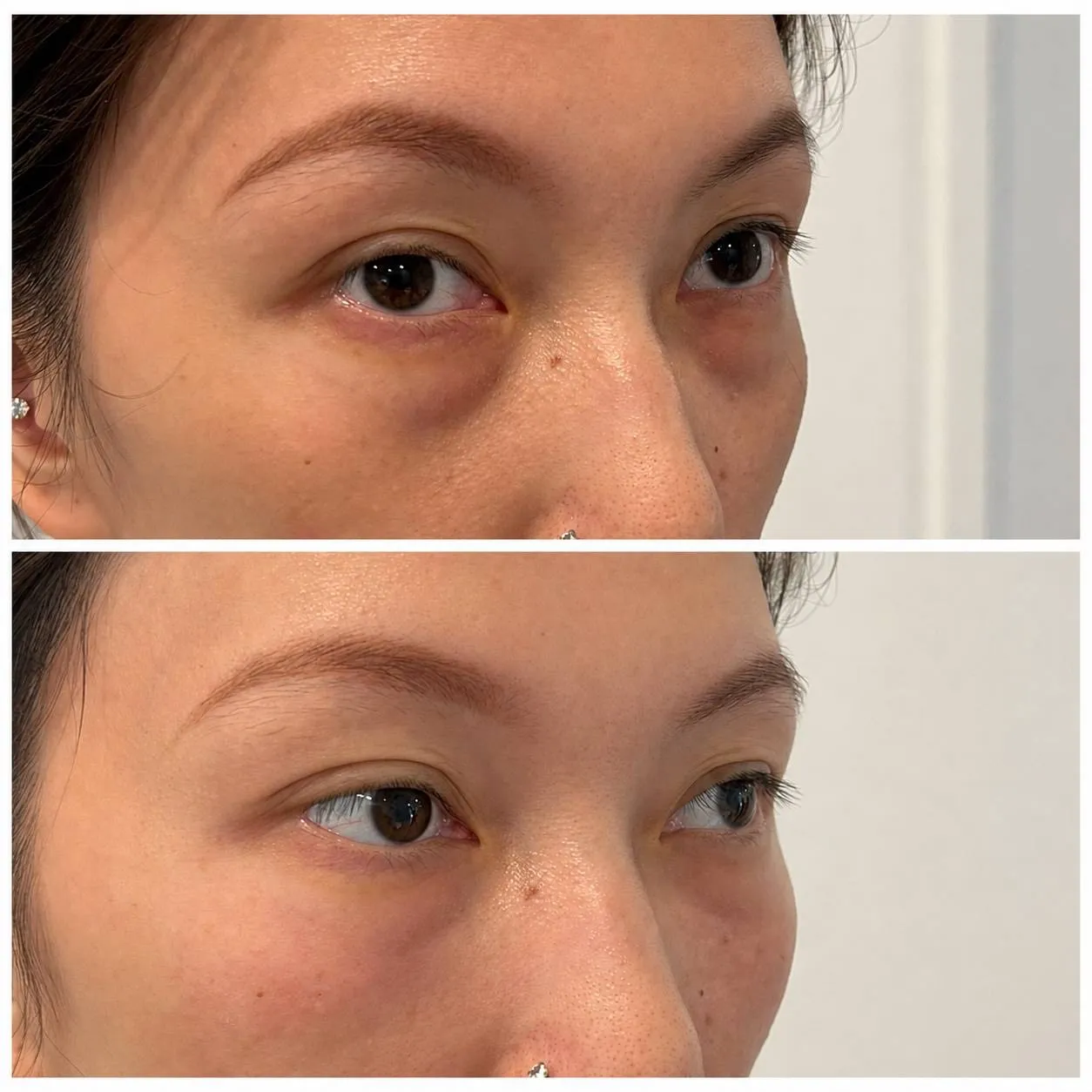
One of Dr Azra’s patients — the hollow filled and the shadow it was casting lifted with it. Published with written consent.
Dark circles, hollowing, fine lines, and puffiness under the eyes are among the most common aesthetic concerns raised in consultations — and among the hardest to treat with skincare alone. The under-eye area has the thinnest skin on the face, minimal fat padding, and a dense vascular network that makes it uniquely prone to showing tiredness, ageing, and volume loss.
For patients in Dubai and Abu Dhabi, these concerns are frequently accelerated by chronic UV exposure, dehydration, long screen hours, disrupted sleep patterns, and the environmental stress of the Gulf climate.
Dr Azra Vaziri offers personalised under-eye assessment and treatment at her clinics in Dubai and Abu Dhabi, using regenerative and structural approaches including tear trough filler, polynucleotides, PRP, Innovyal, and Jalupro Young Eye that address the specific causes behind your dark circles — not just the surface appearance. Additional options include Profhilo for periorbital bio-remodelling and mesotherapy for targeted skin nourishment. For a comprehensive overview, read our complete guide to under-eye treatments in Dubai.
What Are You Noticing?
Under-eye concerns present differently for each patient. You may recognise one or more of the following:
The under-eye area is complex — dark circles alone can have four or five different causes. A clinical assessment helps identify what is driving your specific concern, so treatment can be targeted rather than generic.
Why Dark Circles and Under-Eye Hollowing Develop
The causes of under-eye concerns are often layered. Understanding which factors are most relevant to your case is essential for effective treatment.
Volume Loss (Structural)
As you age, fat pads under the eyes thin and descend, and bone resorption creates a deeper orbital rim. This produces the hollow, sunken look that shadows the under-eye area — the most common dark circle cause. Tear trough filler physically fills the hollow, eliminating the shadow.
Vascular Dark Circles
The under-eye skin is thin enough to reveal underlying blood vessels. Poor circulation, allergies, and fatigue dilate these vessels, producing the bluish-purple discolouration many patients notice. PRP and polynucleotides improve skin thickness, reducing vascular visibility.
Pigmentary Dark Circles
Excess melanin production in the periorbital area, often genetic or worsened by sun exposure in the UAE, creates brown-toned discolouration that sits in the skin itself rather than beneath it. Common in Middle Eastern and South Asian skin types. Filler alone will not correct this.
Thin, Crepey Skin
Collagen and elastin loss causes the skin to become thinner, less elastic, and more prone to fine lines. UV exposure and air conditioning in Dubai’s climate accelerate this. Polynucleotides and PRP rebuild the dermal structure from within.
Lifestyle and genetics also play a role — chronic sleep deprivation, high sodium intake, allergies, and predisposition to deeper orbital anatomy all contribute. Some patients in their twenties present with prominent tear troughs due to bone structure alone. Underlying medical causes (thyroid, anaemia) should be investigated if dark circles are severe or sudden in onset.
Under-Eye Treatments Available
Dr Azra Vaziri offers several non-surgical approaches to under-eye rejuvenation. The right treatment — or combination — depends on the specific cause of your concern, which is assessed during your consultation.
Dark Circles Before and After
Two real patients of Dr. Azra Vaziri: one treated with a targeted dark-circle booster, one with under-eye filler. In both, the shadow lifts and the whole face reads less tired.
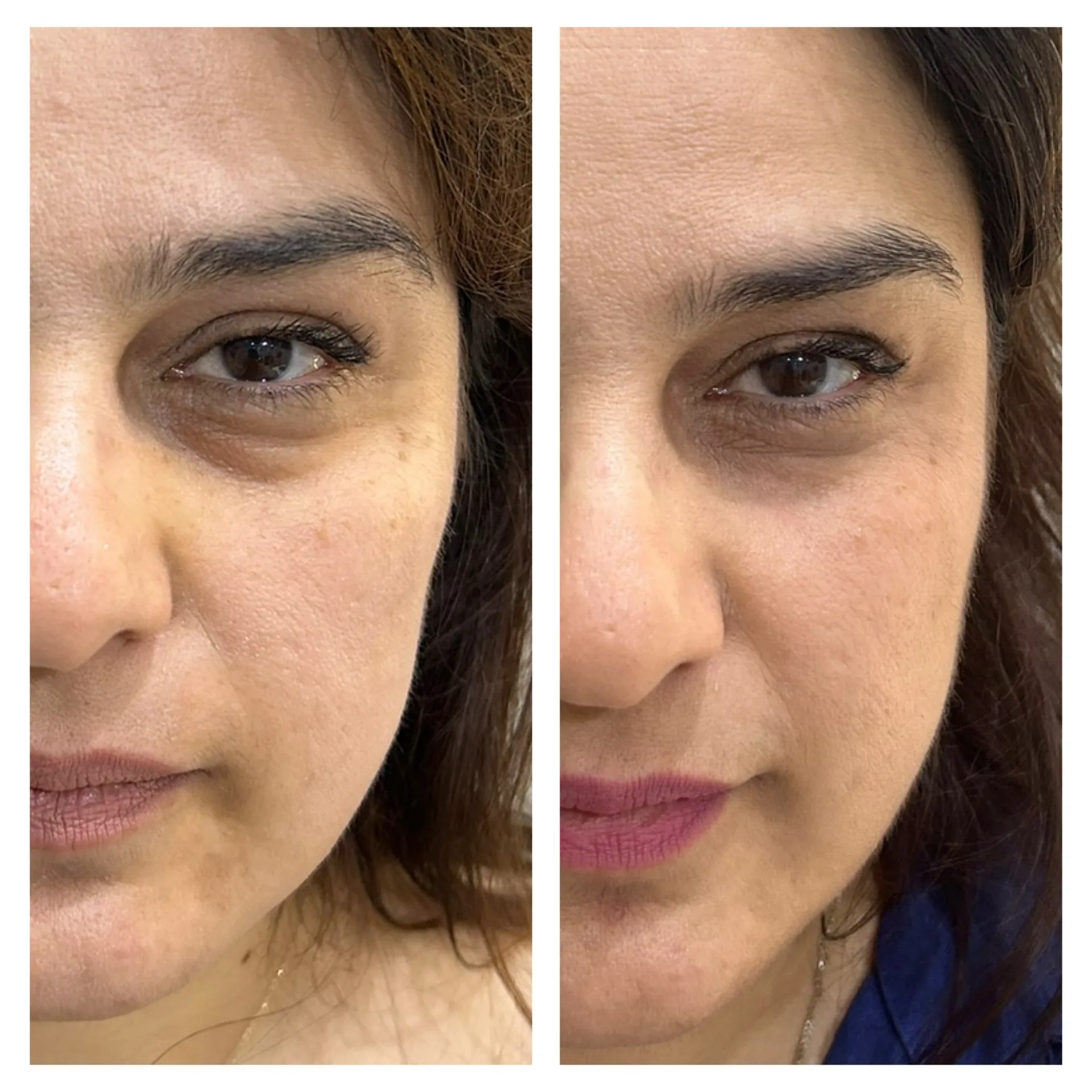
Dark circle booster — treated by Dr. Azra Vaziri, Dubai.
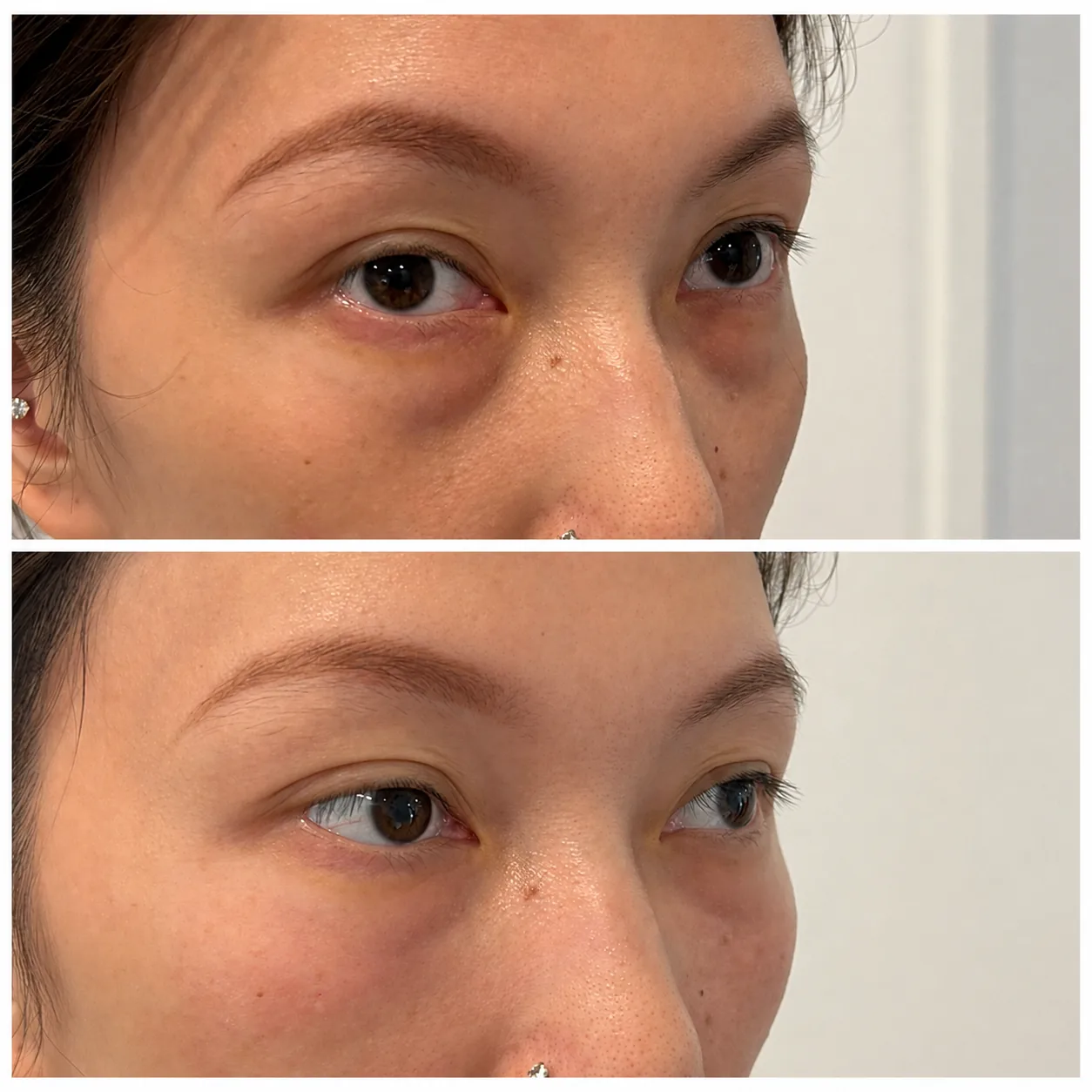
Under-eye filler for dark circles — treated by Dr. Azra Vaziri, Dubai.
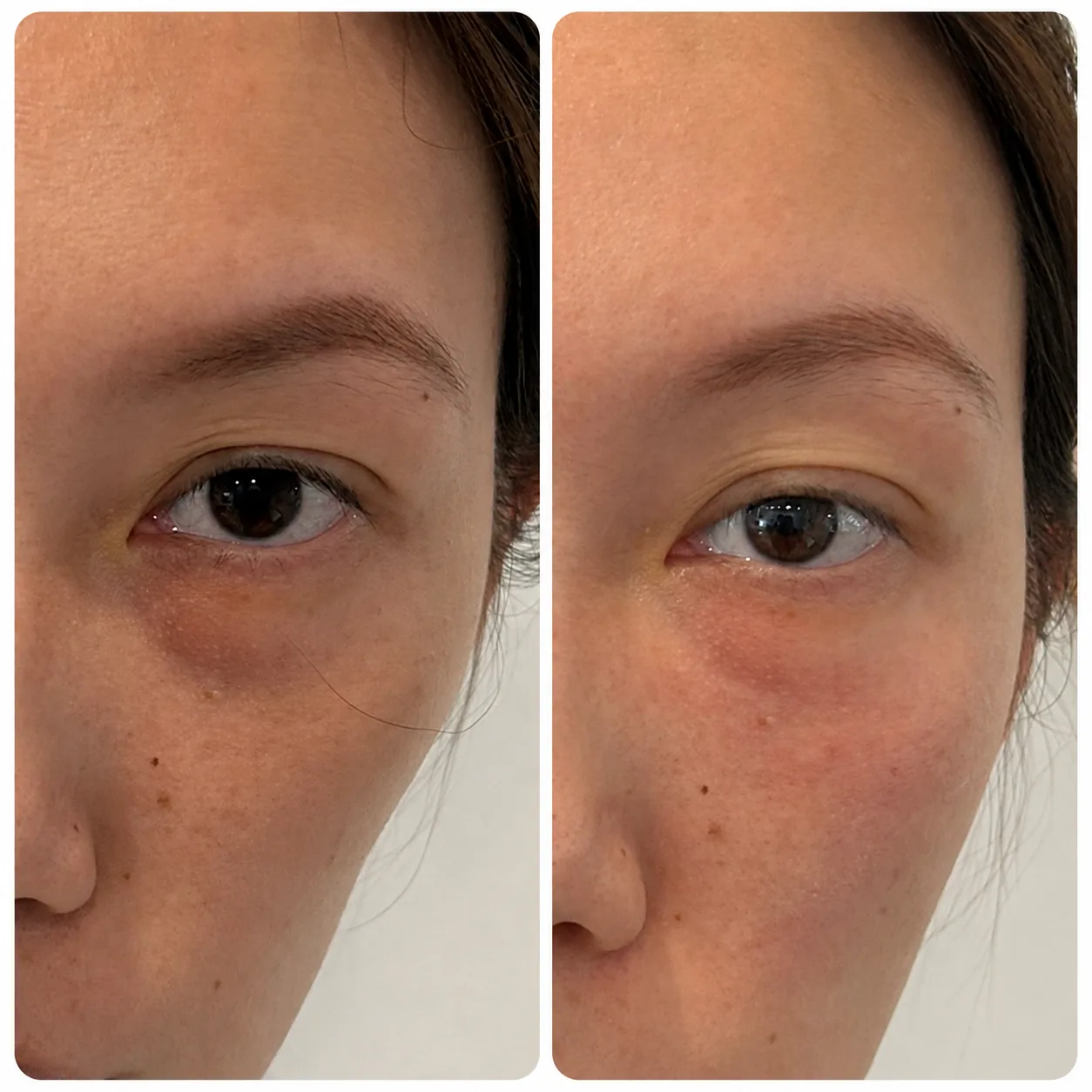
A third case, structural rather than pigment — the hollow is filled and the shadow it was casting goes with it. Treated by Dr. Azra Vaziri, Dubai.
* Photographs published with the patient’s written consent, in line with UAE medical advertising regulations. Individual results vary — book a consultation to see cases similar to yours.
Under-Eye Treatment Prices in Dubai
Pricing depends on the treatment selected and the number of sessions required. Dark circle treatment is often a combination protocol — assessment at consultation determines what is needed.
A personalised quote is provided during consultation. See also: filler pricing · PRP pricing
Not sure which treatment you need?
The most common mistake is choosing a treatment before knowing the cause. Dark circles from hollowing need filler. Dark circles from thin skin need polynucleotides or Innovyal. Dark circles from pigmentation need a different approach again. Dr Azra assesses which type you have before recommending anything.
Not sure whether filler is right for you? Read our guide to choosing between treatments →
Comparing Under-Eye Treatments
| Factor | Polynucleotides | Innovyal | Sunekos | Jalupro Eye | Tear Trough Filler | PRP |
|---|---|---|---|---|---|---|
| Primary action | Skin repair, collagen stimulation | ECM hydration, skin density | ECM regeneration, elastin renewal | Bio-revitalisation, density | Volume restoration | Growth factor renewal |
| Best for | Crepey skin, thinning, fine lines | Early circles, thin skin, hydration | Hollowing, laxity, structural loss | Early ageing, maintenance | Deep tear trough hollowing | Vascular circles, thinning |
| Adds volume? | No | No | Minimal | No | Yes | No |
| Sessions | 3–4 | 3 | 3–4 | 2–3 | Usually 1 | 3–4 |
| Standard price | Quoted | 800 | 1,600 | 1,500 | 1,500 | 600 |
| From (AED) | Quoted | 700 | 1,400 | 1,200 | 1,350 | 500 |
| Results duration | 6–12 months | 6–12 months | 6–12 months | 6–9 months | 9–18 months | 6–12 months |
These treatments can be combined. A common approach is Innovyal, polynucleotides, or Sunekos to rebuild skin quality, followed by tear trough filler only if structural volume is still needed. For patients with broader skin quality concerns, exosome therapy or skin boosters may also be incorporated. Complementary approaches such as Botox for crow’s feet, Dermapen microneedling for periorbital texture, or thread lifting for mid-face support may also be discussed.
What to Expect — Results Timeline
Timeline varies by treatment. Filler results are immediate. Regenerative treatments build gradually — this is a sign the treatment is working at a cellular level, not a flaw.
Day of Treatment
Filler: immediate volume correction visible. Polynucleotides / PRP / Innovyal / Sunekos: mild swelling at injection sites, no visible result yet.
Week 1–2
Swelling resolves. Filler patients see their settled result. Regenerative treatment patients notice subtle brightening and reduced puffiness at injection sites.
Month 1–3
Progressive improvement from regenerative treatments as collagen production increases. Skin feels thicker and more hydrated. Dark circles visibly reduced. Most patients complete their course of 3–4 sessions in this window.
Month 3–12
Full results established. The under-eye area looks refreshed, brighter, and structurally supported. Maintenance sessions every 6–12 months sustain results. Combined protocols often reduce the amount of filler needed over time.
Treatment Process
- Under-Eye Assessment — Dr Azra examines the periorbital area in detail — evaluating skin thickness, pigmentation type, vascular visibility, volume loss, and structural anatomy. Photographs may be taken under clinical lighting to map the specific causes at play.
- Personalised Treatment Plan — Based on your assessment, a tailored protocol is designed. This may involve a single treatment, a combination approach, or a phased plan that addresses skin quality first and volume second.
- Treatment Sessions — Most protocols involve 1–4 sessions depending on the treatment selected. Each session typically takes 30–45 minutes. A topical anaesthetic or ice is applied for comfort.
- Recovery — Downtime is minimal for most under-eye treatments. You may experience mild swelling, redness, or small bumps at injection sites for 24–48 hours. Bruising is possible given the vascular nature of the area but typically resolves within a week.
- Progressive Results — Regenerative treatments produce gradual improvement over 4–8 weeks as collagen rebuilds. Filler provides immediate contour correction. Maintenance sessions are recommended to sustain results long term.
Why Choose Dr Azra for Under-Eye Treatment
Dr Azra Vaziri is a DHA and DOH licensed aesthetic physician with over 20 years of injectable experience — including extensive expertise in the technically demanding periorbital zone. Her diagnostic-first approach means she assesses the cause before recommending a treatment.
DHA & DOH Licensed
Licensed to practice in Dubai and Abu Dhabi
20+ Years Experience
Injectable specialist since 2004
Allergan MD Codes
Distinction certificate — advanced injection mapping
IMCAS Paris Speaker
International aesthetic conference presenter
Diagnostic-First Approach
Assesses cause before recommending treatment
2 Clinics in UAE
Dubai (Sheikh Zayed Road) & Abu Dhabi (Louvre Medical)
Related Concerns
Dark circles and under-eye ageing frequently overlap with broader skin concerns. Many patients benefit from addressing these together:
Browse all treatments under All Treatments, Skin Treatments, and Dermal Fillers.
Frequently Asked Questions
Book a Consultation
Get a personalised treatment plan for your skin concern from Dr Azra Vaziri — DHA & DOH licensed, 20+ years of experience.