
Educational Guide · Polynucleotides · Regenerative Aesthetics
What Are Polynucleotides? The Complete Guide
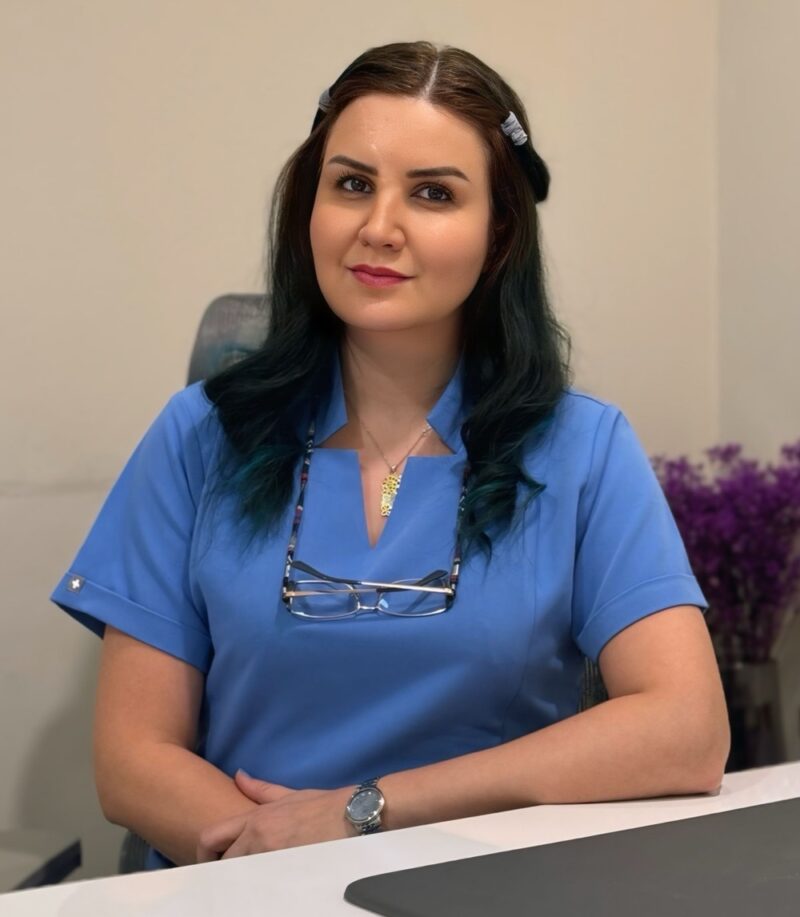
Polynucleotides (PN) are one of the most significant advances in regenerative aesthetic medicine. This guide explains what they are, how they work at the cellular level, how they compare to other skin treatments, and why they are gaining rapid adoption among aesthetic physicians worldwide — including Dr Azra Vaziri in Dubai.
The Science Behind Polynucleotides
Polynucleotides are long chains of nucleotides — the building blocks of DNA. In aesthetic medicine, they are extracted from salmon or trout DNA through a rigorous purification process that removes all proteins and potential allergens, leaving only the bioactive DNA fragments.
When injected into the skin, these DNA fragments act as powerful biological signals. They bind to purinergic receptors (A2A receptors) on the surface of fibroblasts — the cells responsible for producing collagen, elastin, and other structural components of the skin. This binding activates a cascade of regenerative processes:
Fibroblast Activation
PN bind to A2A purinergic receptors, stimulating fibroblasts to produce new collagen and elastin.
Tissue Repair
DNA fragments provide nucleotide building blocks that cells use to repair damaged DNA and regenerate tissue.
Anti-Inflammatory
PN reduce chronic micro-inflammation in the skin — a key driver of premature aging.
Free Radical Scavenging
Antioxidant properties protect cells from UV and environmental oxidative damage.
Polynucleotides vs PDRN vs Salmon DNA — What Is the Difference?
These terms are often used interchangeably, but they refer to different things:
Polynucleotides (PN) are long-chain DNA fragments (molecular weight above 100 kDa). They provide a scaffold effect, act as a hydration reservoir, and activate fibroblasts through receptor binding. Products: Plinest, Newest (Mastelli), Ameela (Hyalual).
PDRN (Polydeoxyribonucleotide) is a subset of polynucleotides — shorter DNA fragments (molecular weight 50–1,500 kDa) with a specific focus on A2A receptor activation and anti-inflammatory action. Products: Rejuran / Vitaran. Learn more about PDRN therapy.
Salmon DNA is a broader marketing term that encompasses both PN and PDRN products derived from salmon. Our salmon DNA treatment page and salmon DNA facial guide cover this in more detail.
What Can Polynucleotides Treat?
Polynucleotides are versatile and address multiple skin concerns simultaneously:
- Fine lines and wrinkles — through collagen and elastin stimulation
- Early skin aging — cellular repair and regeneration
- Dark circles and undereye crepiness — thickens thin periorbital skin
- Dull, tired-looking skin — improved radiance through tissue health
- Skin dehydration — PN act as a hydration reservoir in the dermis
- Uneven skin texture — smoother, more refined surface
- Neck and decolletage aging — thin skin responds well to PN repair
- Acne scarring — as adjunctive therapy to improve tissue quality
- Hand aging — skin thinning and crepiness on the dorsal hands
How Polynucleotides Compare to Other Skin Treatments
Understanding where polynucleotides sit in the treatment landscape helps patients and practitioners make informed decisions:
Skin Boosters (HA) — Primary mechanism: hydration. Inject hyaluronic acid micro-droplets to plump and hydrate the skin. Immediate glow, limited regeneration. Skin boosters vs polynucleotides →
Profhilo — Primary mechanism: HA bioremodelling. High and low molecular weight HA that provides hydration plus mild biostimulation. Two sessions, good for laxity. See our detailed Profhilo vs Polynucleotides comparison.
Polynucleotides — Primary mechanism: cellular repair. DNA fragments that activate fibroblasts, repair tissue, reduce inflammation, and scavenge free radicals. Deeper biological action than HA-based treatments.
Exosomes — Primary mechanism: intercellular signalling. Deliver growth factors, mRNA, and microRNA that instruct cells to regenerate. Complementary to polynucleotides. Polynucleotides vs exosomes →
Biostimulators (Sculptra, Radiesse) — Primary mechanism: collagen stimulation through controlled inflammatory response. Volume + firmness over months. Different pathway than PN.
For the three-way comparison with Profhilo and skin boosters, see our existing guide: Profhilo vs Skin Booster vs Polynucleotides.
Rejuran (Vitaran) — The Product Dr Azra Uses
Rejuran is a PDRN-based polynucleotide product manufactured in South Korea. It is one of the most extensively studied polynucleotide products in aesthetic medicine, with clinical data supporting its efficacy for skin regeneration, elasticity improvement, and wound healing.
The Rejuran range includes products optimised for different treatment areas — including a specific formulation for the delicate undereye area (Rejuran i) and a healer formulation for overall skin quality (Rejuran Healer).
Dr Azra Vaziri selected Rejuran for her practice based on its clinical evidence, product purity, and established safety record. See also: Profhilo vs Rejuran comparison. Book a polynucleotide consultation to discuss whether this treatment is right for your skin.
Related Treatments
Educational Guides
Frequently Asked Questions
Book a Consultation
Get a personalised skin-quality plan — boosters, PRP, exosomes or microneedling — from Dr Azra Vaziri, DHA & DOH licensed.