
Subcision at a Glance
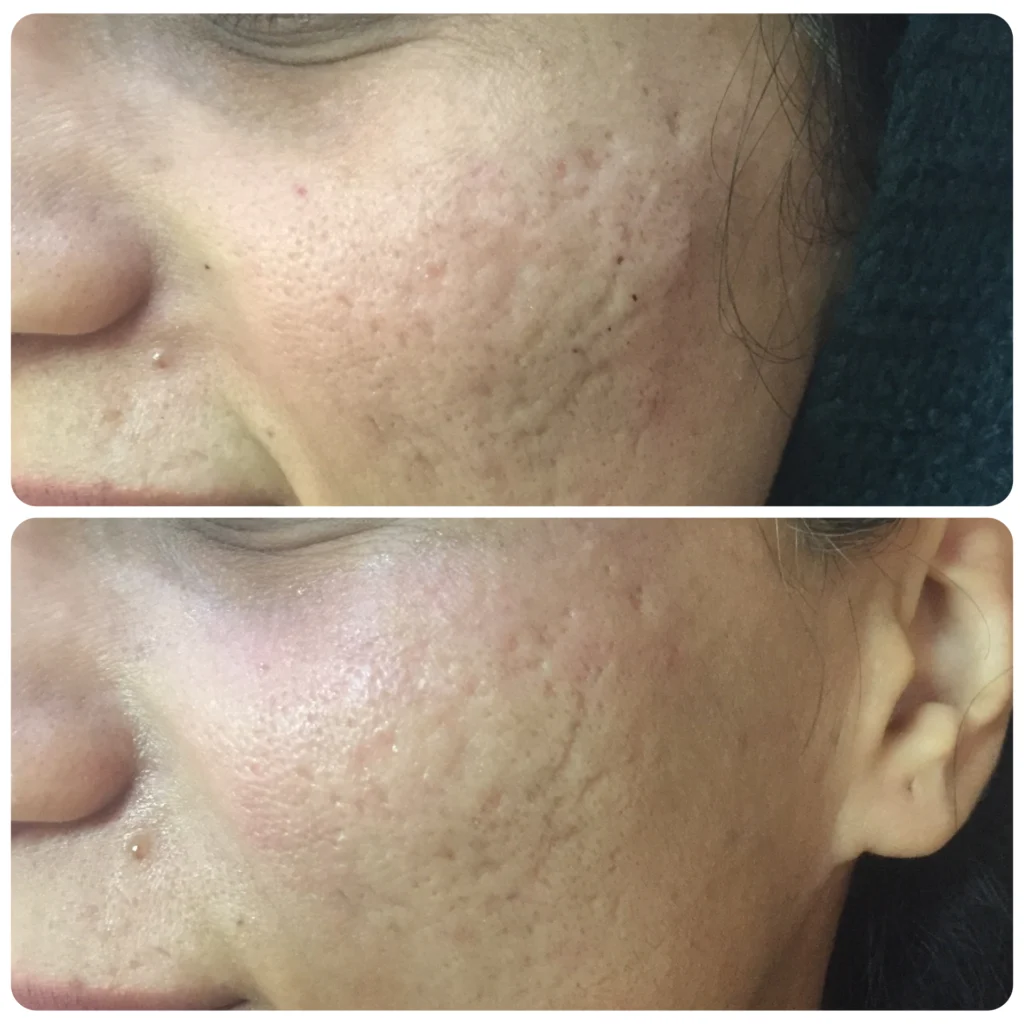
Subcision is a minor in-clinic procedure that treats depressed acne scars — particularly rolling scars — by releasing the fibrous bands that tether the scar down to the tissue beneath. Once those bands are cut, the skin is free to lift back to its normal level, and the controlled injury stimulates fresh collagen to fill the space from below.
It is one of the few acne scar treatments that addresses the cause of a depressed scar rather than only resurfacing the top of the skin. For that reason subcision is often the turning point for rolling and tethered scars that have not improved with microneedling or peels alone.
At her Dubai clinic, Dr Azra Vaziri performs subcision as part of a personalised scar plan, usually combined with RF microneedling or filler so that the released skin is supported while new collagen forms. Subcision sits within the wider acne scar treatment menu.
What Is Subcision?
Subcision — short for subcutaneous incisionless surgery — is a technique in which a fine needle or blunt cannula is passed just under a depressed scar, moving in a gentle fanning motion to cut the fibrous strands anchoring the scar to the deeper layers of skin. These tethering bands are what pull a rolling scar downward and create the shadowed, wave-like dip you see on the surface.
Two things happen once the bands are released. First, the skin is mechanically freed and rises toward the level of the surrounding tissue. Second, the micro-trauma of the procedure triggers the body’s wound-healing response, laying down new collagen in the released pocket that supports the lift over the following weeks. It is this dual action — immediate release plus gradual collagen fill — that makes subcision so effective for scars that resurfacing treatments cannot reach.
Because it works beneath the surface rather than on top of it, subcision is safe across all Fitzpatrick skin types, including the deeper skin tones common in the UAE, with a low risk of the pigmentation changes that can follow more aggressive laser resurfacing.
Which Scars Does Subcision Treat?
What Happens During Subcision
- Assessment & mapping — Dr Azra Vaziri examines your scars in raking light, identifies which are tethered, and marks each one. Only depressed, bound-down scars are selected for subcision.
- Numbing — the area is cleaned and local anaesthetic is injected so the procedure itself is comfortable. You stay awake throughout.
- Band release — a fine needle or blunt-tip cannula is introduced through a single entry point and moved in a fanning sweep beneath each scar, freeing the fibrous tethers. You may feel pressure but not sharp pain.
- Support (optional) — where useful, RF microneedling, a small amount of biostimulator, or filler is added so the newly released skin is held up while collagen forms.
- Aftercare — pressure is applied to limit bruising, and you leave with clear aftercare guidance. The whole visit typically takes 30 to 45 minutes.
Subcision Is Usually Part of a Combination
Subcision releases the scar; the treatments below help fill and refine it. Dr Azra Vaziri commonly pairs subcision with one or more of these, staged over a course, so that deep structure and surface texture are treated together. See how everything fits in the full acne scar treatment guide.
| Paired with | What it adds | Best when |
|---|---|---|
| RF microneedling | Deep collagen remodelling to fill the released pocket | Most rolling & boxcar scars — the standard pairing |
| Dermal filler / biostimulator | Immediate structural support under the released scar | Deeper single scars needing an instant lift |
| Dermapen + exosomes | Surface texture refinement and faster recovery | Mixed scarring with texture irregularity |
| Chemical peels | Even tone and treat residual pigmentation | Scars accompanied by dark marks (PIH) |
Frequently Asked Questions
Book a Consultation
Dr Azra Vaziri — DHA & DOH licensed aesthetic physician with 20+ years of experience in Dubai & Abu Dhabi.